Loading Ad...
India

Bengaluru’s First Double‑Decker Flyover Opens on Trial A Game Changer for Silk Board Traffic

Wednesday, April 22, 2026
5 min read
Loading Ad...
Bengaluru double‑deck flyover under construction
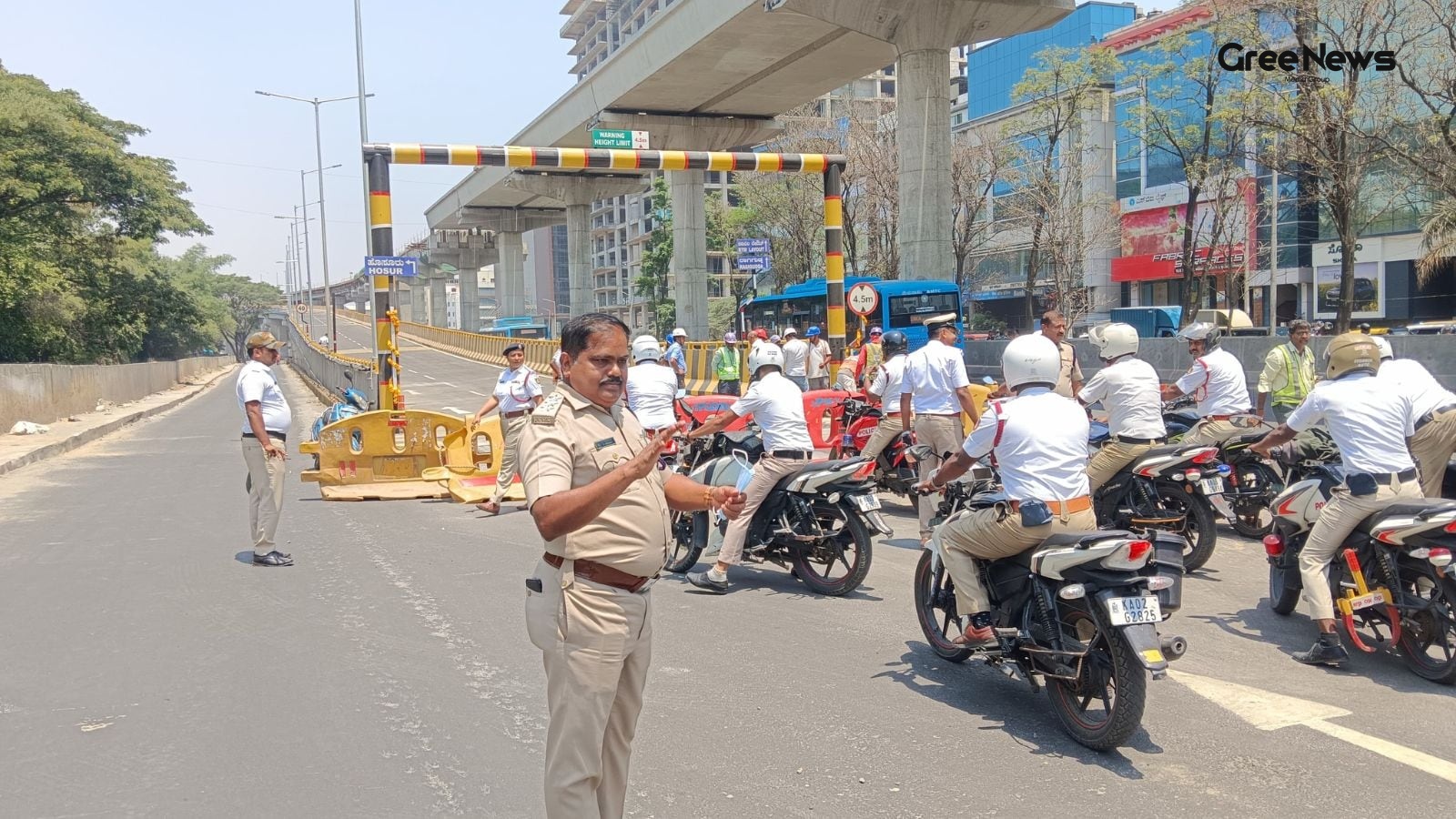
View of the newly opened double‑deck flyover connecting HSR Layout and Jayanagar.

Trial traffic on the double‑deck flyover what it means for commuters

When I first heard about the double‑deck flyover on X, I thought, “finally, something to untangle the mess around Silk Board!” The South East Traffic Police posted a short note saying traffic is now allowed on the double‑deck flyover from HSR 5th Main to Jayanagar (Ragigudda). It’s being run on a trial basis, which basically means they’re testing whether everything works smoothly before giving the full Green light.

Honestly, the moment I drove on that new stretch, the feeling was a mix of excitement and skepticism. You know how you feel when you hear a rumor about a new shortcut, and then you actually try it out? That was me a bit of that “what happened next is interesting” vibe. The flyover has two levels, and the top deck is meant mainly for fast‑moving traffic, while the lower one serves local commuters and connects to the rail‑cum‑road segment.

Who built it and who gave the nod?

The whole project is the brain‑child of Bengaluru Metro Rail Corporation Limited, popularly known as BMRCL. They’ve been handling a lot of the city’s major transport undertakings, and this double‑deck flyover is another feather in their cap. After a thorough inspection by the Bengaluru Traffic Police, officials confirmed that the structure was ready for use. The police even mentioned that the flyover falls under the jurisdiction of Madiwala Traffic Station, which is part of the South Eastern Subdivision.

Even though the inspection cleared the flyover, the formal opening was delayed a little because they needed a nod from higher authorities. In most cases, these approvals take a while, especially for something as massive as a 5.12 km stretch that promises signal‑free movement. Many people were surprised by this delay, especially after the earlier partial opening of the rail‑cum‑road portion a few months back.

Why this flyover matters breaking down the numbers

Let’s get to the nitty‑gritty. The flyover runs from HSR Layout’s 5th Main all the way to Jayanagar’s Ragigudda, covering roughly 5.12 kilometres. That’s not just a random length; it’s the exact distance that connects two heavily congested nodes on the Outer Ring Road. The officials claim that this will cut travel time along the corridor by over 30 per cent. Imagine you’re traveling from Ragigudda to HSR Layout or even heading towards Hosur Road you could shave off a good half‑hour of your commute.

What’s more, the flyover offers a signal‑free route. In daily life in Bangalore, signal delays are a common headache. By bypassing those traffic lights, the flyover promises smoother flows for both private vehicles and public transport. This thing is also part of a larger strategy to decongest the notorious Silk Board stretch, which frequently pops up in trending news India and viral news feeds due to its gridlock.

My personal take does it really help?

Being a regular commuter, I’ve spent countless evenings stuck at the Silk Board junction, watching my car inch forward while the radio blared the same traffic updates. When I finally got to try the double‑deck flyover, I felt a noticeable difference. The top deck felt like a highway, almost like a dedicated lane for those who want to zip through without stop‑and‑go. The lower deck, meanwhile, catered to local traffic and seemed less crowded.

What caught people’s attention was the sheer height of the structure. It looks almost like a modern bridge cutting through the city’s chaos. I asked a few fellow drivers at the toll booth, and most of them were nodding in aGreement the experience felt smoother, and the travel time was indeed shorter than usual. Of course, this is just a trial run, so we’ll have to see if the benefits stay consistent during peak hours.

How it fits into the bigger picture of Bangalore’s traffic plan

Beyond the immediate relief, the double‑deck flyover is part of a broader push by the city’s transport department to upgrade infrastructure. The aim is to create more signal‑free corridors, integrate road and rail networks, and ultimately provide a more reliable commuting experience for the growing population.

In most cases, new infrastructure projects like this are launched in phases. First, the rail‑cum‑road segment from Ragigudda to Central Silk Board was opened partially, and now the double‑deck flyover adds another layer to that setup. This layered approach is designed to handle different types of traffic long‑distance commuters, local residents, and public transport all at once, which is a clever way to make the most out of limited urban space.

Many local businesses, especially those around HSR Layout and Jayanagar, are already feeling the ripple effect. Delivery timings are improving, and the flow of customers is smoother. This makes it a win‑win for both commuters and merchants, an aspect often highlighted in India updates on urban development.

The road ahead what to watch for

Now that the trial phase is in full swing, authorities will be monitoring traffic patterns, safety reports, and feedback from everyday travellers. If everything goes well, we can expect a full‑scale opening soon, turning this trial into a permanent solution for the city’s traffic woes.

What I’ll be keeping an eye on is whether the travel‑time reduction stays consistent during the rush hour peaks. Also, it’ll be interesting to see if the city introduces more such double‑deck structures in other congested corridors. The buzz around this development is already appearing in the latest news India feeds, and many are hopeful that this could set a precedent.

For now, if you’re planning a trip across the Outer Ring Road, especially if you’re headed from HSR Layout to Jayanagar or vice versa, give the new double‑deck flyover a try. You might end up saving a good chunk of your day and perhaps, you’ll become part of that trending news India story that shows how a single piece of infrastructure can change the daily grind for thousands.


Reported by a local resident and commuter based in Bengaluru.

Written by GreeNews Team — Senior Editorial Board

GreeNews Team covers international news and global affairs at GreeNews. Our collective of senior editors is dedicated to providing independent, accurate, and responsible journalism for a global audience.

#sensational#india#global#trending
Loading Ad...

More from India

View All
How a Young UPSC Aspirant’s Tragic Death Unfolded: The Hunt, Arrest and Shocking Details
India

How a Young UPSC Aspirant’s Tragic Death Unfolded: The Hunt, Arrest and Shocking Details

In a chilling case that has dominated the latest news India, a 21‑year‑old UPSC aspirant from Delhi was found dead at her home in Kailash Hills. The family discovered the aspirant’s lifeless body under suspicious circumstances, prompting a frantic police investigation that spanned two states. Authorities quickly zeroed in on a 19‑year‑old domestic worker named Rahul from Rajasthan, who had been dismissed from the household a few months earlier. CCTV footage captured Rahul near the residence in the early hours, and after intensive joint raids by Delhi and Alwar police, Rahul was finally arrested in Rajgarh. A case of sexual harassment has also been lodged against Rahul, and six additional suspects linked to him have been detained for questioning, including Rahul’s father. Investigators suspect Rahul used a mobile charger cable to strangle the UPSC aspirant, possibly seeking revenge for his termination. The post‑mortem is expected to confirm a sexual assault, while police also probe whether any valuables were stolen during the crime. The incident has sparked widespread outrage, with many people surprised by the brutal method of the murder and the involvement of a domestic worker. As the story continues to develop, it remains a stark reminder of the safety concerns faced by young women pursuing competitive exams in India, and the case is being closely followed as part of the current viral news and trending news India discussions.

Apr 22, 2026
Kasaragod Shock: 36‑Year‑Old Woman Booked Under POCSO After Alleged Abuse of 17‑Year‑Old Boy  What the Latest News India Reveals
India

Kasaragod Shock: 36‑Year‑Old Woman Booked Under POCSO After Alleged Abuse of 17‑Year‑Old Boy What the Latest News India Reveals

In a startling development that has quickly become part of the breaking news across India, a 36‑year‑old woman from Kasaragod, Kerala, has been booked under the Protection of Children from Sexual Offences (POCSO) Act for allegedly sexually abusing a 17‑year‑old boy. The case came to light while police were probing an unrelated POCSO matter, and the teenager’s own confession led investigators to register a separate charge against the woman. As the investigation continues, authorities are gathering evidence and trying to piece together the timeline of events. The incident has sparked intense discussion on social media, with many users labeling it as viral news and calling for stricter enforcement of child protection laws. Simultaneously, a separate case in Delhi’s Aman Vihar, where an eight‑year‑old girl was assaulted, underscores the urgent need for heightened awareness and community vigilance. This article delves deep into the details of both cases, explains the legal provisions of the POCSO Act, and offers personal reflections on how such incidents affect everyday life in India. It also explores what the trending news India tells us about the broader challenge of safeguarding children, and how citizens can contribute to safer neighborhoods. The piece blends factual reporting with real‑life observations, aiming to keep readers engaged while delivering the essential India updates that matter.

Apr 22, 2026
Loading Ad...

Latest Headlines

Legal Immigration Plummets Faster Than Illegal Crossings Under Trump  H‑1B Visas Slip 25% (Latest India Updates)
World

Legal Immigration Plummets Faster Than Illegal Crossings Under Trump H‑1B Visas Slip 25% (Latest India Updates)

In a surprising turn of events that has become trending news India, an analysis by David J. Bier of the Cato Institute reveals that legal immigration to the United States fell sharply under the Trump administration, far outpacing the decline in illegal border crossings. While illegal entries continued a long‑term downward trend, policy shifts hit legal pathways especially high‑skill workers and international students hard. Student visas dropped about 40% and H‑1B visas saw a 25% dip, partly due to a hefty $100,000 fee on certain petitions. The study estimates that monthly cuts to legal inflows are roughly two and a half times larger than the reductions in illegal immigration. Figures show that before the current administration, Border Patrol arrests had already fallen over 80% from their peak, but the legal side experienced a steeper, policy‑driven contraction. This breaking news has caught the attention of observers worldwide, including many in India, where the decline of H‑1B visas directly impacts aspiring Indian professionals. The analysis also hints that the full impact of the new fee may not be felt for months, making the situation a key point of discussion for policymakers and potential migrants alike. The article walks through the numbers, the timeline, and what these changes could mean for both the U.S. and Indian talent pool, offering a clear, human‑centred perspective on a complex immigration story.

Apr 22, 2026
Loading Ad...
How a Young UPSC Aspirant’s Tragic Death Unfolded: The Hunt, Arrest and Shocking Details
India

How a Young UPSC Aspirant’s Tragic Death Unfolded: The Hunt, Arrest and Shocking Details

In a chilling case that has dominated the latest news India, a 21‑year‑old UPSC aspirant from Delhi was found dead at her home in Kailash Hills. The family discovered the aspirant’s lifeless body under suspicious circumstances, prompting a frantic police investigation that spanned two states. Authorities quickly zeroed in on a 19‑year‑old domestic worker named Rahul from Rajasthan, who had been dismissed from the household a few months earlier. CCTV footage captured Rahul near the residence in the early hours, and after intensive joint raids by Delhi and Alwar police, Rahul was finally arrested in Rajgarh. A case of sexual harassment has also been lodged against Rahul, and six additional suspects linked to him have been detained for questioning, including Rahul’s father. Investigators suspect Rahul used a mobile charger cable to strangle the UPSC aspirant, possibly seeking revenge for his termination. The post‑mortem is expected to confirm a sexual assault, while police also probe whether any valuables were stolen during the crime. The incident has sparked widespread outrage, with many people surprised by the brutal method of the murder and the involvement of a domestic worker. As the story continues to develop, it remains a stark reminder of the safety concerns faced by young women pursuing competitive exams in India, and the case is being closely followed as part of the current viral news and trending news India discussions.

Apr 22, 2026
Loading Ad...
Loading Ad...