Launch Event in Kolkata
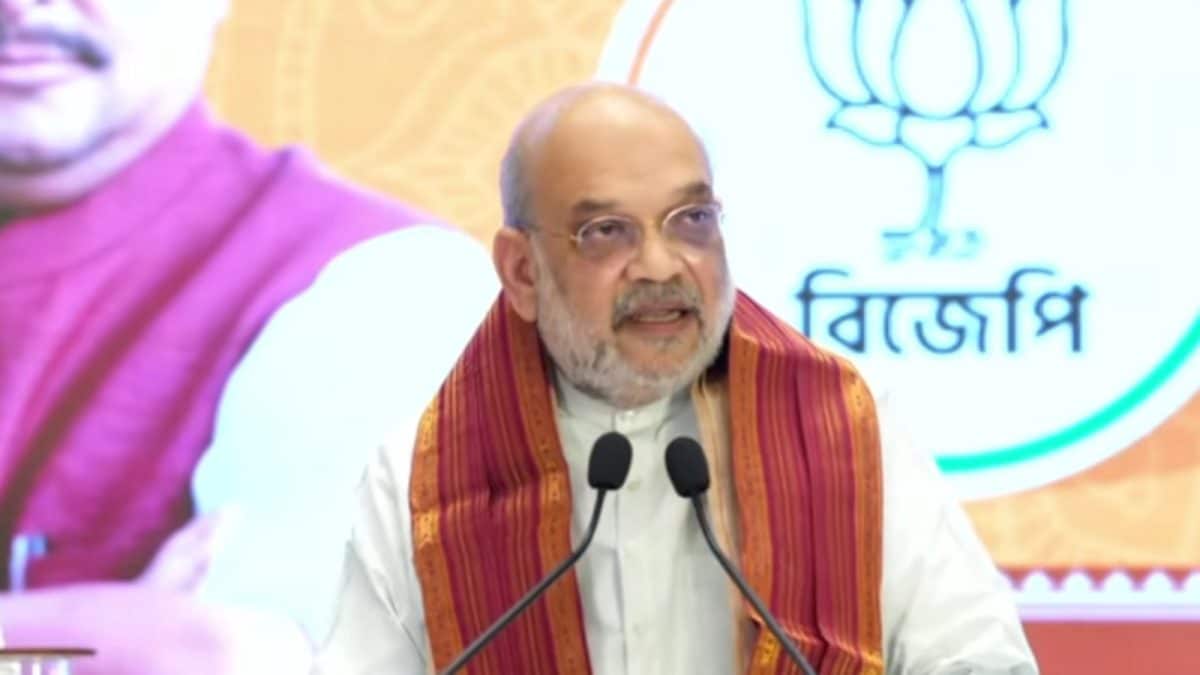
So, on a bright Friday morning in Kolkata, Amit Shah stepped onto the stage with a big banner behind him that read “UCC in Six Months, One Crore Jobs”. You could feel the buzz in the air – the kind you get when a big promise is about to be made in front of a crowd that’s half hopeful and half skeptical. Amit Shah opened the session by saying the manifesto is meant to lift the “deep despair” that, according to him, haunts many parts of West Bengal. He talked about farmers losing crops, youth without jobs and women living in fear. It sounded like a story you hear from a neighbour in a village near Siliguri, where farmers complain about erratic rains and youngsters keep asking, “Kab tak job milegi?” (When will we get a job?).
Key Welfare Promises: Money for Women and Youth
One of the first things the BJP manifesto mentions is a direct cash transfer of Rs 3,000 every month for women. Amit Shah told the crowd that this amount is meant to give a little extra security to families where the woman is the primary earner or where she simply needs that cushion for emergencies. I remember my aunt in Howrah who works as a cashier; a little extra cash each month could really help her pay for school fees for her kids. The same Rs 3,000 is also promised for unemployed youth. It’s a figure that many of us have seen in past schemes, but the promise here is that it will be rolled out quickly and without a lot of paperwork. For a lot of college graduates in Darjeeling who are still stuck in the “grade‑10‑and‑still‑waiting‑for‑a‑job” loop, this could be a small but welcome relief.
Besides cash, Amit Shah promised to fully implement the Ayushman Bharat health cover, free vaccinations, cancer screening and institutional deliveries for women. In practice, that would mean a mother in a small town like Bankura not having to travel to Kolkata for a safe delivery. The idea is to bring big‑city services to the far‑flung corners of West Bengal. I’ve heard stories from my own cousin in a tea garden, who said that the nearest hospital is a two‑hour bus ride away – something that can be terrifying when you’re pregnant.
Uniform Civil Code in Six Months – A Bold Claim
Perhaps the most headline‑grabbing promise is the introduction of a Uniform Civil Code (UCC) within half a year. Amit Shah said that the UCC will bring “uniformity” to personal laws, something he claims will help resolve many disputes that otherwise get tangled in court battles. In the street outside my flat in Salt Lake, I often hear arguments about inheritance and marriage that get heated because of differing religious customs. The notion of a single set of laws sounds simple, but it’s also a subject that makes many people uneasy, especially in a culturally diverse state like West Bengal where festivals and rituals vary from the Hooghly banks to the tea‑garden hills.
While Amit Shah painted the UCC as a step towards “development without fear”, I can’t help but think of the many families that have had to navigate complex personal law provisions for generations. The promise is ambitious – six months is a very short time for any legal overhaul, let alone one that touches on deep‑rooted customs.
Job Creation: One Crore Jobs Target
The manifesto talks about generating one crore (ten million) jobs in West Bengal. Amit Shah said this would be achieved through a mix of infrastructure projects, boosting the “blue economy” and reviving old tea gardens. If you walk through the streets of Kolkata during rush hour, you see many people commuting long distances, hoping to catch a train that will take them to some construction site or a newly set‑up factory. For a state where many families still rely on agriculture, the idea of shifting to industrial jobs is both exciting and intimidating.
In my own neighbourhood in Kalyani, a group of young men have started a small agro‑processing unit with help from a bank loan. They hope to expand quickly, but they’re still looking for more skilled workers. The promise of ten million jobs could mean that many of those small ventures will finally get the manpower they need. Of course, the exact type of jobs – whether they are in manufacturing, services or tourism – is not spelled out in detail, which leaves a lot of room for speculation.
Security Measures: Curbing Cow Smuggling and Infiltration
Security was another big theme during Amit Shah’s speech. He talked about curbing cow smuggling along the state’s borders and promised a “zero‑tolerance” approach to illegal immigration, calling it “ghuspathiya”. In many border districts like Murshidabad, locals often complain about cattle being taken away under the cover of night, sometimes leading to clashes with the authorities. Amit Shah’s pledge to tighten border checks could be a relief for farmers who fear losing their livestock.
On the immigration front, Amit Shah mentioned fast‑track investigations led by a retired judge and the release of white papers on alleged corruption by the All India Trinamool Congress (TMC). This aligns with the BJP’s national narrative of cracking down on illegal entry and ensuring law and order. In the mango‑groves of Malda, where seasonal migrant workers are common during harvest, the discussion around “infiltration” often turns sensitive. Amit Shah’s stance suggests a tougher line, which might create both support and anxiety among different sections of the population.
Special Schemes for Agriculture and Rural Development
Beyond the big promises, the manifesto lists a number of targeted schemes for farmers. Amit Shah highlighted specific support for potatoes, mangoes and paddy – three crops that dominate West Bengal’s agricultural landscape. In my uncle’s farm near Jalpaiguri, potato prices have often swung wildly, leaving him uncertain about his earnings. A dedicated scheme could mean price support, better storage facilities or direct market linkages, something that could stabilise incomes.
There’s also talk of a “Durga Suraksha Squad” that would train women in self‑defence. It’s a practical idea, especially in areas where women feel unsafe walking home after night markets. A few months back, I visited a workshop in Howrah where women learned simple but effective defence moves – it left a lasting impression on me, and I think formalising such squads could boost confidence across the state.
Infrastructure, Blue Economy and Cultural Projects
Infrastructure development features heavily in the manifesto. Amit Shah spoke about reviving old tea gardens, setting up a commission for Darjeeling tea and drawing up a “blue economy” roadmap. The “blue economy” is often used to describe sustainable use of water resources – think fishing, ports, marine tourism. West Bengal’s coastline, especially around the Sundarbans, could see new job opportunities if ports are modernised and eco‑tourism is promoted.
The idea of a “Vande Mataram Museum” also popped up. This would be a place to showcase Bengal’s rich cultural heritage – from Kalighat paintings to the lyrical poetry of Rabindranath Tagore. I recall taking my children to the Indian Museum in Kolkata, where they were fascinated by the dinosaur fossils and the intricate tribal art. A dedicated museum could become a new attraction for both locals and tourists alike.
Tagore’s Inspiration and the Emotional Appeal
During the launch, Amit Shah invoked Rabindranath Tagore’s famous lines from Gitanjali – “When the mind is without fear and the head is held high”. He said the BJP’s plan would be built on “Bharosa” (faith) and that the journey would be “bharosa of sonar Bangla”. This emotional brushstroke seemed designed to connect with the deep cultural pride many West Bengalis have for Tagore, who is a household name from school textbooks to street‑side tea stalls.
Speaking about “zero tolerance” for illegal infiltration, Amit Shah used phrases like “Select delete deport” and “chun chunkar”. While the wording may sound a bit rough, it reflects the hard‑line approach the party wants to project. In everyday conversation, you’ll often hear people from districts like North 24 Parganas discussing the impact of illegal migration on job competition and public resources – a topic that stirs strong opinions on both sides.
Conclusion: Hope, Skepticism and the Road Ahead
All in all, Amit Shah’s manifesto tries to blend welfare, development and security into a single package. For someone like me, who grew up watching elections from a small balcony in Kolkata, it feels like another chapter in the long story of West Bengal’s politics. The promises of jobs, cash assistance and cultural projects are attractive, yet the feasibility of delivering a Uniform Civil Code in six months and creating ten million jobs is a question that will be tested in the days to come.
What stands out is the personal tone Amit Shah used – talking about “fear‑less minds” and “faith”. Whether that resonates with the youth waiting for a career break, the women who want more safety, or the farmers worried about crop losses, only time will tell. As the election season heats up, the real test will be whether these promises translate into tangible changes for the everyday people of West Bengal.