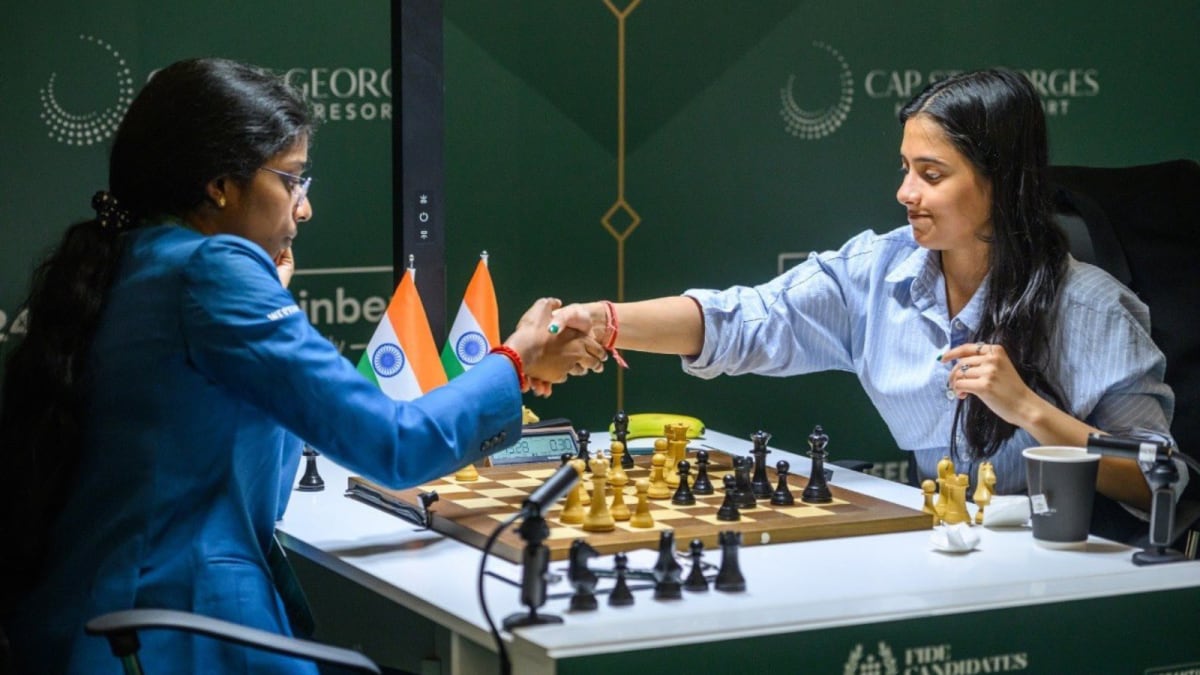
Why R Vaishali’s Lead Feels Like a Dream for Indian Chess Fans
When I first tuned in to the Women’s Candidates after the rest day, I could feel the excitement bubbling up like a hot cup of chai on a rainy morning. R Vaishali, with six points, sits alone at the top of the table. That single‑point lead over Aleksandra Goryachkina, Anna Muzychuk and Zhu Jiner gives her a comfortable cushion, but it also raises the stakes. A win against Aleksandra Goryachkina in the next round could push the margin even further, making a title chase against Ju Wenjun look almost certain.
What really caught my eye was the way R Vaishali has been playing – bold, attacking, and sometimes a little reckless, but always with a clear purpose. In the first ten rounds, R Vaishali racked up three wins, suffered only one loss and drew the rest. That kind of aggressive spirit is exactly what Indian fans love to see, especially when it reminds us of R Praggnanandhaa’s daring style in the Open section.
Even though the tournament still has four rounds left, R Vaishali’s position feels solid. The only players close enough to threaten are Anna Muzychuk from Ukraine, who is just half a point behind, and Zhu Jiner from China, also on five and a half points. The trio of Kateryna Lagno, Aleksandra Goryachkina and Bibisara Assaubayeva all sit on five points, while Divya Deshmukh, another Indian hopeful, trails by a half‑point. Former women’s world champion Tan Zhongyi, on the other hand, is struggling at the bottom with only 3.5 points.
From my viewpoint, the real test for R Vaishali will be the games that follow the clash with Aleksandra Goryachkina. After that, there are two more Chinese opponents and a match against Kateryna Lagno waiting. Each of those games could swing the momentum either way, but if R Vaishali can hold onto her lead, a shot at Ju Wenjun later this year looks very likely.
Open Section: Javokhir Sindarov’s Commanding Run and R Praggnanandhaa’s Slip
Switching over to the Open section, the story reads like a drama playing out on a big screen. Uzbek teenager Javokhir Sindarov is sitting on eight points out of ten, having notched six wins and four draws. That score puts him in a comfortable position to challenge D Gukesh for the World Championship match, provided he avoids any nasty blunders in the final rounds.
What surprised many of us, including myself, was how quickly the race narrowed down to just a few names. Anish Giri, the Dutch grandmaster, is the closest challenger with six points – a full two points behind Javokhir Sindarov. To stay in contention, Giri would need to win almost every remaining game, something that feels like asking a peacock to fly across the Himalayas.
Even Fabiano Caruana, who started the tournament with high hopes, is now sitting at five points, a point behind Giri and effectively out of the title hunt. The third‑place spot is now a distant memory for Caruana. Players such as Hikaru Nakamura, Wei Yi and Matthias Bluebaum are bunched together on 4.5 points, making the middle of the table look like a crowded bus stop.
R Praggnanandhaa, who had everyone cheering after his impressive opening blitz, now finds himself in seventh place with just four points. After a promising start, a series of draws and a loss have shifted his position to the lower half of the table. The new challenge for R Praggnanandhaa is to find the same fighting spirit that carried him through the early rounds, especially when facing Matthias Bluebaum, who has been steady throughout the event.
Andrey Esipenko, the Russian youngster, is languishing at the bottom with only 3.5 points. A win in his upcoming game against Anish Giri could cause a small ripple, but it is unlikely to affect the top‑spot battle dominated by Javokhir Sindarov.
Looking ahead, a win for Javokhir Sindarov against Fabiano Caruana could almost seal the title race. Even a draw would bring him even closer to the coveted match against D Gukesh. The pressure is on, but Javokhir Sindarov seems unfazed – his calm demeanor during the games suggests he is already visualising the next stage.
My Personal Observations From the Hall
I have been following the Candidates for a few years now, but this edition feels different. The atmosphere in the hall is electric, with a mix of Indian fans chanting softly, Iranian spectators sipping tea, and a few Europeans quietly analyzing each move on their laptops. Whenever R Vaishali makes a daring sacrifice, you can hear a collective gasp followed by a nervous laugh – it’s the kind of reaction that reminds you why chess is more than just a game of numbers.
On a rainy Sunday morning, I was sitting in a small café near the venue, watching the live broadcast on a cracked laptop screen. The commentator’s voice was steady, but the excitement in my own voice was obvious when I said, “Look at that move by R Vaishali! If she can pull this off, she might just become the first Indian woman to win the Candidates.” My friend, who had never watched elite chess before, leaned in and asked, “Is she going to face Ju Wenjun soon?” I could feel the pride bubbling – it’s not every day you see an Indian name at the top of a world‑class tournament.
When Javokhir Sindarov played his last round against Fabiano Caruana, the tension in the room was palpable. Even the volunteers serving tea seemed to pause, listening intently as each piece moved across the board. I could see the concentration on Javokhir Sindarov’s face – no smile, just a focused gaze that reminded me of a fisherman waiting for the biggest catch.
Another personal memory that stands out is when R Praggnanandhaa lost a crucial game against Matthias Bluebaum. The silence that followed his move was deafening. I could feel the collective sigh of disappointment from the Indian contingent, but also a sense of determination – as if we were all saying, “Don’t worry, brother, you will bounce back.” That resilience is what makes Indian chess fans stick around, cheering through highs and lows.
Overall, the tournament feels like a roller‑coaster that we Indians have been riding for a long time, with many twists and turns. Seeing R Vaishali and Divya Deshmukh hold their own against world‑class opponents gives a sense of fulfillment, like watching one’s child perform well in school after years of hard work.
Round 11 Pairings – Who Plays Who?
Here are the official pairings for Round 11, as released by the organizers.
Open: Fabiano Caruana (USA, 5) vs Javokhir Sindarov (Uzbek, 8); R Praggnanandhaa (India, 4) vs Matthias Bluebaum (Germany, 4.5); Hikaru Nakamura (USA, 4.5) vs Wei Yi (China, 4.5); Anish Giri (Netherlands, 6) vs Andrey Esipenko (Russia, 3.5).
Women: Aleksandra Goryachkina (Russia, 5) vs R Vaishali (India, 6); Tan Zhongyi (China, 3.5) vs Bibisara Assaubayeva (Kazakhstan, 5); Kateryna Lagno (Russia, 5) vs Anna Muzychuk (Ukraine, 5.5); Zhu Jiner (China, 5.5) vs Divya Deshmukh (India, 4.5).
These matches will likely decide the shape of the final standings. A win for Javokhir Sindarov against Fabiano Caruana could almost lock the title race. Similarly, a victory for R Vaishali over Aleksandra Goryachkina may widen the gap and bring her closer to a possible title duel with Ju Wenjun.