Teenage Observations That Sparked a Dream
When Manisha Sah Thulgharia was a teenager at St. Mary’s Convent School in Nainital, the world seemed divided into two clear camps. On one side were married women whose lives revolved around husbands, children and extended families, often seen hustling around household chores and family gatherings. On the other side stood a handful of unmarried teachers – women in their thirties and forties who were quietly labeled “spinsters” by neighbours. To the casual observer their lives might have seemed solitary, but to a keen‑eyed teenager they looked like a breath of fresh air.
Manisha Sah Thulgharia remembers watching those teachers sip tea at a small dhaba after school, chatting about books, planning weekend trips to Ranikhet or simply enjoying a quiet morning jog in the pine‑filled lanes. “They seemed independent,” Manisha Sah Thulgharia says, “they had time for themselves, they travelled, they went to cafés, and they spent weekends the way they wanted. Their world felt wider.” These moments planted a seed that later grew into a firm conviction: life could be lived on one’s own terms, without the compulsory checkpoint of marriage.
Growing Up With the Himalayas as a Playground
Living in the Kumaon hills meant that nature was never far away for Manisha Sah Thulgharia. The dense forests, towering oak trees and mist‑clad mountain ridges formed the backdrop of every school field trip, every weekend trek, and every rainy‑day daydream. An oak tree near Manisha Sah Thulgharia’s childhood home became an unlikely confidante. “I always visit my friend whenever I’m back in my hometown. It has seen me grow,” Manisha Sah Thulgharia recalls, smiling at the thought of a tree as a lifelong companion.
Those forest walks taught Manisha Sah Thulgharia about the slow, patient rhythms of nature – how a sapling takes years to become a giant, how seasons change without hurry. Later, when Manisha Sah Thulgharia started shaping clay, those same rhythms informed the way sculptures were formed, with each curve echoing the gentle sway of leaves in a breeze. The tension between wild, untouched hills and the rapid, concrete‑filled sprawl of Indian metros became a recurring theme in Manisha Sah Thulgharia’s art.
A Family That Gave Space To Choose
In many Indian households, especially those in smaller towns, the conversation about a daughter’s future quickly turns to potential grooms and wedding dates. Manisha Sah Thulgharia, however, was the eldest of three sisters in a family that, while rooted in traditional values, placed education and personal ambition above societal pressure. When proposals started arriving for Manisha Sah Thulgharia and her sisters – the classic “marriageable age” suitors with arranged‑marriage paperwork – the parents simply asked, “What do you want to do?”
Manisha Sah Thulgharia told her mother that the focus needed to stay on art and career. The mother, though occasionally wondering if someday a partner might bring companionship, respected the decision. “She has seen how I work, how I run my studio, how I conduct my life,” Manisha Sah Thulgharia says. “She’s happy seeing that.” The sisters eventually married when they felt ready, but Manisha Sah Thulgharia stayed single, fully committed to the studio and the wilderness that inspired it.
What Freedom Looks Like When You’re Single
Choosing not to marry gave Manisha Sah Thulgharia a kind of freedom that many of her friends in married households find hard to imagine. In most Indian families, a simple decision – taking a weekend trip to Jaipur or switching a project deadline – often requires a whole conference call with in‑laws, children, and sometimes even the neighbour’s aunt. Manisha Sah Thulgharia says, “Usually, people have to check with everyone before making decisions. I don’t have to do that.” This autonomy means that if Manisha Sah Thulgharia feels the urge to pack a bag and catch an overnight train to Kolkata for a pottery workshop, there is no one to negotiate with.
But freedom isn’t just about travel. It also means the ability to set a late‑night work schedule during an art‑inspired bout, to stay up painting till the early hours of the morning without worrying about who will make dinner. The daily routine becomes a personal choreography, not a household rhythm. Yet Manisha Sah Thulgharia admits that singlehood also brings moments of loneliness – a quiet house on a rainy evening, a missing companion to share a cup of masala chai while watching the monsoon clouds roll over the city.
Living Alone in Noida: A Day In The Life
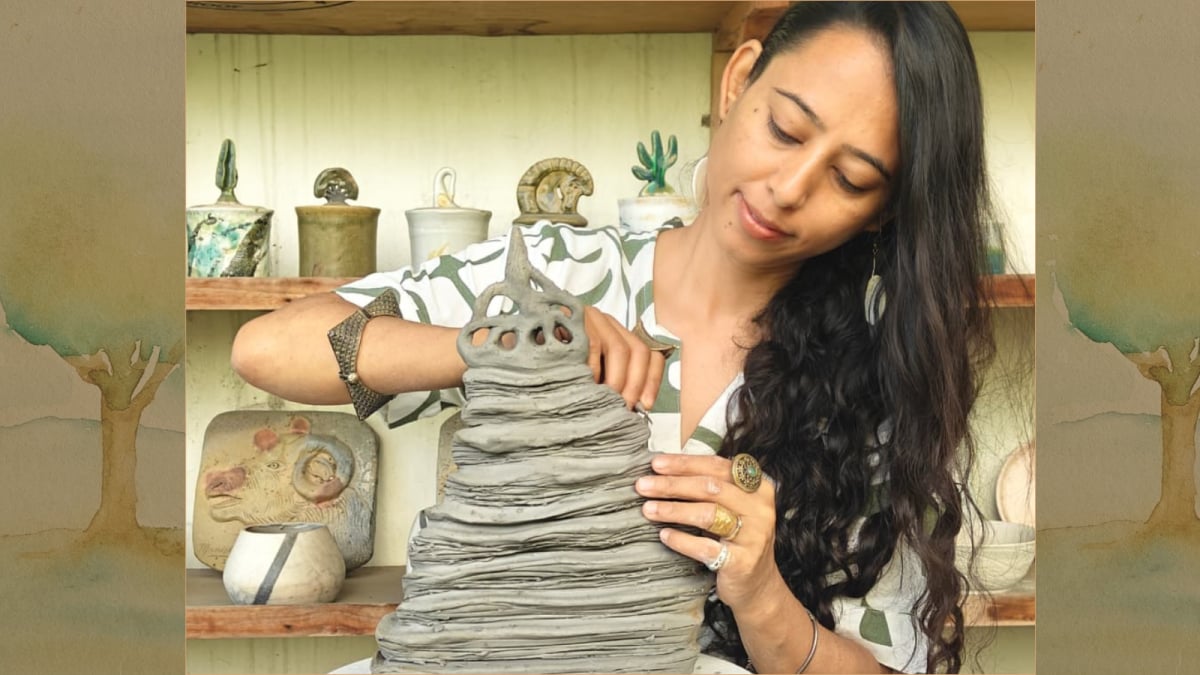
At 45, Manisha Sah Thulgharia runs the Wildfern Pottery Studio in Noida, a buzzing hub where corporate teams come for creative retreats, students gather for mentorship, and the scent of wet clay fills the air. Mornings begin with Manisha Sah Thulgharia stepping out onto a small balcony, watering a few potted herbs, and listening to the distant hum of traffic mixed with the chirping of sparrows. “That’s the best part of the day – being outside with nature,” Manisha Sah Thulgharia says, often pausing to sip a steaming cup of chai brewed on a portable stove.
After breakfast, Manisha Sah Thulgharia heads into the studio. Some days are filled with mentoring sessions where Manisha Sah Thulgharia demonstrates wheel‑throwing techniques, while other days are spent sketching a new tree‑inspired design, reading a book on sustainable architecture, or researching the impact of urbanisation on Himalayan ecosystems. The flexibility to shift between teaching, creating, and simply day‑dreaming about forest trails is something Manisha Sah Thulgharia values highly.
Lunch is usually a quick paneer‑paratha made at home, followed by a short walk to a nearby market where Manisha Sah Thulgharia picks up fresh vegetables and sometimes chats with the shopkeeper about the latest local news. Evening routines might involve a quiet dinner alone, a video call with a sister who lives in Delhi, or attending a local art exhibition in Gurgaon. The whole day is curated by Manisha Sah Thulgharia herself, a luxury that would be hard to imagine if a spouse’s schedule had to be woven into the tapestry.
Artistic Journey: From Clay To Conscious Commentary
Manifold themes run through Manisha Sah Thulgharia’s work, but the most persistent one is the dialogue between nature and urban growth. Clay, being an earth‑derived material, allows Manisha Sah Thulgharia to hold a piece of the land in her hands as she shapes it. Each sculpture – whether it mimics the bark of a tree or the layered strata of a hill – becomes a quiet protest against unchecked development.
When asked to imagine her life as an artwork, Manisha Sah Thulgharia smiles and describes a large ceramic vessel, not empty but brimming with stories of forests lost and cities expanding. The piece would not be merely decorative; it would convey a message: a reminder of what humanity risks losing as forests disappear and skylines rise.
Recent projects see Manisha Sah Thulgharia collaborating with corporations to create installations that highlight water scarcity, using porous clay forms that slowly absorb and release water, symbolising the delicate balance of ecosystems. These works have been displayed in office lobbies and public parks, sparking conversations among employees who normally discuss profit margins rather than ecological footprints.
Being an Unmarried Woman in Contemporary India
Even today, there are relatives who ask, “Why didn’t you get married, Manisha Sah Thulgharia?” Some assume that something must be “wrong”. Yet Manisha Sah Thulgharia notes a slow but steady shift. Younger aunties now suggest live‑in relationships as a compromise, while friends increasingly respect the choice to stay single if it brings happiness.
Manisha Sah Thulgharia often hears, “When women see that you’re happy and living on your own terms, many of them actually appreciate it.” The acceptance is far from universal, but it is growing, especially in metropolitan circles where career and personal fulfillment are given more weight than traditional timelines.
Advice For Young Women Who Dream Beyond Marriage
Reflecting on a life lived independently, Manisha Sah Thulgharia’s advice is simple yet powerful: don’t abandon your dreams. “Life rarely arrives neatly planned. You can never be ready for everything,” Manisha Sah Thulgharia says. “Experiences will come, and you learn from them.”
Manisha Sah Thulgharia stresses protecting peace of mind above all. “What makes you happy is very important. Guard your peace of mind,” she adds. For Manisha Sah Thulgharia, peace of mind is the foundation that allowed the bold choice of staying single while pursuing a demanding artistic career.
Closing Thoughts: Roots, Freedom, and Ongoing Growth
Manisha Sah Thulgharia’s journey is a tapestry woven from early observations of independent teachers, the whispering trees of the Kumaon hills, a supportive family that valued ambition, and a personal resolve to live on her own terms. The Wildfern Pottery Studio stands as a testament to that resolve, a space where clay meets consciousness and where freedom is not just a concept but a daily practice.
Much like the oak tree that first befriended Manisha Sah Thulgharia, the life she leads remains rooted in the choice made decades ago – to grow in her own direction, unburdened by the expectations of marriage, and to nurture both art and self with equal devotion.