What sparked the massive crackdown?
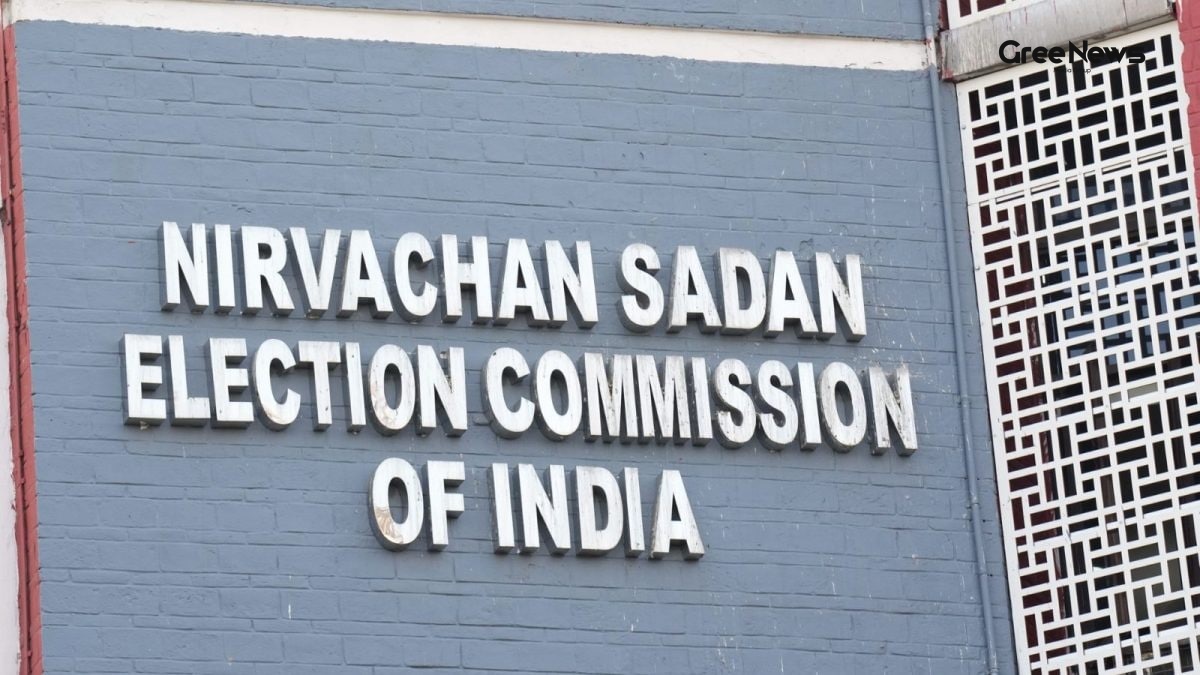
Honestly, when I first read the breaking news about the Election Commission of India (ECI) seizing over ₹1,000 crore, I was taken aback. It felt like something straight out of a thriller, but it was real, trending news India that hit our feeds just as the election season was heating up. The ECI said the move was part of intensified surveillance and enforcement measures across key poll‑bound states. Basically, the goal was to nip any attempt of money power or muscle power in the bud before voters even stepped into the booths.
What happened next is interesting the ECI didn’t just send a single team; they mobilised thousands. Over 5,000 Flying Squad Teams (FST) were pressed into service, and an additional 5,363 Static Surveillance Teams (SST) were positioned at strategic points like state borders and busy junctions. Imagine a network of eyes and ears spreading across the two biggest political battlegrounds in southern and eastern India that’s the scale we’re talking about.
Numbers that speak louder than words
Let’s dive into the actual figures, because they tell a story on their own. According to the Election Seizure Management System (ESMS), Tamil Nadu topped the list with assets worth ₹599.24 crore. West Bengal was close behind with ₹472.89 crore. If you add those up, the total crosses the ₹1,000 crore mark a massive amount that would make any political analyst sit up straight.
The breakdown is quite revealing. In Tamil Nadu, the highest cash seizure was exactly ₹100 crore. In West Bengal, the ECI confiscated almost 3.9 million litres of liquor that’s a number you don’t hear every day. Apart from cash and liquor, the combined value of drugs, gold, silver and other items allegedly meant for free distribution to voters added up to a staggering ₹1,072.13 crore. Many people were surprised by how much of it was in the form of precious metals, which often fly under the radar in election‑related reports.
These numbers are not just statistics; they have a direct impact on the political landscape. When you hear about such a huge haul of illicit assets, it sends a clear message: the Election Commission of India (ECI) is serious about curbing the dark side of elections.
How the Flying Squad Teams (FST) work on the ground
Now, you might be wondering how the Flying Squad Teams (FST) actually operate. In most cases, each team is a compact unit equipped with the authority to respond swiftly to any complaint lodged by a citizen or a party official. The ECI set a bold target resolve issues within 100 minutes. That means from the moment a complaint lands in the system to the moment the team reaches the spot, the clock is ticking.
Out of the total 5,011 Flying Squad Teams (FST), 2,728 are patrolling in West Bengal while 2,283 are active in Tamil Nadu. These teams are like the emergency responders of the election world they rush to curtail any violation, be it an unauthorized gathering, an attempt to distribute cash, or the movement of illicit liquor. I heard a friend in Kolkata say that during his chai break, he saw a Flying Squad Team set up a temporary checkpoint near a bustling market, checking every vendor’s inventory. It felt like a real‑life version of ‘Cops’ meets the election arena.
What’s more, the FST aren’t just reactive. They also carry out surprise raids based on intelligence reports, making it harder for any political aspirant to plan illicit activities. The whole setup is a mix of vigilance, speed, and authority that many have termed as a game‑changer for free and fair polls.
Static Surveillance Teams (SST) the silent sentinels
If Flying Squad Teams (FST) are the fast responders, Static Surveillance Teams (SST) are the silent sentinels stationed at critical points. The ECI deployed 5,363 Static Surveillance Teams (SST) along state borders, railway stations, highway checkpoints and other high‑traffic zones. Their job is to conduct surprise checks on the movement of cash, liquor, drugs, and any other inducements that could sway voter behaviour.
Imagine you’re traveling from Chennai to Bangalore and you’re stopped at a border check. The SST may ask for a quick inspection of the vehicle, looking specifically for large bundles of cash or sealed bottles of liquor. It’s a simple yet effective way to disrupt any attempt at ‘cash‑for‑vote’ deals before they even reach the polling booths.
These teams work closely with local police and the state’s Director General of Police (DGP). In fact, the Election Commission of India (ECI) has been holding regular review meetings with Chief Secretaries, Directors General of Police and other senior officials of Tamil Nadu and West Bengal to keep the coordination tight and the enforcement strict.
Technology meets citizen power the C‑Vigil app
One of the most fascinating aspects of this operation is how the Election Commission of India (ECI) has leveraged technology to bring citizens into the fold. The ‘C‑Vigil’ mobile application lets any ordinary person whether you’re a college student in Chennai or a shopkeeper in Darjeeling lodge a complaint directly if you witness a violation of election rules.
When a complaint is logged, the details get instantly routed to the nearest Flying Squad Team (FST) or Static Surveillance Team (SST). The surveillance teams are integrated with the app, so they can verify the complaint on the spot and take swift action. It’s like turning every smartphone into a mini‑surveillance node, amplifying the reach of the Election Commission of India (ECI) far beyond traditional police patrols.
During a recent conversation with a friend who works in a local NGO, he told me that the C‑Vigil app has become a daily habit for many he checks it as often as his WhatsApp messages. Many people were surprised by how user‑friendly the app is; a few taps, a quick photo, and the complaint is sent off. The system then sends a confirmation and, eventually, a follow‑up on the action taken. This transparency builds trust, and that’s something the Election Commission of India (ECI) really wants to nurture ahead of the 2026 general elections.
Impact on the political climate why it matters
So why does all this matter to the average voter? For one, it sends a strong message that money and muscle will not be the trump cards they once were. The Election Commission of India (ECI) is essentially saying, ‘We are watching, and we have the tools to stop any underhanded tactics.’ This influences political parties to rethink their campaign strategies, perhaps focusing more on genuine outreach rather than bribery.
Moreover, the sheer scale of the seizure over ₹1,000 crore has become viral news across social media platforms. It’s trending news India, and every time someone scrolls through their feed, they see posts about the crackdown, discussions about the fairness of elections, and debates about whether the measures are enough. The public’s perception of the election’s integrity can shape voter turnout, voter confidence, and ultimately, the results.
Another interesting angle is how the crackdown might affect smaller parties. In most cases, the big players have deeper pockets, but the new surveillance mechanisms level the playing field a bit. If a small party decides to play by the rules, they could gain credibility among the electorate, especially among youth who actively follow latest news India and value transparency.
Real‑life anecdotes from the field
Let me share a couple of stories I heard from people on the ground. In Kolkata, a street vendor recounted how a Flying Squad Team (FST) stopped a truck that was allegedly carrying bottles of illicit liquor concealed among sacks of rice. The team seized the entire load, and the driver was taken in for questioning. The vendor said, ‘I never thought I’d see such a raid in my lane, but it shows the Election Commission of India (ECI) really means business.’
On the other side, in a small town near Coimbatore, a local teacher mentioned that the C‑Vigil app helped him report a case where a political activist was handing out cash to students before a mock election in the school. The report was acted upon within an hour, and the activist was warned. The teacher smiled and said, ‘It feels good to see that the Election Commission of India (ECI) backs ordinary people like us.’ These anecdotes highlight how the combination of Flying Squad Teams (FST), Static Surveillance Teams (SST) and citizen reporting is creating an environment where election violations are less likely to go unnoticed.
Challenges and the road ahead
Despite the massive effort, there are still challenges. India’s sheer size, diverse languages, and varied political landscapes mean that enforcement must be consistently high across all corners. Some critics argue that the focus on cash and liquor seizures might overlook more subtle forms of influence, like digital misinformation.
However, the Election Commission of India (ECI) seems to be aware of this. In addition to ground surveillance, it has been ramping up cyber monitoring and fact‑checking initiatives to combat viral news India that could mislead voters. The mix of physical presence and digital vigilance is designed to provide a holistic shield around the democratic process.
Going forward, the key will be maintaining the momentum. If the Election Commission of India (ECI) can keep the Flying Squad Teams (FST) and Static Surveillance Teams (SST) active, and if citizens keep using the C‑Vigil app, the election season could set new standards for transparency. It could also inspire other states to adopt similar models, turning this into a national template for clean elections.
Final thoughts a glimpse into a cleaner electoral future
All in all, the crackdown by the Election Commission of India (ECI) seizing over ₹1,000 crore, mobilising thousands of surveillance teams, and empowering citizens through technology marks a milestone in India’s democratic journey. It’s not just about the money or the liquor; it’s about sending a signal that the electorate deserves a level playing field.
For anyone following the latest news India, especially the upcoming 2026 elections, these developments are worth keeping an eye on. The story is still unfolding, and what happens next could shape the political narrative for years to come. As we sip our chai and watch the headlines, let’s hope this wave of vigilance turns into a lasting tradition of clean, fair, and transparent elections in our country.