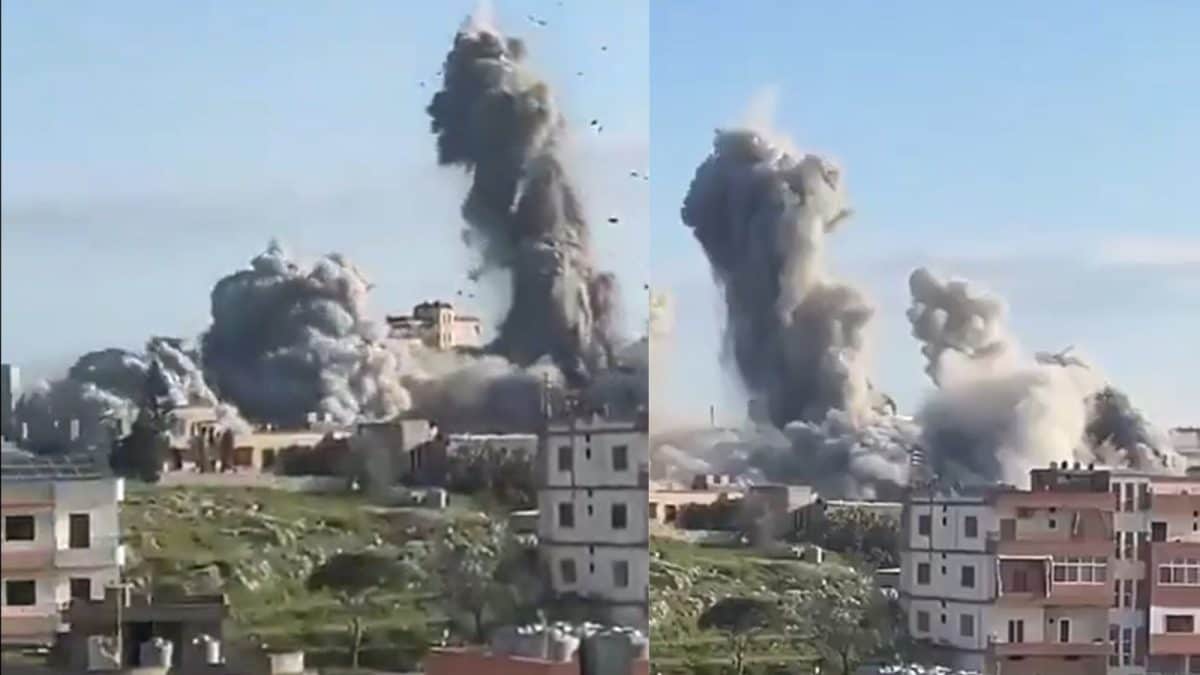
Israeli airstrikes hit Zefta and central Beirut, killing at least 182, ceasefire with Iran excludes Lebanon, over 100 Hezbollah targets hit, Iran halts oil tankers in Hormuz.
When I first saw the video clips of Zefta, I could feel the chill that runs down your spine watching your neighbour’s town turn into a cloud of black smoke. The footage, which went viral on social media, showed the sky over Zefta suddenly darkening as what seemed like several missiles slammed into the area. You could actually see flames licking the sides of a few houses before they were swallowed by thick, grey plumes that rose like a giant chimney.
What struck me most was how quickly the video spread – within minutes, friends on WhatsApp were forwarding the same clip, each adding their own gasp or short prayer. It felt as if the whole of southern Lebanon was collectively holding its breath, wondering if the flames would reach their own rooftops. The images didn’t just show destruction; they captured a moment of shared anxiety that many of us in nearby districts can relate to.
These attacks on Zefta did not happen in isolation. For months now, the Israel‑Lebanon border has been a tinderbox, with sporadic cross‑border fire keeping both sides on edge. In my neighbourhood, we would hear the occasional distant thud in the night, and the older men would discuss the latest skirmish over tea, each story adding another layer to the tension that seemed to hang over the whole region.
Even though I live a few hundred kilometres away, the sense of unease is the same. The news that Israeli planes had entered the airspace over Zefta and dropped bombs felt like a personal alarm bell; it reminded me of the day when the border came under fire a few years back, when we all slept with the lights on for a few nights. The contrast between the everyday bustle of markets and the sudden, stark visuals of smoke made the reality of war feel uncomfortably close.
Later that same day, a ceasefire was declared between the United States and Iran – a development that many had hoped would bring at least a temporary pause to the fighting. But the news quickly clarified that Lebanon was not part of that deal. When President Donald Trump told PBS NewsHour that Lebanon was excluded because of Hezbollah’s presence, it felt like a punch to the gut. The statement was clear: the ceasefire was limited, and the decision to leave out Lebanon was tied directly to the Iran‑backed militant group Hezbollah.
Trump even described the continuing Israeli strikes in Lebanon as a “separate skirmish.” In my mind, that wording seemed odd, because the people living in the streets of Beirut were feeling the same terror as those in Zefta. Still, the political nuance mattered – it meant that the diplomatic pause would not shield the Lebanese people from further Israeli attacks.
And true enough, within hours of the ceasefire announcement, Israeli missiles slammed into central Beirut. The city, usually buzzing with traffic and street vendors selling chaat and samosa, turned into a chaotic scene of smoke and sirens. According to the reports, at least 182 people lost their lives and hundreds more were injured – making it the deadliest day of the current Israel‑Hezbollah war.
I remember watching a live‑streamed video from a friend in Beirut, the camera shaking as it tried to capture the aftermath of a building that had collapsed under the blast. The street was packed with people trying to help the injured, some shouting for ambulances, others offering water. It was a painful reminder that behind every statistic are real families, mothers, and children whose lives are suddenly shattered.
Israel, for its part, has consistently said that the ceasefire does not apply to its operations against Hezbollah. The official stance was that the truce would not limit any military action aimed at what Israel calls a terrorist organization operating from Lebanese soil. This view stood in stark contrast to the calls from Iran and Pakistan, which urged that the ceasefire should also cover the Lebanese front.
When I read those statements, I could not help but think of the many diplomatic meetings that happen behind closed doors while ordinary people on the street are dealing with the immediate fallout. The gap between high‑level talks and the reality on the ground is often enormous, and this episode highlighted that gap in a very harsh way.
The Israeli military later described the strike on Beirut as its largest coordinated attack in the ongoing war. According to the reports, over 100 Hezbollah targets were hit within a ten‑minute window, spanning not only Beirut but also the southern parts of Lebanon and the eastern Bekaa Valley. The sheer scale of the operation left many of us bewildered – how could so many missiles be launched and hit so many locations so quickly?
In conversations with friends who work in the defence sector, they explained that modern warfare increasingly relies on precision‑guided munitions and sophisticated intelligence. Yet, even with all that technology, the human cost remains terrifyingly high. The news that more than a hundred sites were hit in such a short span made the entire region feel like a chessboard where each move ripples out to affect countless lives.
Adding another layer to the crisis, Iran announced that it was again halting the movement of oil tankers through the Strait of Hormuz. The announcement came from state‑run media and was framed as a response to the Israeli attacks on Lebanon. The Strait, being a vital artery for global oil supplies, has often been used by Iran as a leverage point in its broader geopolitical strategy.
While most of us here in India are far from the waterway, the news reminded me of the wider economic implications that such conflicts can have. The price of oil fluctuates, markets react, and everyday commuters in Delhi or Mumbai end up feeling the pinch at the pump. The interconnectedness of these events – a strike in Zefta, a bombing in Beirut, a shutdown in Hormuz – paints a picture of how local violence can ripple into global consequences.
Through all these developments, I kept returning to the images from Zefta and Beirut – the smoke, the crumbling walls, the faces of people caught in the crossfire. They serve as a stark reminder that behind the diplomatic jargon, ceasefire talks, and strategic calculations, there are ordinary citizens trying to survive each day.
Seeing the destruction first‑hand, even if only through a screen, forced me to confront the human tragedy that comes with each missile launch. It also made me more aware of how quickly the narrative can shift – from a ceasefire announcement that offers a fleeting sense of relief to a renewed wave of violence that shatters any hope of peace.
In the end, the story of Israeli airstrikes on Zefta and Beirut is not just about numbers or political statements. It is about the lived experience of people who watch their streets turn into smoke‑filled skies, about families who pray for safety while the world watches from afar. As I continue to follow the situation, I hope that the voices from the ground are not drowned out by the louder political discourse.