Top News
Hidden Water in Earth’s Mantle Could Outweigh All Oceans What It Means for Us
What the discovery is all about
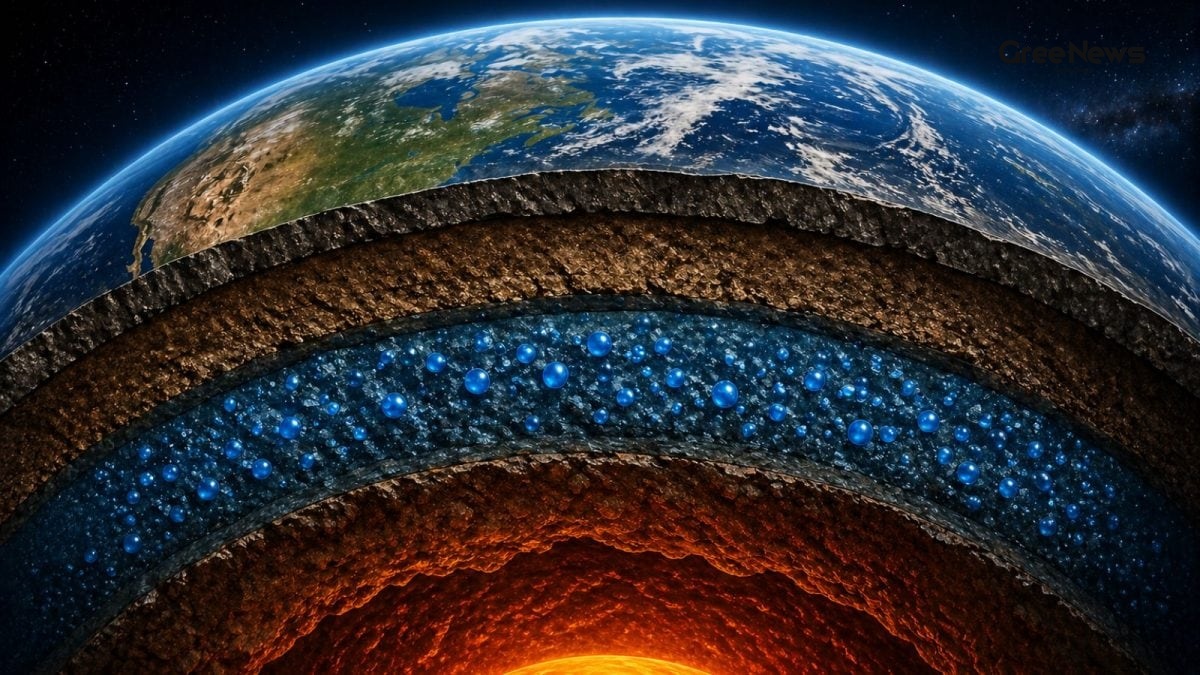
Okay, so imagine you’re sitting in a Delhi tea stall, sipping chai, and someone drops the news that the Earth has a secret stash of water deeper than any well or borehole. That’s basically what scientists have just revealed a massive quantity of water hidden inside a mineral called ringwoodite, sitting in the transition zone of the mantle, somewhere between 400 and 700 kilometres below our feet.
Now, this isn’t the kind of water you can go kayaking in. There are no waves, no fish, just water molecules squeezed into the tiny spaces inside the crystal lattice of ringwoodite. It’s more like a sponge soaked with water, except the sponge is a rock that lives under the crust.
When you hear the term “transition zone”, think of it as the Earth’s version of a highway interchange a region where the pressure and temperature change enough for rocks to transform into different minerals. In most cases, we only know this zone because earthquake waves take a detour there, slowing down or speeding up depending on what they encounter.
How scientists stumbled upon the hidden water
It all started with something that sounds like a plot from a Bollywood thriller seismic waves, the very same tremors that make our houses shake during an earthquake, were moving a bit slower than expected while passing through a certain depth. Researchers were tracking these waves, and the slowdown hinted that something unusual was present.
Later, a team managed to bring tiny fragments of ringwoodite up to the surface a rare feat because the mantle is not exactly a place you can take a vacation to. In the lab, they examined the crystal structure under powerful microscopes and discovered that water was chemically bound within the mineral. That was the smoking gun.
What’s fascinating is that the amount of water that ringwoodite can hold is huge. Estimates suggest that if all the ringwoodite in the transition zone were saturated, the total water content could be more than the volume of all the oceans combined. That’s something that makes any science enthusiast go, "wow, that’s mind‑blowing!"
And guess what? This story quickly turned into breaking news across India, appearing in the latest news India feeds and sparking heated debates on social media. People were sharing the article, calling it viral news, and many started wondering if this hidden water could ever be of any use to us.
Why this water matters even if we can’t touch it
Before we start dreaming about tapping into this underground reservoir, let’s get a reality check. The water locked in ringwoodite is not like the water in our taps. It doesn’t form lakes or rivers. It’s integrated into the mineral’s structure, making it essentially unavailable for extraction.
But its presence is far from pointless. The water molecules influence how the mantle behaves. Imagine a pot of rice cooking on a low flame; the water inside the grains helps conduct heat. Similarly, the water inside ringwoodite assists in the transfer of heat from Earth’s core to the surface. This, in turn, affects mantle convection the slow, churning motion that drives plate tectonics.
In most cases, the deeper you go, the hotter it gets, and the more the rocks become plastic. The tiny amount of water can reduce the melting point of these rocks, making it easier for magma to form. That’s one reason why volcanic hotspots, like those in the Deccan Traps, could be linked to the deep water cycle.
When we talk about the Earth’s water cycle, we usually picture evaporation, clouds, rain, and rivers. This discovery adds another layer literally to the cycle. Water is not only moving in the atmosphere and over the surface; it’s also slowly cycling deep within the planet over millions of years. That’s a new twist that has made this topic trending news India has been following closely.
Potential implications for Earth’s future
Now, many people ask, "What does this mean for us today?" The short answer is: not much in terms of daily water supply. The longer answer is more intriguing. If the mantle holds so much water, any changes in the deep Earth dynamics like shifts in mantle plumes or variations in heat flow could indirectly affect surface phenomena.
Think about it this way: the deep‑Earth water could be a hidden thermostat. By altering the viscosity of the mantle, it might change how fast continents drift apart or come together. Over geological time, that influences mountain building, sea‑level changes, and even climate patterns.
Some scientists are now exploring whether the deep water reservoir could play a role in the Earth’s long‑term habitability. If the mantle releases water back to the surface through volcanic eruptions, it could replenish atmospheric moisture over billions of years, sustaining the water cycle we rely on.
All these possibilities have made this discovery a hot topic in the scientific community, and it’s widely covered in trending news India portals. People are curious, and that curiosity is driving more research funding, which in turn could lead to new insights about Earth’s inner workings.
What surprised most researchers
Here’s the kicker when the first paper came out, many geologists thought the amount of water would be modest, perhaps enough to make a dent in the total ocean volume. But the numbers turned out to be staggering. That caught people’s attention because it flips the script on how we think about planetary water stores.
Another surprising element is how the water is stored. It’s not like a hidden lake; it’s chemically bound, making it stable for billions of years. That stability means the water has been there since the early days of Earth, silently influencing its evolution.
Many were also shocked that this water is essentially invisible to us. You can’t drill down 400 kilometres with today’s technology, so the water remains out of reach. Yet, its effects ripple up to the surface in subtle ways.
How the story spread from labs to living rooms
After the research was published, the news quickly filtered through scientific blogs, mainstream newspapers, and viral social media posts. In most cases, the headlines read something like “Earth’s mantle holds more water than oceans”. That made it into the trending news India feeds, and soon you could hear it in every chai‑talk.
People started sharing memes of oceans with captions like “You thought we were full of water? Think again!”. The mix of scientific wonder and a dash of humor helped the story become viral news across platforms.
Even school teachers used it as a cool example to explain why the Earth isn’t just rock and water on the surface. Kids loved the idea that there’s a hidden ocean inside a mineral. It made the lesson more engaging and, honestly, a lot more fun.
What’s next the road ahead for researchers
Scientists aren’t stopping at just confirming the presence of water in ringwoodite. The next big question is: how much of this water is actually there, and how is it distributed? To answer that, they plan to use more advanced seismic imaging techniques, perhaps even satellite‑based gravimetric measurements.
There’s also interest in studying other deep‑Earth minerals that might hold water, like wadsleyite. Comparing the water‑holding capacities of different minerals could give a clearer picture of the total deep‑Earth water budget.
In most cases, this research could also inform models of how Earth’s interior cools over time. If water speeds up heat transfer, then the planet might be losing its internal heat faster than previously thought. That could have implications for the magnetic field and, indirectly, for life on the surface.
All these upcoming studies are being watched closely, and every new finding adds another chapter to the story that has become a staple in the latest news India headlines.
Wrapping it up why you should care
At the end of the day, this discovery reminds us how much of our planet remains a mystery. While we hustle through traffic in Mumbai or trek the Himalayas, there’s a whole hidden world of water deep inside the Earth, silently shaping the environment we live in.
Even if we can’t drink that water, knowing it exists changes how we view Earth’s water cycle, climate stability, and geological activity. It’s a classic example of how a single scientific breakthrough can become breaking news, spark curiosity, and eventually influence policy and education.
So the next time you hear a headline about “Earth’s mantle holding more water than oceans”, remember the story behind it a story that started with earthquake waves, traveled through labs, and ended up as viral news on your phone. And who knows, maybe in the future, this hidden water will help us understand climate change better, or even guide us in exploring other planets.
For now, let’s keep the conversation going, share the news with friends, and stay curious about the world both the one we see on the surface and the one hidden deep beneath our feet.
Written by GreeNews Team — Senior Editorial Board
GreeNews Team covers international news and global affairs at GreeNews. Our collective of senior editors is dedicated to providing independent, accurate, and responsible journalism for a global audience.
#sensational#top news#global#trending
More from Top News
View All
Top News
When Billboards Backfire: 8 Viral Ads That Turned Into PR Nightmares in India
In the world of outdoor advertising, a striking billboard can make a brand unforgettable but it can also spark controversy that spirals into a PR disaster. Over the past few months, eight high‑profile billboards across India have become the talk of the town for all the wrong reasons, turning what were meant to be massive marketing pushes into viral news stories that harmed the brands’ images. From ambiguous messages that offended cultural sensibilities to bold visuals that seemed tone‑deaf during sensitive times, each of these campaigns sparked heated debates on social media and in daily conversations. Many observers noted how quickly the public’s reaction shifted from curiosity to criticism, with the incidents quickly becoming trending news India and breaking news headlines. The fallout highlighted the fine line between grabbing attention and crossing the line, reminding marketers that not all publicity is good publicity. This article walks you through each of the eight billboard controversies, shares personal observations from people who saw them on the streets, and reflects on the lessons brands can learn from these viral news moments. Whether you’re a marketer, a media enthusiast, or just someone who enjoys a good India updates story, the experiences and reactions around these billboards offer a vivid snapshot of how outdoor ads can impact public sentiment and become a part of the country's latest news India narrative.
Apr 30, 2026 by GreeNews Team

Top News
I Stumbled on a Viral Video of a 4BHK Flat in Mumbai’s Historic Marlboro House Rent Price Will Shock You
A viral clip of a spacious 4BHK flat inside the storied Marlboro House, located near Antilla in Mumbai, has become the latest buzz across India. The video, which quickly turned into breaking news, showcases the apartment’s grand interiors, heritage charm and an eye‑popping rental amount that left many netizens stunned. In this detailed account, I share how I first came across the clip, what the flat looks like inside, why the historic building is a coveted address, and the factors that make the rent figure so high. The story also touches upon the growing fascination with heritage properties, the surge of viral news on social platforms, and how such updates shape the real‑estate conversation among Indian buyers and renters. Readers will get a virtual tour, practical insights, and my personal reflections on whether paying such a hefty sum is worth it in today’s market. This piece combines the excitement of trending news India with a grounded look at Mumbai’s property scene, delivering a balanced view for anyone following the latest news India about premium rentals.
Apr 30, 2026 by GreeNews Team

Top News
Your Smartphone vs. the Apollo Moon‑Landing Computer A Personal Take on Power and Purpose
In this eye‑opening piece I walk you through the fascinating comparison between the tiny Apollo Guidance Computer that steered astronauts to the Moon and the massive smartphones we carry in our pockets today. While the Apollo computer had just 64KB of memory and a 1 MHz processor, modern Indian phones boast gigabytes of RAM and processors that run billions of cycles per second. I share personal memories of watching the historic 1969 landing on a black‑and‑white TV, and explain how the disciplined design of the Apollo system built for precision and reliability managed to land humans on the lunar surface despite overload alarms. By contrast, today’s devices juggle calls, videos, gaming, and navigation simultaneously, showing that sheer computing power is no longer the sole factor for success. The article delves into how the Apollo computer prioritized critical tasks, why that focus matters for current tech development, and what "latest news India" readers can learn about using technology responsibly. It also highlights why "breaking news" about tech breakthroughs must be paired with thoughtful design, making this story a must‑read for anyone curious about the intersection of history, modern gadgets, and the future of Indian innovation.
Apr 30, 2026 by GreeNews Team

Top News
The ‘Walking’ Palm Mystery: How This Tree Really Adapts (Not Walks)
Ever heard of a tree that can walk? The walking palm, known scientifically as Socratea exorrhiza, has been a favourite topic in the latest news India and even made waves as breaking news in many viral news threads. Native to the rain‑forests of Ecuador, Peru and Costa Rica, the palm looks like it’s perched on stilts, leading many to imagine it shifts its position in search of light. I first came across this claim while scrolling through trending news India about exotic wildlife, and it sparked my curiosity. In reality, scientists say the tree isn’t taking literal steps; instead, it slowly reshapes its root system for stability and better access to sunlight. Over years, old roots die and new ones sprout, causing a subtle change in the tree’s stance, but the movement is so slow you’d never notice it day‑to‑day. This piece dives into the real story behind the walking palm, explains why the myth grew so popular, and highlights how the tree’s clever adaptation helps it survive in soft rainforest soil while reminding us that even the most fascinating nature stories have a grounded scientific explanation.
Apr 30, 2026 by GreeNews Team
Latest Headlines

Recipes
Why My Protein Is Going ‘Namkeen’ in 2026 and the Other Food Trends Shaping India’s Kitchen
The 9th Godrej Food Trends Report, unveiled at the Tasting India festival in New Delhi, points to a dramatic shift in the Indian food landscape for 2026. Rather than chasing gimmicks, consumers are now looking for deeper stories behind what they eat from bold, flavour‑packed dishes that celebrate the country’s love for spice, to the rising prominence of the Indian female farmer whose produce is becoming a premium hallmark. Traditional sweets are getting a modern twist, merging global textures with hyper‑local ingredients, while protein snacks are moving away from sweet, chalky bars towards savoury, street‑food inspired flavours. Home kitchens are becoming smarter, using high‑quality pre‑made bases that save time without compromising health. At the same time, the era of theatrical restaurant gimmicks is fading, making way for honest, region‑specific concepts that tell a clear story. This article shares a first‑hand account of attending the festival, highlights the key trends ‘Chatpata’ maximalism, the invisible backbone of women farmers, the Mithai makeover, the protein reality check, the smart home kitchen, and the death of theatrical dining and weaves in the latest news India, breaking news, and trending news India to keep readers both informed and engaged.
Apr 30, 2026 by GreeNews Team

India
Punjab Police Uncover Massive Terror Plot After Patiala Rail Blast, Seize RPG, RDX and Grenades
In a dramatic turn of events that has become breaking news across India, Punjab Police revealed a sprawling terror conspiracy behind the Patiala freight corridor blast. The investigation led to the seizure of a rocket‑propelled grenade, a 2.296 kg improvised explosive device, more than a kilogram of RDX, hand grenades, pistols, live cartridges and sophisticated communication gear. Authorities say the network was backed by handlers in Malaysia, linked to Pakistan’s ISI, and even connected to a US‑based individual named Surinder Singh Thikriwal. Four members of a pro‑Khalistan module, including Satnam alias Satta and his brother Jagrup Singh, were arrested after a fierce encounter that left Jagrup Singh dead. Director General of Police Gaurav Yadav confirmed the operation exposed a wider web of terror operatives, prompting heightened concerns over railway security and prompting a flurry of reactions on social media. This detailed account covers the seized weaponry, the international links, the arrests, and what the ongoing probe means for India’s infrastructure safety, reflecting the latest news India is buzzing about.
Apr 30, 2026 by GreeNews Team

India
Vinesh Chandel’s Bail Granted After Coal Scam Probe What It Means for West Bengal Politics
In a development that has captured the attention of many across the country, I-PAC director Vinesh Chandel was released on bail by Delhi’s Patiala House Court in connection with a money‑laundering case linked to an alleged coal scam in West Bengal. The Enforcement Directorate (ED) did not oppose the bail, but the court imposed strict conditions, including prohibitions on tampering with evidence or influencing witnesses, and a requirement for Chandel to stay cooperative and accessible throughout the investigation. Chandel, a law graduate from NLIU Bhopal and a 33 % shareholder of I‑PAC, which handled the Trinamool Congress’s recent poll campaign, was earlier sent to judicial custody and had been questioned by the ED over alleged involvement in the generation, diversion and possession of proceeds of crime worth several crores. This article walks you through the background of the case, the court’s decision, the reactions from political circles and what this bail might imply for the upcoming political scenario in West Bengal, all while keeping the tone of a friend sharing the latest breaking news and its nuances.
Apr 30, 2026 by GreeNews Team
India
Bihar Govt Strips Sanjay Gandhi Name from Patna Zoo & Dairy Institute What It Means
In a surprising turn of events that has become the talk of the town, the Bihar government has officially removed the name of Sanjay Gandhi from two major institutions in Patna. The Sanjay Gandhi Biological Park, a beloved landmark since the 1970s, has been renamed "Patna Zoo" and the Sanjay Gandhi Institute of Dairy Technology has been rebranded as the Bihar State Institute of Dairy Technology. These changes were part of a massive cabinet meeting chaired by Chief Minister Samrat Choudhary, where 61 decisions were approved, ranging from a massive power‑subsidy scheme for consumers to the creation of new degree colleges in underserved blocks, a Centre of Excellence for autism treatment, and the allocation of land for a new National Institute of Fashion Technology campus. While the renaming has sparked a mix of curiosity, nostalgia, and debate among locals, the broader set of welfare and education initiatives promises to reshape the state's development landscape. This article walks you through the details, the reasons behind the renaming, and what these moves could mean for people across Bihar, all presented in a conversational, first‑person style that captures the buzz of the latest news India.
Apr 30, 2026 by GreeNews Team
Business
Vedanta’s Ex‑Demerger Day Explained: What Indian Investors Should Watch
In this detailed piece I walk you through the latest news India has to offer about Vedanta Ltd’s ex‑demerger day, a key event that could reshape the portfolio of many shareholders. I break down what a demerger actually means, why the record date matters, how the special pre‑open session will decide the ex‑demerger price, and what the valuation outlook looks like according to market analysts. You’ll also get a glimpse of my own experience of tracking this breaking news, the practical steps I took to stay eligible, and why many investors are buzzing about the potential upside. By the end of the article you’ll understand how this India updates can affect your holdings, the mechanics behind the price discovery, and the post‑split valuation that Nuvama has pegged at roughly Rs 936 per share. Whether you are a seasoned trader or just curious about corporate restructuring, this story offers a clear, relatable guide to navigating Vedanta’s move.
Apr 30, 2026 by GreeNews Team

Sports
India’s Nail‑Biting 2‑3 Loss to China in Thomas Cup Sparks Talk of a Jap‑India Quarter‑Final Showdown
In a gripping Thomas Cup group encounter, India fell 2‑3 to China despite a heroic comeback from Ayush Shetty and a victorious finish by HS Prannoy. The tie saw early setbacks with Lakshya Sen and the Rankireddy‑Shetty duo losing, but the Indian side fought back, earning crucial points in the second singles and final match. The narrow defeat left India second in Group A, guaranteeing a spot in the quarter‑finals where they are likely to clash with Japan, the group‑topper. This article walks through each match, shares player reactions, and explores what the result means for India’s chances of lifting the coveted Thomas Cup. It also looks at crowd vibes, the pressure of a first‑time Thomas Cup appearance for some, and why this fixture has become one of the most discussed pieces of breaking news in Indian badminton circles, feeding the latest news India fans are eager to follow.
Apr 30, 2026 by GreeNews Team