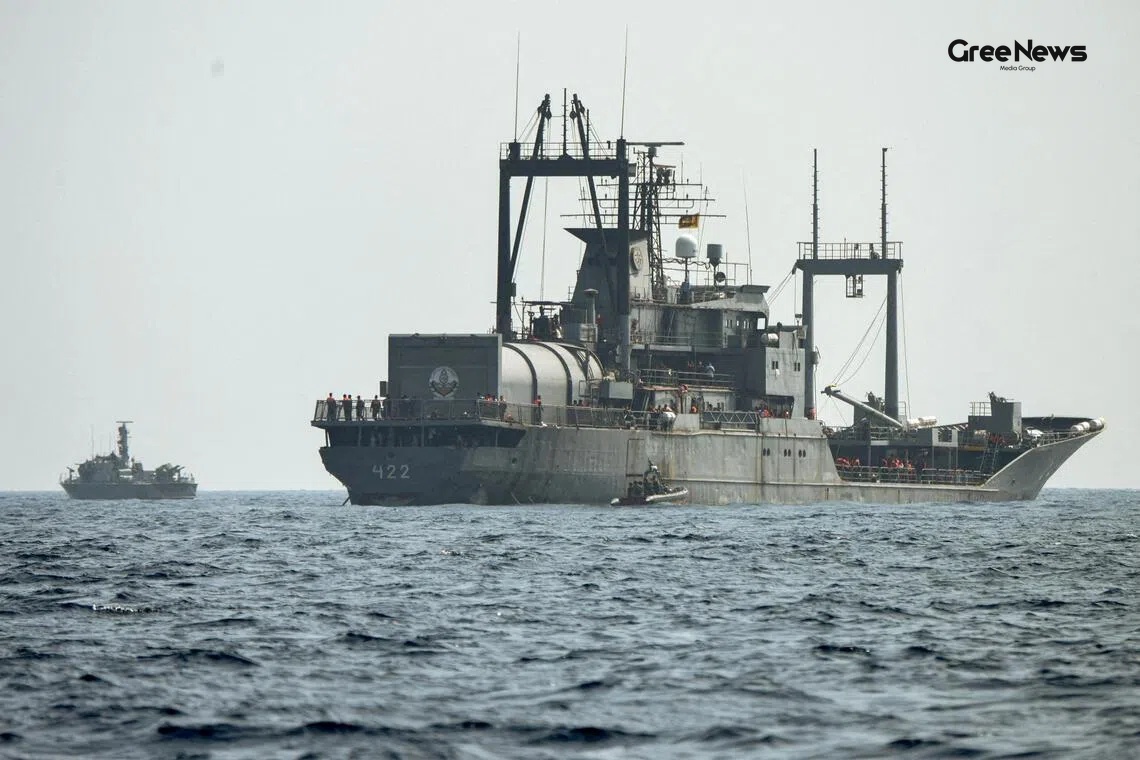
Hey, let me tell you about something that’s been buzzing on the latest news India feeds Sri Lanka just sent back 238 Iranian sailors who were stuck on their ships after a dramatic incident in the Indian Ocean.
Honestly, I was scrolling through my phone, sipping my morning chai, when I saw the breaking news headline pop up. It said something about a US submarine torpedoing an Iranian frigate near Sri Lankan waters. My first thought was, “Wow, the Middle‑East conflict has actually reached our backyard!” So I dug a bit deeper.
What actually happened?
On a quiet morning, the Iranian warship IRIS Dena was cruising just off the coast of Sri Lanka when, according to Iranian authorities, a US submarine launched a torpedo. The attack caused the frigate to sink, killing 104 sailors and leaving many more stranded in the sea.
Now, you might wonder why the US would be involved at all. According to the reports I read (and the viral news spreading on social media), the US and Israel were conducting a joint operation against Iran, and the Indian Ocean became an unexpected battlefield.
When the tragedy struck, Sri Lankan officials acted fast. Deputy Defence Minister Aruna Jayasekara confirmed that they rescued 32 sailors from the IRIS Dena within hours. The crew was brought aboard Sri Lankan naval vessels and given medical care.
But the story didn’t end there. Another Iranian ship, the IRIS Bushehr, had already taken safe harbour in Sri Lanka after hearing about the attack. Over the next few weeks, Sri Lanka organised a massive repatriation effort for the remaining crew members.
How the repatriation unfolded
According to Deputy Defence Minister Aruna Jayasekara, a total of 206 sailors from the IRIS Bushehr were flown out of the island on a chartered aircraft on the night of the operation. The flight was coordinated with Iranian officials and took off from a Sri Lankan airbase, heading straight to Tehran.
What’s interesting is that a small group fifteen Iranian sailors decided to stay back in Sri Lanka to keep the IRIS Bushehr operational. The vessel is now anchored off Trincomalee in the north‑east, under Sri Lankan watch.
When I read this, I imagined the scene: sailors in crisp white uniforms, the salty breeze of the ocean, and the hum of a cargo plane roaring overhead. It felt like a scene straight out of a movie, except it was real and had huge diplomatic implications.
President Anura Kumara Dissanayake publicly said that Sri Lanka was providing humanitarian protection to the Bushehr crew in line with the 1907 Hague Convention. Basically, the island chose to stay neutral, refusing US warplane access to its ground facilities, while still helping the stranded crew.
Why this matters for India and the region
For us in India, this incident is a reminder of how quickly global geopolitics can touch our shores. The Indian Ocean has always been a vital trade route, but now it also appears on the list of trending news India readers are following.
The whole episode has sparked a lot of discussion on social platforms people are asking whether Sri Lanka’s neutral stance will affect its relations with the US, and what it means for India’s own security calculations.
In most cases, the Indian government has kept a close eye on the developments. While I don’t have any insider info, I’ve seen a few interviews where Indian navy officials mentioned they are ready to assist Sri Lanka if needed, but they also respect Colombo’s decision to stay neutral.
What caught people’s attention most was the human angle the images of exhausted sailors, the relief on families’ faces when the news of repatriation broke, and the sense of solidarity shown by the Sri Lankan people.
Other Iranian ships seeking refuge
It’s not just the Dena and Bushehr that made headlines. Earlier in March, another Iranian vessel the IRIS Lavan sailed into India’s Kochi port seeking shelter. The ship carried 183 crew members, and after negotiations, over 100 non‑essential crew left India.
That episode added another layer to the India updates we’ve been following. While the Lavan’s situation was handled separately, it underscored the broader pattern of Iranian naval assets looking for safe harbour in the region after the US‑Israel offensive.
Personal reflections
Honestly, reading all this made me think about the sailors back home in Kerala, Gujarat, and elsewhere, who work on cargo ships and sometimes face dangers we rarely imagine. The Indian Ocean is ours, but we share it with many nations, and sometimes that means stepping into the middle of world events.
When I heard that Sri Lanka had allowed a few Iranian crew members to stay on the Bushehr to keep it running, I felt a mix of curiosity and admiration. It shows a practical side a ship needs a crew to stay afloat but also a compassionate side, helping people who are far from home.
And let’s not forget the families waiting back in Iran. The repatriation flights must have been a huge relief. I can only imagine the phone calls, the tear‑filled reunions, the feeling of finally being able to hug your loved ones after weeks at sea.
What’s next?
Going forward, the situation remains fluid. The US‑Iran tension is far from over, and the Indian Ocean could see more naval movements. Sri Lanka’s stance of neutrality, as expressed by President Anura Kumara Dissanayake, will likely be tested again.
For the rest of us following breaking news and viral news updates, the key takeaway is that regional stability depends on how countries like Sri Lanka, India, and even smaller island nations handle such incidents.
If you’re keeping an eye on the latest developments, you’ll notice that every little move like a chartered aircraft taking off, or a few sailors staying back can become a talking point on social media, influencing public opinion across South Asia.
So, that’s the full picture as I’ve pieced it together from the news feeds, interviews, and a dash of personal reflection. It’s a vivid reminder that the world’s headlines are not just abstract stories; they involve real people, real ships, and real decisions that ripple across borders.
---
Related commercial content (as appeared in the original article):
Xiaomi
$9.59
$14.9036% off
Muji
$60.00
$99.0039% off
La Gourmet
$18.90
$59.9068% off
Muzigae Mansion
$9.81
$27.9065% off
Bellroy
$119.20
$149.0020% off
Sony
$449.99
$649.0031% off
Actto
$59.42
$106.9544% off
Lego
$196.17
$259.9025% off
EuropAce
$399.00
$599.0033% off
Vanish
$10.43
$14.9030% off
YOULIMEIJIA
$30.50
$56.0546% off
Le Creuset
$108.00
$179.0040% off
Disney
$27.90
$55.9050% off
Dreame
$149.00
$299.0050% off