Inside Iran’s 10‑Point Ceasefire Proposal Accepted By US For Two‑Week Deal
US and Iran reach a fragile two‑week ceasefire tied to reopening the Strait of Hormuz, while nuclear limits and sanctions remain at the center of negotiations.
Overview of the aGreement
A conditional two‑week ceasefire between US and Iran was announced early on Wednesday. The ceasefire, confirmed by Iran’s Supreme National Security Council, is presented as a temporary pause that hinges on progress made in ongoing diplomatic talks. The central focus of the pause is the reopening of the Strait of Hormuz, a maritime corridor that carries a substantial share of the world’s oil supplies.
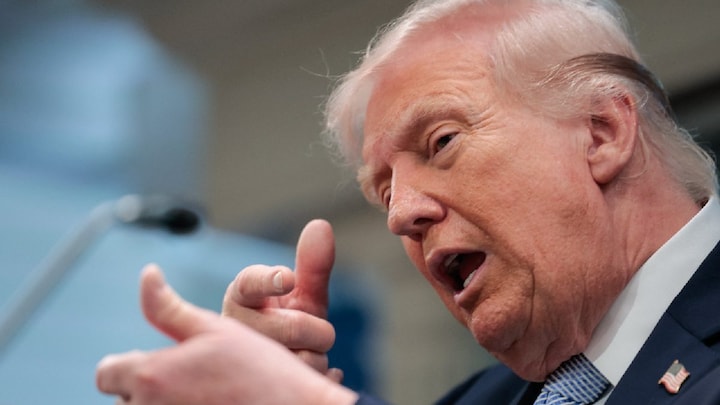
Donald Trump told AFP that the United States stands ready to halt planned strikes for the aGreed period, provided that Iran takes concrete steps to ensure safe and unrestricted navigation through the Strait of Hormuz. Donald Trump described the arrangement as a “double‑sided ceasefire” designed to create a diplomatic window for both sides.
According to senior officials in the Trump administration, the United States will use the two‑week interval to push for the removal of Iran’s nuclear material, an end to uranium enrichment, and the dismantling of Iran’s ballistic‑missile capabilities. These demands are presented as non‑negotiable conditions that the United States expects Iran to address before the ceasefire can be extended.
Details of Iran’s 10‑point plan
Iran presented a comprehensive 10‑point plan that seeks to end the conflict on its own terms. The plan emphasizes a permanent cessation of hostilities, the guarantee of free navigation through the Strait of Hormuz, and the removal of all regional disputes. Iran insists that any aGreement must incorporate a complete and irreversible halt to military actions against Iran, without a defined time limit.
The proposal also calls for firm security guarantees that would safeguard the movement of commercial vessels through the Strait of Hormuz. Iran indicates a willingness to allow safe maritime traffic during the negotiation period, but stresses that coordination with Iranian armed forces will be necessary and that technical constraints may apply.
Foreign Minister Abbas Araghchi underscored that the ceasefire is conditional, linking its continuation to tangible progress in the negotiations. Abbas Araghchi affirmed that Iran will maintain control over the Strait of Hormuz while also ensuring that international shipping can proceed under aGreed safety protocols.
Ten key points of the Iranian proposal
- 🔹 Non‑aggression
- 🔹 Continuation of Iran’s control over the Strait of Hormuz
- 🔹 Acceptance of enrichment
- 🔹 Lifting all primary sanctions
- 🔹 Lifting all secondary sanctions
- 🔹 Termination of all UN Security Council resolutions
- 🔹 Termination of all IAEA Board of Governors resolutions
- 🔹 Payment of compensation to Iran
- 🔹 Withdrawal of US combat forces from the region
- 🔹 Cessation of war on all fronts, including against the Islamic Resistance of Lebanon
Each point is presented as a prerequisite for any lasting settlement. Iran insists that the United States must aGree to a permanent non‑aggression stance, acknowledge Iran’s continued authority over the Strait of Hormuz, and accept Iran’s right to pursue nuclear enrichment within the bounds of international law.
The sanction‑related points call for the removal of both primary and secondary economic restrictions that have been imposed on Iran since the inception of the conflict. Iran also demands the nullification of all United Nations Security Council resolutions that target Iran’s nuclear program, as well as the cancellation of any resolutions adopted by the International Atomic Energy Agency’s Board of Governors.
Financial restitution is another pillar of the plan. Iran seeks compensation for damages incurred during the conflict, framing the payment as a necessary step toward reconciliation.
On the security front, Iran demands a complete withdrawal of US combat forces from the region, arguing that their presence perpetuates instability. Finally, Iran calls for the cessation of all hostilities, explicitly naming the Islamic Resistance of Lebanon as a party whose combat activities must end as part of the broader peace process.
United States’ response and conditions
Senior officials in the Trump administration have repeatedly asserted that the United States will maintain pressure on Iran to eliminate nuclear material, stop all enrichment activities, and dismantle ballistic‑missile infrastructure. According to Channel 12, these positions are at odds with Iran’s claim that the United States has already aGreed to the ten‑point framework.
The United States emphasizes that any extension of the ceasefire beyond the initial two‑week period will be contingent upon Iran’s demonstrable compliance with the removal of nuclear material and the cessation of enrichment. The United States also links the lifting of sanctions to concrete verification steps conducted by international inspectors.
Donald Trump reiterated that the United States stands ready to pause military operations, but warned that any deviation from the aGreed‑upon terms, especially regarding the safety of navigation in the Strait of Hormuz, will trigger a swift resumption of strikes. Donald Trump framed the two‑week window as an opportunity for diplomatic engagement, not a concession.
Implications for regional stability
The ceasefire, while temporary, offers a rare pause in a conflict that has escalated with each successive round of sanctions, missile tests, and naval confrontations. A successful reopening of the Strait of Hormuz would alleviate immediate pressures on global oil markets and could reduce the risk of accidental engagements between naval vessels.
However, the divergent expectations of Iran and the United States create a fragile balance. Iran’s insistence on a permanent end to hostilities and the removal of all sanctions clashes with the United States’ demand for irreversible steps toward denuclearization. This mismatch raises questions about whether the two‑week ceasefire can evolve into a more durable peace framework.
The involvement of regional actors adds another layer of complexity. The Islamic Resistance of Lebanon, mentioned explicitly in Iran’s ten‑point plan, remains a key proxy force in the broader geopolitical contest. Any settlement that fails to address the activities of such groups may leave underlying tensions unresolved.
Prospects for a lasting resolution
Both Iran and the United States have signaled a willingness to engage in dialogue, yet each side maintains core demands that appear mutually exclusive. Iran’s requirement for the termination of all UN Security Council and IAEA Board of Governors resolutions conflicts with the United Nations’ mandate to monitor nuclear compliance. The United States’ insistence on the dismantlement of enrichment facilities stands in direct contrast to Iran’s demand for acceptance of enrichment.
The path forward will likely depend on confidence‑building measures taken during the two‑week window. If Iran can ensure uninterrupted, safe passage for commercial shipping through the Strait of Hormuz, the United States may consider easing some of the most restrictive sanctions as a goodwill gesture. Conversely, if verification teams can document the irreversible removal of enrichment equipment, the United States could justify a partial rollback of secondary sanctions.
Both Iran and the United States have placed significant political capital on the outcome of these talks. The political leadership in Washington and the political establishment in Tehran will be under intense scrutiny from domestic constituencies, making any perceived concession a potential source of internal pressure.
Conclusion
The conditional two‑week ceasefire represents a tentative step toward de‑escalation in a conflict that has threatened global energy security and regional stability. Iran’s ten‑point framework outlines a comprehensive set of demands that, if met, would dramatically reshape the diplomatic landscape. The United States, meanwhile, remains steadfast in its pursuit of denuclearization and the removal of Iran’s ballistic‑missile capabilities.
The coming weeks will test the durability of the ceasefire, the sincerity of the parties’ commitments, and the capacity of diplomatic channels to bridge a widening gap between mutually incompatible positions. The world will be watching closely as Iran and the United States navigate this delicate diplomatic dance, hoping that the brief pause in hostilities can evolve into a more permanent and peaceful resolution.