Iran and Oman Could Impose Fees on Vessels Transiting Hormuz Under Proposed Ceasefire Framework
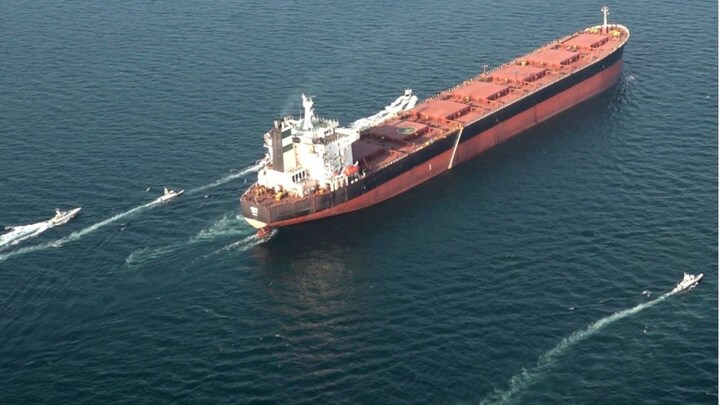
Iran maintains that ships may continue to navigate the Strait of Hormuz only after coordinating with Iran's armed forces, a stance that could lead to fee collection under the Tehran‑Washington cease‑fire arrangement, according to sources.
Background on the Strategic Corridor
The narrowest segment of the Strait of Hormuz measures roughly twenty‑one miles across, yet the waterway accounts for about one‑fifth of the world’s daily traded crude oil. Because of this pivotal role, any alteration to the legal status of the passage carries profound economic and geopolitical repercussions. Under the terms of the Tehran‑Washington ceasefire concept, the two parties would permit Iran and Oman to levy charges on vessels that transit the corridor. If the arrangement proceeds as reported by the Associated Press, the Strait of Hormuz would shift from a universally free international passage to a route subject to a regulated fee structure.
Iran’s Stated Position on Navigation Through Hormuz
Iran has consistently reiterated that any ship wishing to sail through the Strait of Hormuz must do so "via coordination with Iran's armed forces." This phrasing was originally delivered by Iran’s foreign minister Seyed Abbas Aragchi, who emphasized that such coordination is a prerequisite for safe passage. Iran’s ten‑point plan, which Iran claims Washington has acknowledged as a foundation for upcoming negotiations, explicitly references “controlled passage through the Strait of Hormuz in coordination with Iran's armed forces.” The plan further characterizes this requirement as granting Iran “a unique economic and geopolitical position.”
Iran’s articulation of the coordination requirement leaves little room for ambiguity. By insisting that the coordination be conducted directly with Iran's armed forces, Iran signals an intention to maintain a direct supervisory role over every transiting vessel. The language also suggests that Iran envisions the coordination process as a formalized mechanism capable of generating revenue, thereby reinforcing the broader economic objectives embedded in Iran’s ten‑point framework.
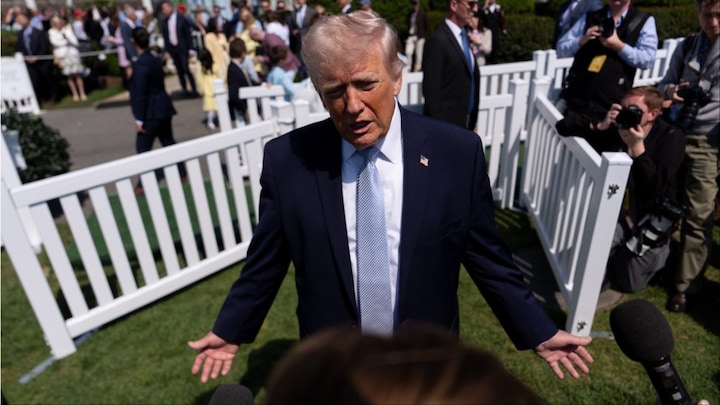
In parallel, the public statements issued by former United States President Donald Trump on his platform Truth Social did not reference fees or coordination with Iran’s armed forces. The statement highlighted a conditional suspension of military actions directed at Iran, predicated on the Islamic Republic of Iran’s aGreement to a “complete, immediate, and safe opening” of the Strait of Hormuz. The wording of the statement framed the cessation of hostilities as a “double‑sided ceasefire,” but omitted any explicit mention of fee collection or coordinated navigation protocols.
Ceasefire Proposal and Potential Fee Structure
The ceasefire proposal articulated between Tehran and Washington incorporates a provision that would allow Iran and Oman to charge ships for using the Strait of Hormuz. The proposal does not delineate a specific monetary amount, but the language suggests that the fees would be tied to the strategic value of the corridor and the volume of petroleum and other commodities passing through it. By embedding a fee‑charging mechanism within the ceasefire aGreement, the parties signal a willingness to move beyond a purely security‑focused settlement toward an arrangement with tangible fiscal implications.
Alongside the fee‑related clause, Iran’s ten‑point plan demands a comprehensive withdrawal of United States military forces from the region, the lifting of economic sanctions, reparations for damages incurred during the conflict, and the adoption of a binding resolution by the United Nations Security Council. By pairing the fee‑charging provision with these broader political and economic demands, Iran seeks to leverage its strategic position over the Strait of Hormuz to extract concessions across multiple domains.
The role of Oman in this arrangement is also noteworthy. Oman, traditionally acting as a neutral facilitator in regional maritime discussions, would share in the authority to levy fees. This joint participation could lend an additional layer of legitimacy to the fee structure, potentially easing concerns among international shipping operators about unilateral imposition of charges by a single regional actor.
Market Response to the Developing Situation
In the immediate aftermath of the ceasefire discussions, Brent crude prices experienced a sharp decline, falling by roughly twenty percent from a session high of $117.63 to $91.05. This plunge represents the most significant one‑day drop observed since the onset of the COVID‑19 pandemic, as traders rapidly unwound the war‑related premium that had built up over more than a month of conflict. The decline underscores the sensitivity of global oil markets to any indication that the strategic bottleneck presented by the Strait of Hormuz might be alleviated, even temporarily.
Traders cited the prospect of coordinated passage and the potential for fee‑based regulation as factors that could stabilize supply flows, thereby reducing the risk premium previously embedded in oil prices. The market reaction also reflected anticipatory calculations regarding the possible re‑opening of the corridor under terms that would limit disruptions and provide clearer expectations for shipping timelines.
While the price correction was dramatic, analysts cautioned that the underlying volatility could persist until a definitive aGreement is reached and implemented. The presence of multiple variables—such as the exact fee schedule, the timeline for United States military withdrawal, and the scope of sanctions relief—means that market participants will continue to monitor developments closely.
Broader Implications for International Shipping and Geopolitics
The prospect of fee collection in the Strait of Hormuz carries implications that extend beyond immediate price movements. Historically, the waterway has operated under the principle of free navigation, a cornerstone of maritime law enshrined in the United Nations Convention on the Law of the Sea. A shift toward a regulated fee regime would establish a new precedent for strategic chokepoints, potentially prompting other nations to consider similar arrangements in their own narrow passages.
From a geopolitical perspective, the arrangement would reinforce Iran’s claim to a “unique economic and geopolitical position,” as articulated in Iran’s ten‑point plan. By exercising direct control over the passage of vessels, Iran would acquire a lever that could be used to influence regional dynamics, negotiate future aGreements, and shape the strategic calculus of external powers with interests in Middle Eastern energy supplies.
Oman’s involvement adds a moderating dimension to the proposal. Known for its diplomatic outreach and willingness to act as an intermediary, Oman’s participation could help ensure that the fee structure is applied in a manner consistent with broader international expectations. This collaborative approach may reduce the likelihood of unilateral enforcement actions that could otherwise exacerbate tensions.
Finally, the proposed arrangement underscores the interconnected nature of security, economics, and diplomacy in the region. By embedding fee collection within a larger peace framework that includes military disengagement, sanctions relief, and United Nations endorsement, the parties demonstrate an awareness that any durable solution must address the full spectrum of interests at stake.