Iran Announces $2 Million Toll for Each Vessel Transiting Strait of Hormuz Under New Ceasefire Arrangement
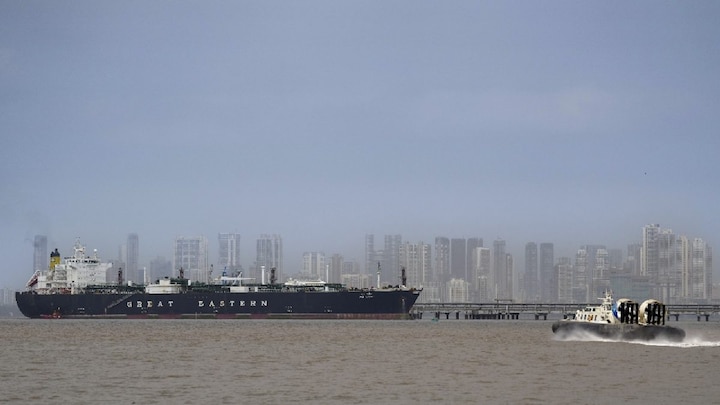
Draft legislation approves a two‑million‑dollar charge per vessel for controlled transit, with revenues designated for post‑conflict rebuilding.
Background to the Toll Initiative
The narrow sea lane that threads between the Arabian Peninsula and Iran, known as the Strait of Hormuz, has long served as one of the world’s most heavily trafficked chokepoints for oil and commercial cargo. In recent weeks, the geopolitical atmosphere surrounding the waterway has grown increasingly volatile. The United States, under the leadership of President Donald Trump, announced an extension of a two‑week period for a full‑scale military operation aimed at securing maritime safety. In response, Iran, invoking the parameters of a newly negotiated ceasefire framework, introduced a policy that would levy a substantial fee on every vessel that seeks to traverse the critical passage.
The policy is framed as a “controlled transit” system, a term that signals a regulated passage coordinated directly with the Iranian armed forces. This coordination is intended to ensure that each ship conforms to a set of predefined security protocols before being permitted to navigate the strait. By turning the transit process into an organized, fee‑based service, Iran aims to formalise the flow of maritime traffic while simultaneously generating a new source of revenue.
Legislative Process and Formalisation
Iran’s Parliament convened to consider a draft bill that would codify the two‑million‑dollar charge as a statutory requirement for any ship wishing to pass through the Strait of Hormuz. After deliberation, the parliamentary body approved the draft legislation, thereby granting it official status. The passage of the bill signifies a decisive step toward institutionalising the fee structure, moving the concept from a temporary wartime measure to a permanent element of Iran’s maritime policy.
According to reports from the news agency Gree, the controlled‑transit system will be overseen by the Iranian armed forces, which will manage the scheduling, inspection, and verification of compliance for each vessel. The involvement of the armed forces underscores the dual nature of the policy: it is both a security mechanism and an economic instrument.
Financial Objectives and Allocation of Revenue
The designated fee of two million dollars per ship is not intended as a punitive measure but rather as a financial lever to support Iran’s reconstruction efforts. The revenue generated from the tolls is earmarked for rebuilding infrastructure and public services that suffered damage during the recent strikes carried out by United States forces and Israeli forces. By linking the toll directly to reconstruction, Iran positions the policy as a self‑financing solution that reduces reliance on external aid or borrowing.
Media reports indicate that the funds collected will be channeled into projects that restore essential facilities, repair damaged ports, and rebuild community assets that were impacted by the attacks. The focus on reconstruction reflects a broader strategic aim: to demonstrate resilience in the face of external aggression and to showcase Iran’s capacity to fund its own recovery through sovereign means.
Operational Mechanics of Controlled Transit
Under the controlled‑transit arrangement, each vessel that approaches the Strait of Hormuz will be required to submit documentation and payment details well in advance of its scheduled passage. The Iranian armed forces will review the submitted information, conduct any necessary inspections, and assign a specific time window for transit. This process is designed to minimise the risk of unauthorized or unsanctioned movements, thereby enhancing maritime security for all parties operating in the region.
The fee structure is uniform, applying equally to commercial tankers, cargo ships, and other types of maritime traffic. By standardising the cost, Iran seeks to eliminate any perception of preferential treatment and to maintain a level playing field for all shipping entities that rely on the strait for global trade.
In practice, the controlled‑transit system will function as a queue‑based scheduling platform, where ships are allotted slots based on their readiness to comply with the payment and security requirements. This approach is intended to reduce congestion, prevent accidental collisions, and ensure a smooth flow of vessels through the narrow waterway.
Strategic Implications for Regional Stability
The introduction of a financial barrier to passage through the Strait of Hormuz carries significant strategic weight. On one hand, the policy reinforces Iran’s claim to sovereign control over its territorial waters and demonstrates a willingness to monetise that control in a way that benefits national reconstruction. On the other hand, the fee could be perceived by international shipping companies and foreign governments as an additional cost burden that may affect global shipping rates and insurance premiums.
From a security perspective, the involvement of the Iranian armed forces in the transit process signals a heightened level of vigilance. By embedding the toll within a broader security framework, Iran aims to deter potential hostile actions while simultaneously asserting its right to regulate traffic in accordance with international law.
Furthermore, the policy aligns with the broader ceasefire framework that was recently negotiated. The toll serves as a fiscal component of that framework, translating the abstract notion of a ceasefire into a tangible, revenue‑generating mechanism that directly supports post‑conflict recovery.
International Reaction and Commercial Considerations
Industry observers have noted that the two‑million‑dollar levy represents a substantial increase in operating costs for vessels that regularly traverse the Strait of Hormuz. Shipping lines that depend heavily on the passage for the movement of oil and goods will need to factor the new expense into their logistical planning and pricing models. While the exact impact on freight rates remains to be quantified, the added cost is expected to be reflected in the price of commodities that travel through the waterway.
Foreign governments and international organisations that monitor maritime safety have expressed interest in the implementation details of the controlled‑transit system. Their primary concerns revolve around ensuring that the new arrangement does not unduly disrupt global trade flows or compromise the principle of free navigation in international waterways.
Despite these concerns, the policy’s proponents argue that the controlled‑transit system offers a clear procedural pathway for vessels to obtain safe passage, thereby reducing uncertainty and enhancing predictability for commercial operators. By providing a structured timetable and a transparent fee schedule, Iran endeavors to create an environment where shipping companies can plan with confidence, even in a heightened security context.
Conclusion: A Dual‑Purpose Policy in a Complex Geopolitical Landscape
Iran’s decision to impose a two‑million‑dollar charge on each vessel navigating the Strait of Hormuz reflects a multifaceted strategy that intertwines security, economics, and post‑conflict reconstruction. The controlled‑transit system, overseen by the Iranian armed forces, is designed to regulate maritime traffic in a manner that safeguards national interests while generating a reliable stream of revenue.
The allocation of toll proceeds toward rebuilding efforts underscores Iran’s determination to restore damaged infrastructure and public services without reliance on external financial assistance. Simultaneously, the policy conveys a message of sovereignty, signalling to the international community that Iran will actively manage and monetise the use of its strategic waterways.
As the global shipping community adapts to the new cost structure, the broader implications for regional stability, trade dynamics, and diplomatic relations will continue to evolve. The two‑million‑dollar toll, embedded within a controlled‑transit framework, stands as a testament to Iran’s resolve to turn a challenging security environment into an opportunity for national renewal.