As US Vice President JD Vance lands in Islamabad for critical negotiations, social media users respond with their signature brand of "meme diplomacy."
When JD Vance stepped out of Air Force Two onto the tarmac of Islamabad International Airport, the first thing that hit my phone was not a press briefing but a flood of memes. I was sipping my chai, scrolling through Twitter, and suddenly the timeline was a collage of iPhone jokes, roadside eatery edits and witty captions about PTA approvals. It felt like the whole country had turned the visit into a giant playground, while the actual talks were happening behind closed doors.
In most cases, a diplomatic visit of this scale would dominate the news for days, but here the digital chatter was unmistakably lighter. People were not just commenting on the strategic importance of the Islamabad Talks; they were laughing about whether JD Vance’s phone would survive Pakistani customs. The contrast was striking and, honestly, a bit refreshing.
Background: Why the Islamabad Talks Matter
The Islamabad Talks are a historic effort to bring a lasting peace between United States and Iran. The agenda includes discussions on ceasefire mechanisms, trade routes, and regional security, especially after the recent flare‑ups in the Middle East. Pakistan, hosting the talks, has positioned itself as a neutral ground where both sides can dialogue without the usual pressure of larger powers.
For the ordinary Pakistani watching the news, the talks are a source of national pride. The idea that Islamabad could be the venue for something that could calm tensions across West Asia feels big. Yet, at the same time, life on the streets continues – chai stalls, traffic jams, and the ever‑present worry about whether your new smartphone is PTA‑approved.
That everyday reality seeped into the online narrative. The seriousness of United States‑Iran negotiations was filtered through the lens of daily Pakistani concerns, making the memes both relatable and oddly poignant.
Meme Diplomacy Unleashed: The First Wave
The first meme that went viral showed a screenshot of JD Vance’s iPhone displaying a ‘No Service’ sign the moment the aircraft door opened. The caption read, “JD Vance aatay huay PTA approved iPhone 17 le aana warna customs walay rok lenge – Usama ki Memes (@Usamakimemes1).” The joke was simple: in Pakistan, the PTA requires all mobile devices to be registered, and failure to do so can lead to confiscation at customs.
What made this meme click was how many of us could instantly picture the scene – the security checkpoint, the customs officer with a stern look, and the foreign dignitary fumbling for signal. The humor came from the clash of a high‑profile political figure with a mundane bureaucratic rule that ordinary Pakistanis face every time they bring a new phone.
Within hours, the meme was shared thousands of times, re‑posted on Instagram stories, and even picked up by mainstream news portals that added a “mobile‑first” angle to their coverage. It felt like the digital world was doing its own version of a press conference, but with emojis and GIFs.
Tech Humor and PTA Regulations: A Closer Look
Pakistan’s PTA registration system is something most locals know well. The rule states that any mobile device above a certain price point must be entered into a government database, otherwise customs can hold it at the border. For many, this is a routine hassle; for foreigners, it becomes punch‑line material.
Comments started rolling in, with users suggesting JD Vance should bring a “PTA‑approved iPhone 17” – a tongue‑in‑cheek way of saying the latest phone model would surely be blocked unless formally registered. Some even suggested JD Vance could simply use a basic Nokia to avoid the drama.
There were also jokes about the PTA’s logo being printed on JD Vance’s passport, or the customs officer handing him a red‑tape certificate. The satire was light, but it also subtly reminded everyone that even high‑ranking officials need to respect local regulations.
Imagined Scenes: Food, TV, and Everyday Life
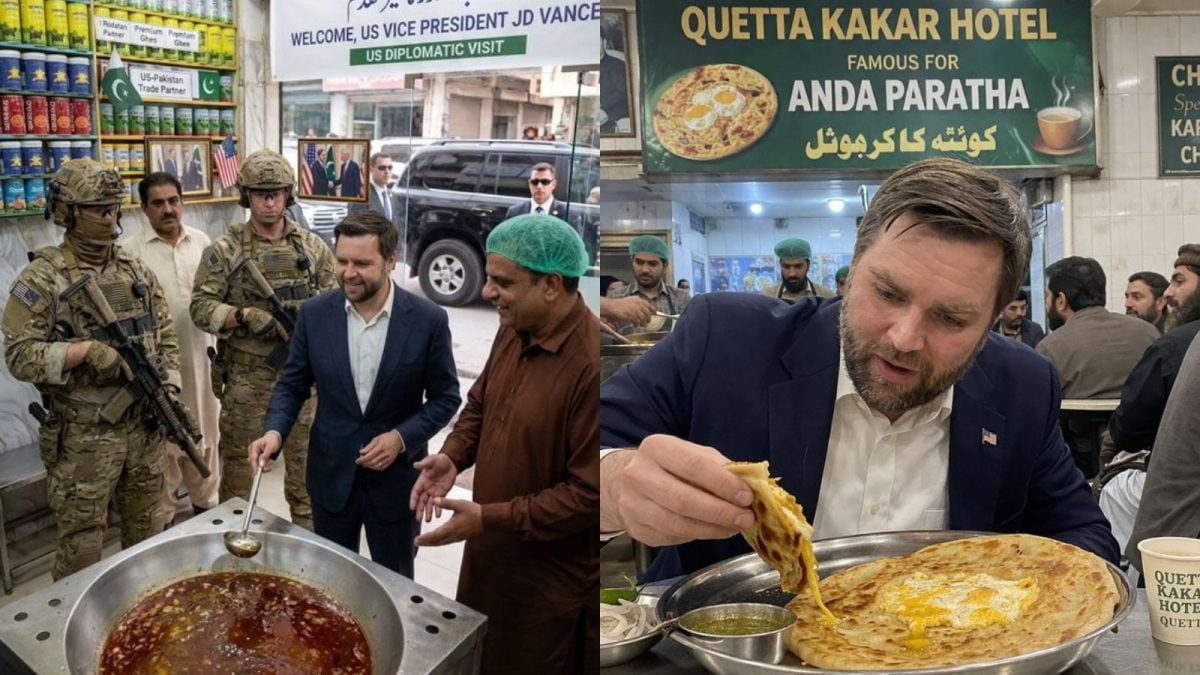
Beyond the tech jokes, the meme creators quickly moved on to food. An AI‑generated edit showed JD Vance biting into a massive anda paratha at a roadside eatery in Quetta, the steam still rising from the hot plate. The caption read, “JD Vance enjoying a legendary breakfast before talks – because no deal is sealed without a good paratha.”
Another popular image placed JD Vance at a bustling Lahore bazaar, holding a plate of nihari while a street vendor shouted, “Sir, extra mirchi!” The humor lay in the stark contrast – a senior US official in the middle of a chaotic market, slurping spicy broth.
Later, a mock interview was shared where JD Vance sat opposite a well‑known Pakistani morning‑show host. The host, in the meme, was asking “Sir, will you bring back mangoes from the US?” The absurdity of the question made everyone laugh, yet it also reflected the everyday curiosity Pakistanis have about life beyond their borders.
These edits were not just jokes; they were a way for Pakistani netizens to ‘personalise’ an otherwise distant political figure, embedding him in familiar settings that resonated with daily life.
Public Reaction and the Spread of the Meme Storm
What surprised me was how quickly the memes traveled across platforms. Within a day, the meme about PTA‑approved phones was trending on Twitter, while Instagram reels showed users acting out the customs scene with exaggerated gestures. Even TikTok creators made short skits where they pretended to be customs officers asking JD Vance for his device IMEI number.
Most interestingly, the government’s official social media handle retweeted a few of the lighter memes, showing a hint of self‑awareness. It seemed like the authorities were okay with a little humor, as long as it didn’t cross into disrespect.
Why the Memes Resonate: Cultural Context
In India and Pakistan, humor is often used as a coping mechanism for serious issues. The concept of “meme diplomacy” isn’t new; we’ve seen it during other high‑profile visits, but the JD Vance episode felt especially viral because it combined three familiar elements: bureaucracy, food, and pop‑culture references.
People relate to the PTA story because they have personally fumbled with registration forms. They relate to the food pictures because a good paratha or nihari is a point of pride, something we love to share with guests. And they relate to the TV interview satire because morning shows are a daily ritual in many households.
This blend made the memes feel like a conversation we were having in our own living rooms, not a distant news report. It turned a geopolitical event into a shared joke, making the whole episode more accessible.
Impact on the Narrative of the Islamabad Talks
While the meme storm didn’t change the official agenda of the Islamabad Talks, it did shape public perception. The jokes kept the conversation alive on social media, ensuring that the public remained engaged, albeit in a lighter tone. When people see JD Vance’s imagined selfie eating a paratha, they are more likely to discuss the actual talks afterward.
Some analysts even suggested that the humor softened the atmosphere, making it easier for JD Vance to interact with Pakistani officials in a more relaxed setting. The underlying message was clear: respecting local customs – both literal and cultural – can go a long way.
Overall, the meme wave acted as an informal bridge between the diplomatic elite and the everyday citizen, reminding everyone that behind the official statements are real people, smartphones, and a love for good food.
Conclusion: A Light‑Hearted Lens on a Serious Encounter
Looking back, JD Vance’s visit to Islamabad will be remembered not just for the cease‑fire negotiations but also for the torrent of memes that turned a high‑stakes diplomatic mission into a nationwide chuckle. The blend of PTA jokes, AI‑crafted food scenes, and playful TV interviews captured the Indian sub‑continent’s unique ability to turn seriousness into something we can all laugh about.
In most cases, the world watches such visits with a solemn lens, but here the Pakistani internet gave us a fresh perspective – that even in the midst of global geopolitics, everyday life, food cravings, and a little bit of bureaucratic humor can still dominate the conversation.
So next time a foreign delegation lands, expect not just press briefings but also a flurry of memes, because that’s how we keep the balance between the heavy and the light, the global and the local.