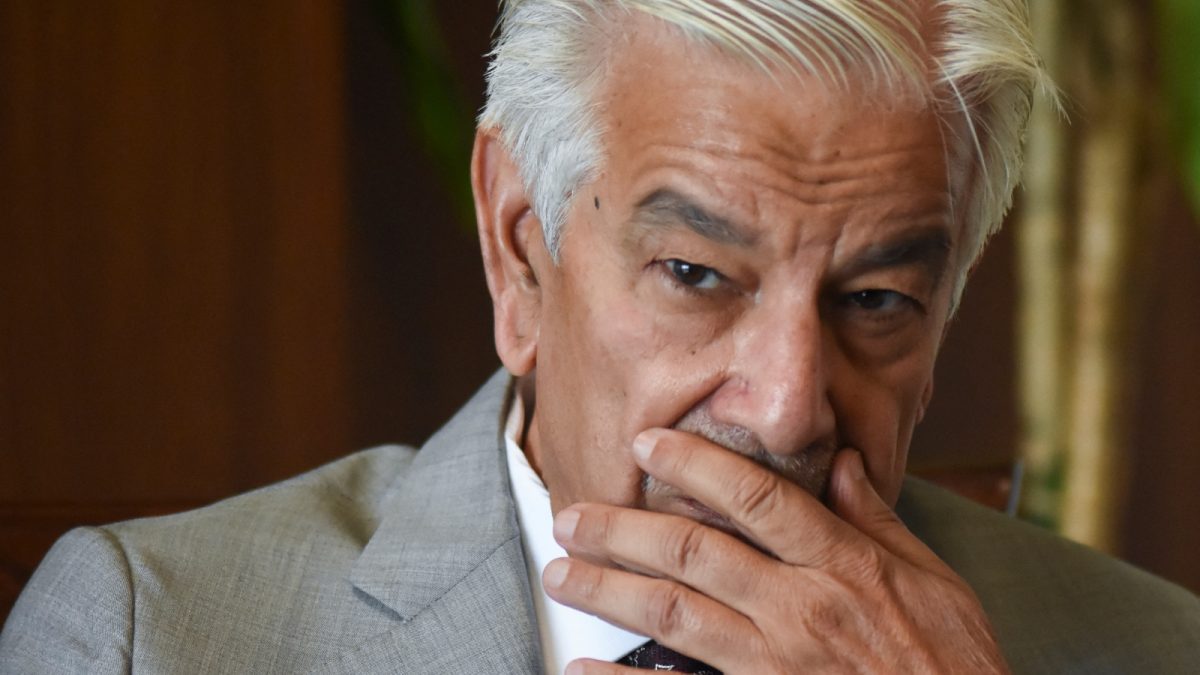
Israel’s strong reaction and doubts over neutrality have cast a shadow over Pakistan’s diplomatic moment.
What I thought would be a high‑stakes diplomatic moment for Islamabad turned into a mess after Defence Minister Khawaja Asif’s fiery comment about Israel. It has now become a big question‑mark over Pakistan’s claim to be a neutral peace broker.
On a Friday, right before the US‑Iran talks that were set to happen in Pakistan’s capital, Khawja Asif posted a series of incendiary remarks on X. The posts were later deleted after a strong backlash from Israel, but the damage was already done.
Pakistan has been praised for helping to arrange a temporary two‑week cease‑fire between the United States and Iran, and it was also preparing to host further talks over the weekend. India Today reported that Lebanon’s Prime Minister Nawaf Salam had even approached Pakistan for help in pushing for an “immediate end” to Israeli strikes.
But this fresh row has complicated that image. It raises a very important question – can Pakistan still hold the ground as a credible mediator now?
What Khawja Asif actually said and why it sparked a row
The controversy began with a series of posts by Khawja Asif on X. Even though the posts were removed later, the text had already spread far and wide.
In the first post, Khawja Asif called Israel “evil” and a “curse for humanity”. He also claimed that “genocide is being committed in Lebanon” even while peace talks were in progress in Islamabad.
He wrote, “Innocent citizens are being killed by Israel, first Gaza, then Iran and now Lebanon, bloodletting continues unabated.”
The most controversial line was, “I hope and pray people who created this cancerous state on Palestinian land to get rid of European jews burn in hell.” This line was the one that attracted the strongest condemnation.
Even after deleting the post, the statement had already drawn strong criticism from Israel and many other quarters.
How Israel responded to the comment
Israel’s reaction was swift and firm. The office of Prime Minister Benjamin Netanyahu called the comment “outrageous”. It said a call for Israel’s annihilation could not be tolerated, especially from a country that claims to be a neutral player.
“This is not a statement that can be tolerated from any government, especially not from one that claims to be a neutral arbiter for peace,” the Prime Minister’s Office said.
Foreign Minister Gideon Sa’ar also weighed in, branding the remarks as “blatant antisemitic blood libels from a government claiming to mediate peace”. He added, “Israel will defend itself against terrorists who vow its destruction.”
Both leaders made it clear that they view the comment as a direct challenge to Pakistan’s credibility as a mediator.
A deeper trust deficit between Israel and Pakistan
The scepticism that Israel holds towards Pakistan’s mediation role is not new. Reuven Azar, Israel’s envoy to India, told NDTV that Israel does not consider Pakistan a credible intermediary in peace talks.
The latest statements by Foreign Minister Gideon Sa’ar seem to reinforce that stance, suggesting that Israel’s position towards Pakistan is hardening.
United States reaction and wider diplomatic fallout
The United States also commented on the matter, adding another layer of complexity. In a separate post, the US official said, “Equating Israel stopping Hezbollah, Hamas, Houthis & their ‘Mother Ship’ Iran is equating John McLane & Hans Gruber in that great Christmas movie classic ‘Die Hard.’ People who support the terrorists over Israel are sick & demonic. Full stop.”
That statement, though not directly naming Pakistan, showed that the US was also watching the fallout closely and was not happy with the tone of the debate.
Did Asim Munir intervene to manage the crisis?
Inside Pakistan, the controversy has also opened up discussions about the internal power dynamics. Some sources say that the incident highlights a widening civil‑military divide that could affect Pakistan’s role in the ongoing US‑Iran mediation.
According to these sources, Pakistan’s ministers were “behaving irresponsibly”, and Washington is increasingly seeing Islamabad as unable to keep its own leadership in check.
They warned that this could further undermine Pakistan’s credibility as a mediator and might even risk disrupting the fragile cease‑fire process.
Why Pakistan’s mediation role is now under scrutiny
The timing of the controversy could not be worse. Pakistan is not just hosting the talks; it has also been lauded for helping to set up the temporary cease‑fire between Washington and Tehran.
Khawja Asif’s remarks have made the situation more complicated in a few ways.
- First, they raise doubts about Islamabad’s ability to stay neutral – a must‑have quality for any credible mediator.
- Second, the episode comes at a time when the cease‑fire itself is already being questioned. Pakistan Prime Minister Shehbaz Sharif suggested that Lebanon was part of the aGreement, a claim that both the United States and Israel dismissed.
- Third, Israeli Prime Minister Benjamin Netanyahu said there is “no cease‑fire in Lebanon” and that military operations against Hezbollah would continue with “full force”, even as he authorised direct negotiations with Lebanon “as soon as possible”.
All of this shows that the cease‑fire is being interpreted differently by different players, even before fresh talks kick off.
What this means for the US‑Iran talks in Islamabad
The immediate worry is whether the diplomatic fallout will affect the US‑Iran talks. On paper, the cease‑fire is still in place, but it is already showing signs of strain.
There are tensions over oil flows through the Strait of Hormuz, and Israeli strikes in Lebanon keep adding pressure to an already fragile arrangement.
The United States has accused Iran of not honouring commitments related to easing oil transit through the strait, saying Tehran is doing a “very poor job”.
Iran’s state‑affiliated Tasnim News Agency has hinted that Tehran may pause dialogue in Islamabad with the United States unless Israeli military actions in Lebanon are halted.
In this environment, Pakistan’s ability to act as a bridge between Washington and Tehran becomes even more critical – and more difficult.
Looking ahead – the road to peace remains rocky
All said, the controversy surrounding Khawja Asif’s comment has put Pakistan’s mediating ambitions under a harsh spotlight. Israel’s strong backlash, the United States’ pointed remarks, and the already‑existing trust deficit between Israel and Pakistan combine to make the upcoming talks a real challenge.
For Pakistan, the lesson may be to keep the rhetoric tighter and focus more on quiet diplomacy rather than public flame‑throwing. The region, meanwhile, continues to look for any avenue that might keep the fragile cease‑fire alive.
Only time will tell whether Pakistan can regain its image as a neutral peace‑broker or whether the damage from Khawja Asif’s “burn in hell” remark will linger for months to come.