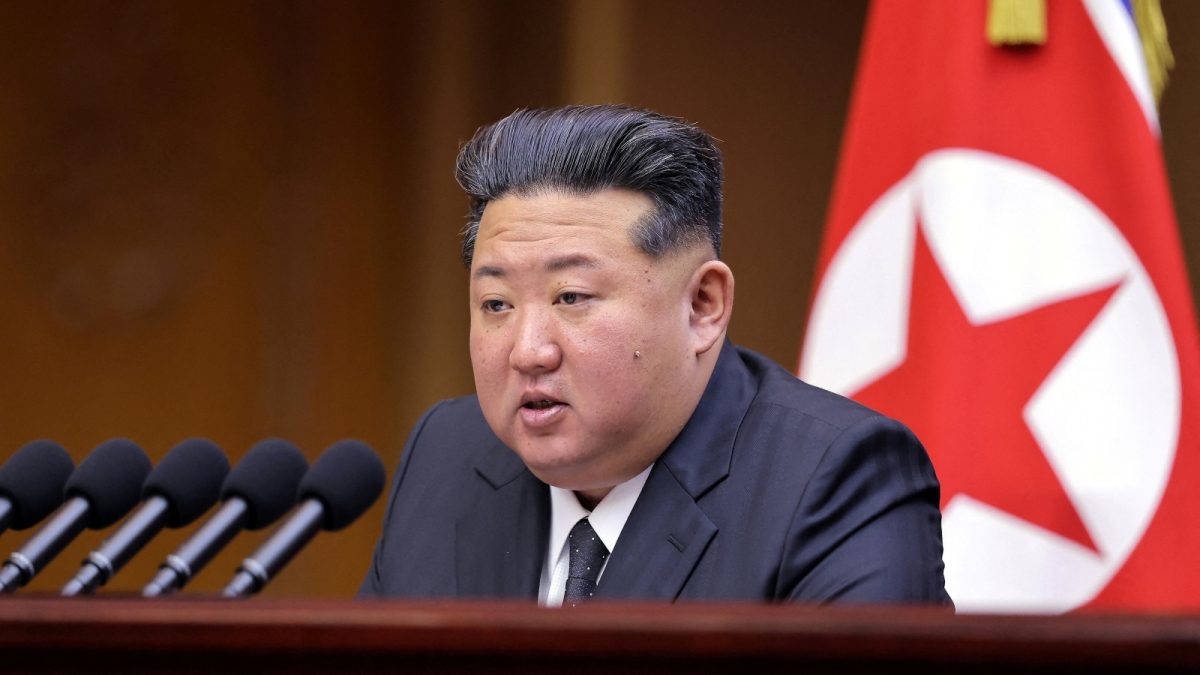
First Impressions of the DMZ – Calm on the Surface, Tension Below
Let me start by saying that walking around the Demilitarised Zone felt oddly peaceful, almost like a quiet park you might find near a railway crossing back home in Uttar Pradesh. You know, the kind of place where you expect loud horns, but instead there’s just a gentle breeze and a couple of tourists snapping photos. That calm, however, is a bit of a mirage. Underneath, there is a thin thread of tension that could snap the moment someone misreads a signal. As someone who spent years watching the security briefings in Seoul, I can tell you the city is basically on a permanent standby mode.
The Korean peninsula, technically still at war since the 1950s, has become one of the world’s most volatile fault lines. The two Koreas used to talk, even if it was just a few formal meetings, but today that door is almost shut. Pyongyang has been firing off more missiles – from hypersonic glide vehicles to cruise missiles and the ever‑scary inter‑continental ballistic missiles – and each test feels like a new headline in the newspapers I read over my morning chai.
Seoul’s Worries About Pyongyang’s Growing Missile Arsenal
When I was asked about how nervous Seoul is about the missile build‑up, my answer was simple: very. South Korea has beefed up its air‑defence systems, radar networks and missile‑intercept capabilities, but the fear is not just about the hardware. It’s about the unpredictability of a regime that seems to thrive on surprise. Imagine a neighbour who keeps extending his fence at night without telling anyone – it makes you wonder what he’s planning.
The reality is that each new test from Pyongyang adds another layer of complexity. Hypersonic glide vehicles, for instance, travel so fast that they can outrun many of our current defence systems. Meanwhile, the cruise missiles can be launched from submarines, making them hard to track. And the ICBMs? They are more of a political message than a direct threat to Seoul, but the message is clear – Pyongyang is not backing down.
Seoul’s strategy, therefore, is a tightrope walk: stay vigilant, keep the military ready, yet try to avoid any move that could be seen as provocation. It’s a bit like walking through a crowded market with a full glass of water – you have to move carefully, or you’ll spill it and cause a mess.
Is There Any Real Hope for Dialogue?
Predicting North Korea’s next move is like trying to guess the next Bollywood hit – you never really know. The regime enjoys playing a game of defying expectations. Right now, the rhetoric coming from Pyongyang is very hard‑line, which makes many experts, including myself, sceptical about any breakthrough in the near future.
But I wouldn’t say the door is totally closed. There are still small openings. High‑level talks between Washington and Pyongyang could, if revived, act like a catalyst for inter‑Korean talks. The logic is simple: if the US can get a foot in the door, it may encourage a wider conversation that includes Seoul.
North Korea’s leadership is fundamentally pragmatic. While preserving the regime’s survival is their top priority, they also feel the pinch of sanctions and economic hardship. This gives them a reason to consider talks that could ease those pressures, especially if there’s a chance to get some relief on sanctions or aid for their people. So, any gesture that appears to benefit ordinary North Koreans could be a lever for dialogue.
That said, skipping a UN resolution or making a symbolic concession without a clear benefit is unlikely to sway Pyongyang. The regime is currently more concerned with its internal insecurities than external goodwill. For Seoul, supporting UN resolutions remains the right thing to do, not just for moral reasons but also to keep the international community watching and applying pressure.
Identity Shift Among North Korean Youth – A Generational Divide?
The longer the peninsula stays divided, the deeper that fissure becomes. Back in 1945, the split was imagined as a temporary inconvenience, but decades later, it feels like a permanent wall. Fewer families now have relatives across the border, and even the Korean language spoken on either side is drifting apart, slowly picking up different vocabularies and accents.
What worries me most is the way the North is actively trying to rewrite its identity for its younger generation. Schools are teaching a version of history that erases any shared Korean narrative, pushing the idea that South Korea is a completely different nation. It’s like when you hear older relatives in a village dismissing the newer generation’s music tastes as “not our culture”. Over time, this creates a generational divide that can be hard to bridge.
If the two sides keep moving further apart, the conflict becomes more than a political disaGreement – it becomes a cultural and emotional chasm. Without some form of people‑to‑people exchange – be it student programmes, cultural festivals, or even joint sports events – the gap will just widen.
Middle‑East Turmoil and Its Ripple Effects on Asian Security
Conflicts far away, like the ongoing standoff involving Iran, have a way of spilling over into Asian security calculations. When oil prices jump because of Middle‑East instability, countries like India and South Korea feel the pinch at the pump. Energy security, after all, is a big part of any nation’s defence planning.
Even though the geography seems far, the underlying principle is the same – a rule‑based world order is being tested. Nations that share values of democracy, human rights and market economies, such as India and South Korea, have a role to play in upholding that order. It’s not just about sending troops or weapons; it’s about diplomatic engagement, supporting peace processes and offering economic help where possible.
Personal Take on the Iran Conflict – Did the US Misread the Situation?
Honestly, when the Iran flare‑up began, I thought it would burn out quickly. Domestic pressures both in the US and Iran make a long‑lasting war difficult to sustain. Most countries lack the appetite for a protracted conflict that would drain resources and public support.
That said, the US messaging at times seemed a bit inconsistent – sometimes firm, sometimes tentative – which gave the impression that the administration hadn’t fully anticipated Tehran’s response. But policy making isn’t a straight line; it twists and turns with new intelligence and on‑ground realities.
We’re still early in the saga, so drawing firm conclusions would be premature. We need to watch how the diplomatic channels evolve, not just in Washington, but also in Jerusalem and Tehran, before we can say for sure how the conflict will settle.
Semiconductor Collaboration – India and South Korea’s Shared Future
Last week I toured Samsung’s headquarters, and it struck me how central semiconductors are to our modern lives – from smartphones to smart cars. AI is reshaping everything, and chips are the backbone of that transformation.
India brings a massive market, a vast pool of software talent, and the scale to run huge data centres. South Korea, on the other hand, offers deep expertise in chip design, advanced manufacturing and a proven track record of high‑quality production. If the two countries can align their strengths, we could not only secure supply chains but also drive the next wave of AI‑powered innovations.
Think of it like a partnership between a farmer who owns fertile land (India) and a skilled chef who knows how to turn that produce into a gourmet dish (South Korea). Together, the end result is something neither could achieve alone.
Why the India‑South Korea Partnership Still Feels Under‑Leverage
There’s no shortage of potential when it comes to India‑South Korea ties, yet a lot of it remains untapped. Part of the gap comes from differing strategic priorities. South Korea is heavily focused on its immediate neighbourhood – the US, Japan, China and Russia – given the security dynamics of the peninsula. India, meanwhile, pursues a broader, multi‑aligned foreign policy, looking beyond just one region.
Despite this, momentum is building. Both governments are slowly making it easier for students, researchers and businesses to move across borders. Private sector initiatives, especially in technology and renewable energy, are showing the first signs of real collaboration.
For the partnership to truly take off, we need more than good intentions. We need concrete projects, joint ventures and a willingness to navigate the bureaucratic red‑tape that often slows things down. When that happens, the relationship can really become a win‑win for both nations.