Why I started paying attention to the IT worker issue in Hinjewadi
Honestly, I never thought I’d be that person scrolling through the latest news India about a labour minister’s meeting. It all began when a friend from Pune’s Hinjewadi IT Park mentioned that several of his colleagues were getting weird calls from HR asking them to resign. He was pretty upset and asked me if I had heard anything. That’s when I started digging, and I realised this wasn’t an isolated incident. So, I decided to follow the story, and what I discovered turned into a pretty eye‑opening journey.
Breaking news: Adv. Aakash Fundkar orders a dedicated study group
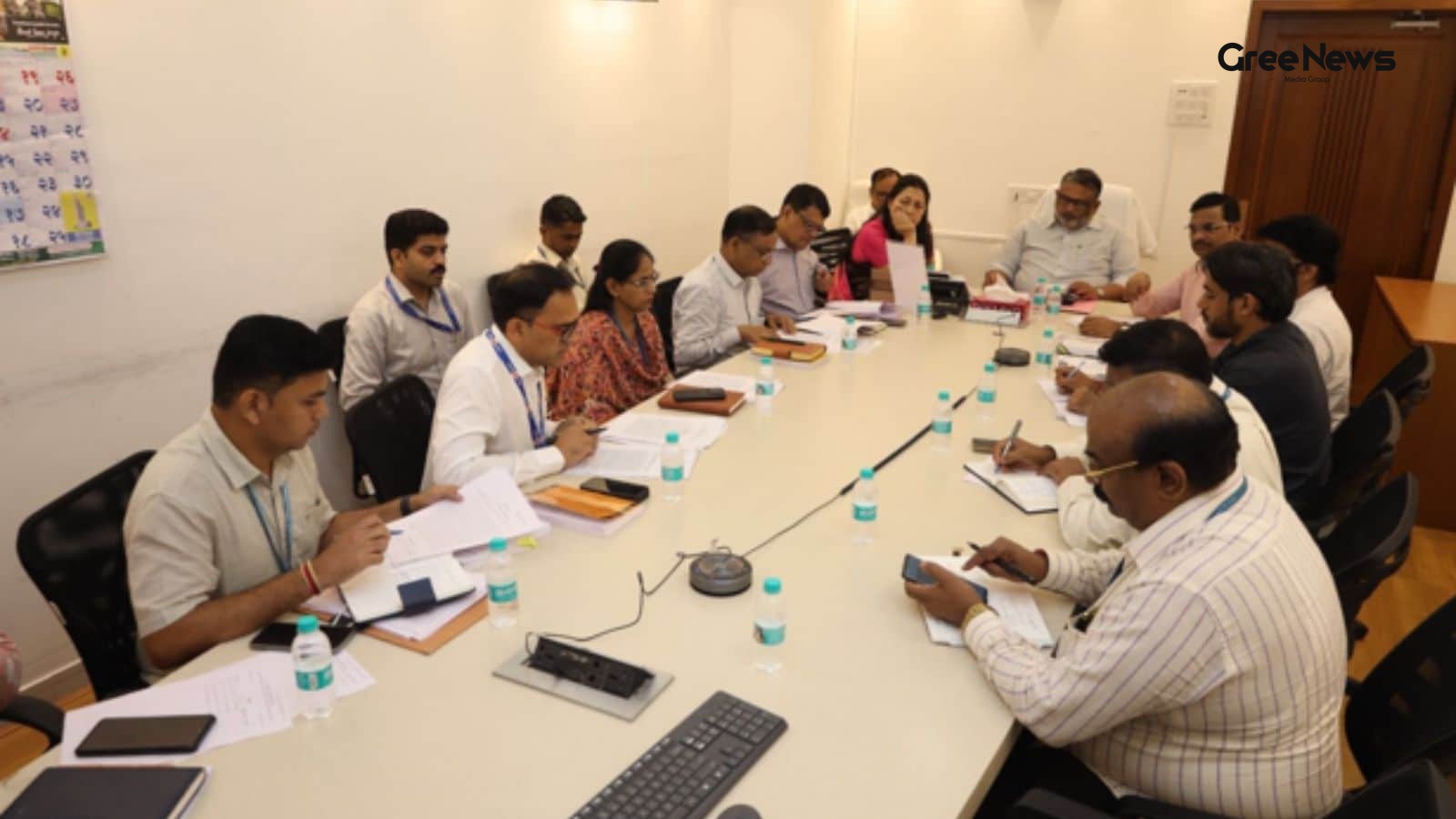
During a recent high‑level meeting at Mantralaya, Adv. Aakash Fundkar, the Maharashtra Labour Minister, gave clear instructions to set up a study group that would look into every nook and cranny of the IT workforce’s grievances in Hinjewadi. The meeting was not just a dull bureaucratic affair it had MLA Shankar Jagtap, Additional Chief Secretary I.A. Kundan, Labour Commissioner H.P. Tummod, Deputy Secretary Swapnil Kapadnis and even a few union representatives in the room. What caught my attention was the minister’s tone he wasn’t just ticking a box; he sounded genuinely concerned, saying that employees must not be forced into leaving their jobs under pressure.
What happened next is interesting the minister asked the officials to draft a detailed plan for the study group, ensuring that it would study forced resignations, Provident Fund glitches, shady placement agencies, and also launch an outreach campaign to make workers aware of their rights. This whole agenda felt like a roadmap for fixing years of neglect, and it’s turning out to be one of the most talked‑about pieces of breaking news in the tech circles of Maharashtra.
Forced resignations: The hidden pressure cooker
Let me give you a real‑world flavor. A colleague of mine, Rohit, works at a mid‑size software firm in Hinjewadi. He told me that after he raised a query about his overtime pay, his manager started “friendly” meetings almost daily, subtly hinting that his future at the company might be at risk if he didn’t “consider other options”. Rohit felt cornered and eventually handed in his resignation, only to realize later that the whole process felt forced.
This kind of pressure, as Adv. Aakash Fundkar highlighted, is not just a rumor it’s being reported across several IT firms. The minister’s directive is to scrutinise each complaint meticulously, and to ensure that HR policies are transparent and free from loopholes that could be misused. In most cases, companies have kept these matters behind closed doors, but now the government wants to bring them into the open.
From a personal view, I think this is a crucial step. When employees feel they can’t speak up without fearing job loss, the entire ecosystem suffers. The study group will likely interview workers, HR heads, and maybe even conduct anonymous surveys to gauge the depth of the problem.
Provident Fund glitches: A bureaucratic nightmare
Another issue that keeps popping up in the trending news India feeds is the Provident Fund (PF) mess. Many IT workers have PF accounts still linked to their previous employers because the new company hasn’t completed the delinking formalities. This leads to delayed contributions and, in worst‑case scenarios, loss of interest earnings.
During the meeting, Adv. Aakash Fundkar specifically asked the officials to coordinate with the PF office and fast‑track the delinking process. He also instructed them to send proper communication to the affected workers, something that, from my experience, never really happens. I once helped a friend from Aurangabad who was stuck with his PF for over a year because the HR department didn’t file the paperwork on time.
The minister’s call for a systematic approach could mean setting up a dedicated helpline, perhaps even an online portal where employees can check the status of their PF account. If it works, this could become a model for other states too.
Placement agencies under the Shop Act: Checking the loopholes
Now, here’s something that many of us never think about the placement agencies that operate under the Shop Act. These agencies often act as middlemen, charging hefty fees, and sometimes bypassing the proper recruitment standards. The minister highlighted that several irregularities have been reported, and he wants the study group to verify the documentation and compliance status of these agencies.
Take the case of a friend who secured a job through a local agency. He later discovered that the agency never registered under the appropriate labour laws, which meant that there was little recourse when the employer delayed salary payments. This is exactly what the study group needs to address ensuring that agencies are transparent, licensed, and bound by the same rules that regular employers follow.
In most cases, the government’s crackdown on such agencies could protect a huge number of fresh graduates who are desperate to get into the IT field. It’s a step that could stop many from falling prey to exploitation.
Awareness campaign: Making sure workers know their rights
One of the biggest gaps, as Adv. Aakash Fundkar noted, is the lack of awareness among IT workers about the grievance redressal mechanisms available to them. He proposed a dedicated outreach programme that would educate employees about the Labour Department’s CIS (Complaint Information System) platform, among other things.
This caught people’s attention because I’ve seen many senior engineers who still rely on informal chats with HR instead of filing official complaints. The outreach could involve webinars, pamphlets, and even QR‑coded posters in office cafeterias. Imagine walking into your office, scanning a QR code, and instantly knowing how to lodge a complaint if you ever face unfair treatment.
Personally, I think this is the most powerful part of the initiative. When workers know their rights, they can stand up against unfair practices. It also creates a culture of accountability, which is essential for sustainable growth in the tech sector.
What the study group will actually do
The study group, as per the minister’s orders, will be comprised of officials from the Labour Department, representatives from the IT industry, and members of workers’ unions. Their job is to go through documented complaints, conduct field visits to Hinjewadi IT Park, and maybe even hold focus‑group discussions with employees from different companies from startups to the big MNCs.
What’s interesting is that the group will also look at the existing legal framework and suggest amendments where needed. This could mean drafting new guidelines for termination procedures, setting timelines for PF delinking, and creating a licensing framework for placement agencies.
Once the assessment is complete, the group is expected to submit actionable recommendations. These will likely include policy changes, enforcement mechanisms, and a roadmap for the awareness campaign. The whole thing could take a few months, but the momentum that’s building right now feels like it could push through fast.
Potential impact on the IT sector and beyond
If the study group’s recommendations are adopted, we could see a shift in how IT companies in Maharashtra handle employee relations. Companies might introduce clearer resignation policies, set up internal grievance cells, and ensure PF accounts are updated in real time. For workers, it could mean a safer environment where they can focus on innovation rather than worrying about unfair termination.
Moreover, this could set a precedent for other states. The tech industry is pan‑India, and measures that work in Maharashtra could be replicated elsewhere. In the age of viral news, such a development can quickly become a model for regulatory reforms across the country.
From my personal viewpoint, the whole scenario feels like a breath of fresh air. The IT sector has been the backbone of Maharashtra’s economy for years, but growth should never come at the expense of employee welfare. Adv. Aakash Fundkar’s proactive stance could redefine the balance between profit and people.
Final thoughts why this matters to all of us
Even if you don’t work in IT, the story resonates because it touches on a larger theme: the need for strong labour protections in fast‑growing sectors. The fact that this is catching the eye of the media as part of India updates shows that the public is hungry for news that impacts real lives.
So, next time you hear about the latest news India on your WhatsApp or read a trending news India article about Maharashtra’s tech hub, remember the faces behind those headlines the engineers, the fresh graduates, the HR officers trying to do the right thing. Their experiences will shape how the state’s policies evolve, and perhaps, how the entire country approaches employee welfare in the digital age.
What I’m taking away from all this is simple: whenever a government step feels like it’s actually listening, it’s worth paying attention. And who knows? Maybe the next big breakthrough you hear about will be a policy that protects you or someone you know.