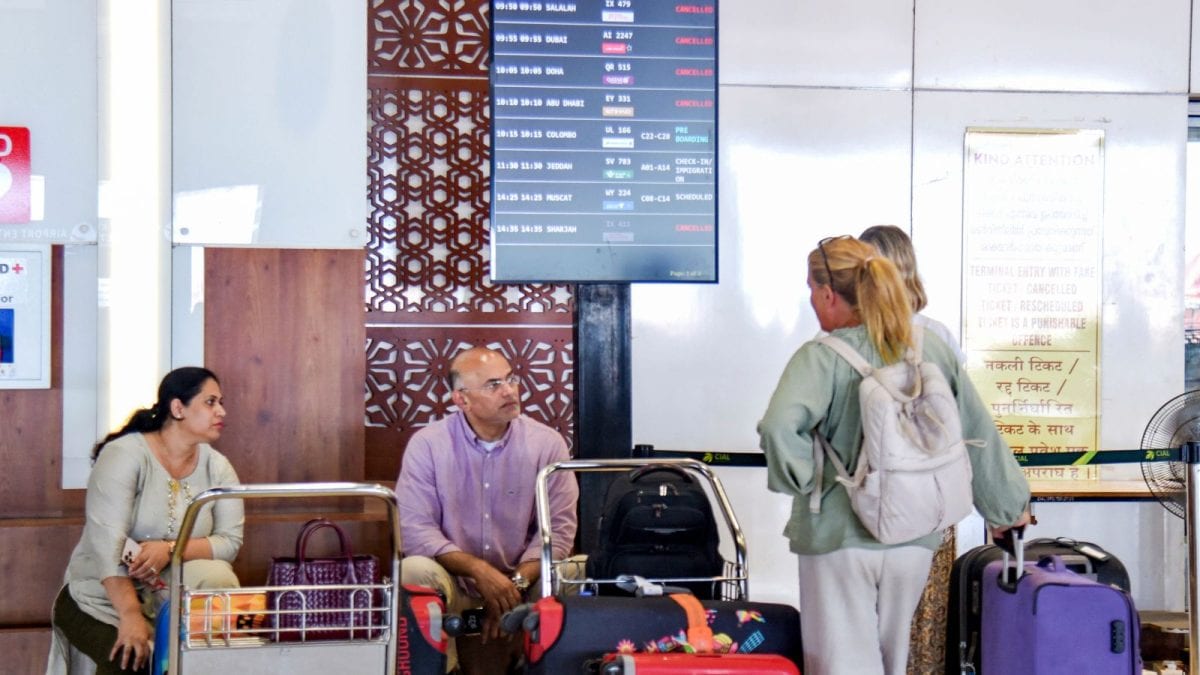
Airspace is slowly reopening and "controlled corridors" are in effect but with 40% of fleets still grounded and high price of tickets, the regional travel map is a tricky maze
The announcement of a two‑week conditional cease‑fire between the United States and Iran introduced a tentative breath of optimism for a region that has functioned under strict lockdown for months. Yet for the millions of travelers who rely on the world’s busiest hubs, the cessation of hostilities does not instantly translate into a return to punctual, regular service.
While the guns have paused, the logistical effort required to untangle the most intricate airspace on the planet is only now gaining momentum. From cancelled flights to 24‑hour detours, the present reality for passengers reflects a complex blend of progress and lingering constraints.
Even after the cease‑fire began, aviation authorities have proceeded with extreme caution, balancing safety, security and the need to restore connectivity.
Controlled Corridors and Restricted Airspace
The United Arab Emirates, Qatar and Saudi Arabia have opened their skies partially, limiting commercial traffic to designated, monitored routes known as controlled aviation corridors. Within these corridors, flight paths are closely supervised, and aircraft are required to follow strict altitude and timing guidelines.
Iran, Iraq, Bahrain and Kuwait continue to enforce largely closed or heavily restricted airspace. Kuwait International Airport remains on hold following a drone strike that damaged Terminal 1, further complicating any potential resumption of service.
Airlines such as Lufthansa and KLM have been compelled to detour through Egypt or Central Asia, adding up to two extra hours to flight durations. The additional fuel consumption is reflected directly in higher passenger fares, as carriers pass the surcharge onto travelers.
Airline Status Tracker: Who Is Flying?
Despite the cease‑fire, major Middle Eastern carriers have not yet overhauled their schedules. Instead, they are gradually scaling back toward pre‑conflict levels, monitoring demand and security developments closely.
Emirates is operating at roughly 70% of its normal capacity. The airline continues to run a reduced schedule, and passengers are strongly advised to verify flight status even after completing check‑in procedures.
Etihad maintains service to 80 destinations from its hub in Abu Dhabi, representing about 65% of its pre‑conflict network. The carrier is cautiously expanding its operations as conditions permit.
Qatar Airways is operating at 40% capacity but is actively working to restore service to more than 120 destinations by mid‑year. The airline’s recovery plan includes a phased increase in flight frequencies as demand returns.
The “No‑Fly” List: Long‑Term Suspensions
Several leading international airlines have judged the two‑week truce to be too fragile for an immediate resumption of full operations. Consequently, these carriers have opted to keep a number of routes suspended well beyond the cease‑fire period.
- British Airways: All flights to Amman, Bahrain, Dubai and Tel Aviv are cancelled until the end of May.
- Lufthansa: Routes to Abu Dhabi, Riyadh and Tehran remain suspended until late October.
- Cathay Pacific: All flights to and from Dubai and Riyadh are cancelled until the end of May.
- KLM: All flights to Dubai, Riyadh and Dammam are cancelled until mid‑May.
- Virgin Atlantic: The London‑Dubai service is suspended for the remainder of the winter season.
Should Travelers Head to the Middle East Right Now?
- Expect technical stops: Low‑cost carriers may schedule unscheduled fuel stops in Southern Europe to accommodate longer flight routes caused by detours.
- Check flight status after check‑in: Emirates and other carriers advise passengers to verify flight status even after completing the check‑in process, as the regional situation remains fluid.
Impact on Ticket Prices and Passenger Experience
The partial reopening of airspace has not alleviated the cost pressure on travelers. Fuel surcharges imposed by airlines such as Lufthansa and KLM have been passed directly to passengers, resulting in ticket prices that are substantially higher than pre‑conflict levels. Moreover, the limited availability of seats on carriers like Emirates, Etihad and Qatar Airways has created competitive demand, further driving up fares.
Passengers who do manage to secure a seat should be prepared for longer travel times. Detours through alternate corridors add time not only to the flight itself but also to ground operations, as aircraft may require additional checks after extended routes. The combination of extended flight duration and higher fuel consumption translates into a noticeable increase in overall travel time.
Operational Adjustments by Airports
Airports across the United Arab Emirates, Qatar and Saudi Arabia have implemented a series of operational changes to accommodate the controlled corridors. Ground handling teams are now synchronized with air traffic control to ensure swift turn‑arounds, while security personnel remain on high alert for any potential resurgence of hostilities.
In contrast, airports in Iran, Iraq, Bahrain and Kuwait have imposed stricter access controls. Limited runway availability and the need for thorough aircraft inspections before take‑off have resulted in reduced departure slots, contributing to the overall bottleneck in the region.
Future Outlook and Recovery Timeline
The durability of the cease‑fire will heavily influence the speed at which airlines can restore full schedules. If the truce holds, aviation authorities anticipate a gradual expansion of controlled corridors, eventually allowing carriers such as Lufthansa, KLM, British Airways and Cathay Pacific to resume a larger portion of their routes.
In the medium term, the goal for carriers like Qatar Airways and Emirates is to return to pre‑conflict capacity levels, which would involve increasing flight frequencies, reopening additional destinations and reducing ticket premiums. The roadmap to full recovery is contingent upon sustained peace, the lifting of airspace restrictions by Iran, Iraq, Bahrain and Kuwait, and the gradual re‑establishment of trust among airline operators and regulatory bodies.