NHS Stands Resilient Amid Ongoing Resident Doctor Walkout, Says Sir Jim Mackey
Sir Jim Mackey reports that the health service is managing the latest six‑day resident doctor strike with minimal disruption, while leaders from the British Medical Association, Health Secretary Wes Streeting, and Conservative figure Kemi Badenoch present contrasting viewpoints.
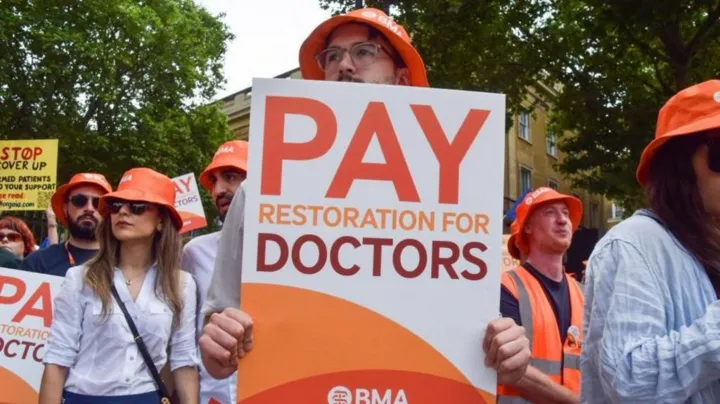
The National Health Service (NHS) is, at present, navigating the challenges posed by the latest resident doctor walkout with a deGree of composure that Sir Jim Mackey describes as “as good a place as we could hope.” The strike, now in its sixth day, marks the fifteenth industrial action undertaken by Resident doctors in the ongoing remuneration dispute.
Operational Adjustments Across Hospitals
From the moment the walkout began, hospitals across England have activated contingency plans designed to preserve urgent and emergency care. Senior clinicians have been redeployed to fill gaps left by the absence of Resident doctors. This rapid mobilisation of senior medical staff has allowed the majority of emergency departments to remain open and functional.
Despite the swift response, the redistribution of manpower has necessitated the postponement of a proportion of elective procedures and pre‑planned treatments. While the NHS reports that most scheduled activities continue, the unavoidable cancellation of some operations underscores the delicate balance between maintaining essential services and accommodating the reduced workforce.
The logistical challenge of reshuffling rotas after a busy holiday period has placed additional pressure on hospital administrators. Sir Jim Mackey notes that “it is tough for staffing picking up the strain,” highlighting the compounded difficulty of aligning shift patterns in the wake of a demanding holiday weekend.
Scale of the Resident Doctor Workforce
Resident doctors constitute nearly half of the entire medical workforce within the NHS. Their sheer numbers mean that any sustained absence has an outsized impact on day‑to‑day service delivery. However, it is noteworthy that approximately one‑third of Resident doctors are not members of the British Medical Association (BMA), indicating a deGree of diversity in representation within the profession.
The breadth of the strike’s impact is therefore felt across a wide array of specialties and locations, from tertiary referral centres to community hospitals. The national nature of the walkout amplifies the importance of coordinated response strategies, as each institution seeks to mitigate service disruption while adhering to patient safety standards.
Perspectives from the British Medical Association
The British Medical Association has characterised the industrial action as “regrettable,” while simultaneously attributing the breakdown to an insufficient offer from the government. The union contends that, despite a cumulative pay rise of 33 % over the past four years, Resident doctors remain effectively 20 % poorer in real terms compared with earnings in 2008 once inflation is accounted for.
Dr Jack Fletcher, the elected leader representing Resident doctors within the BMA, expressed personal sorrow over the necessity of the walkout. Dr Jack Fletcher described the decision to strike as “entirely avoidable,” warning that a continued perception of doctors as a mere inconvenience rather than a vital asset could precipitate a chronic shortage of medical professionals within the NHS.
In Dr Jack Fletcher’s view, the underlying issue is not simply one of pay, but also of how the profession is valued and treated by policymakers and the broader public. The sentiment underscores a broader narrative that professional respect and adequate remuneration are intertwined components of a sustainable health‑care system.
Government Position and the “Generous Deal” Assertion
Health Secretary Wes Streeting has defended the government’s position, stating that Resident doctors have already been offered a “generous deal.” In addition to the previously granted pay increases, Wes Streeting highlighted a commitment to expand training places for future doctors and to absorb out‑of‑pocket expenses such as examination fees.
Wes Streeting further acknowledged the public’s frustration, noting that “people and patients are understandably fed up.” This admission recognises the emotional toll that prolonged industrial action can have on both service users and providers, while also reaffirming the government’s willingness to engage in dialogue aimed at reaching a mutually acceptable resolution.
The health secretary’s emphasis on additional training positions reflects a strategic effort to address long‑term workforce shortages, which have been a recurring theme in discussions about the sustainability of the NHS.
Political Reactions and Calls for Legislative Action
Conservative party leader Kemi Badenoch entered the debate with a stark proposal: to prohibit doctors from striking, aligning medical professionals with existing bans on police and armed forces personnel. Kemi Badenoch asserted that “Labour has chosen the unions over patients,” framing the dispute as a conflict between political allegiance and patient welfare.
This declaration has sparked a broader conversation about the legal status of medical professionals within the framework of industrial relations in the United Kingdom. The suggestion to extend existing bans raises questions about the balance between workers’ rights and the uninterrupted delivery of essential health services.
Public Sentiment and Polling Insights
Recent polling conducted by a reputable research organisation indicates that a majority of the public disapproves of the doctor walkouts. While the data does not present new factual information, it reinforces the narrative that public patience is wearing thin amid repeated disruptions to health‑care delivery.
The prevailing public mood adds pressure on both the government and the BMA to accelerate negotiations, as continued dissatisfaction could influence broader political dynamics and the overall perception of the NHS.
Looking Ahead: Potential Scenarios and Contingency Planning
Sir Jim Mackey’s assessment that the NHS is “as good a place as we could hope” on the first day of the strike reflects an optimistic outlook, yet the acknowledgment that “there is a long way to go” signals awareness of the challenges that lie ahead. The health service’s ability to sustain essential services will hinge on the effectiveness of senior staff redeployment, the flexibility of hospital rota systems, and the willingness of all parties to return to the negotiating table.
Should the strike extend beyond the current timeframe, hospitals may need to intensify contingency plans, potentially involving the recruitment of locum staff or the temporary conversion of non‑clinical spaces into treatment areas. Such measures would aim to preserve patient safety while mitigating the impact of reduced staffing levels.
Conversely, a rapid resolution could allow the NHS to revert to normal operating procedures, thereby reinstating postponed elective procedures and restoring full service capacity. The speed of any negotiated settlement will likely be influenced by the interplay of fiscal constraints, political will, and the persisting sense of professional dignity among Resident doctors.
Conclusion: Balancing Workforce Welfare and Patient Care
The resident doctor walkout encapsulates a complex set of issues that extend beyond immediate pay concerns. It brings to the fore questions about how doctors are valued, how the government allocates resources, and how political actors shape the narrative around essential public services.
Sir Jim Mackey’s communication to health managers underscores a pragmatic approach: maintain service continuity while acknowledging the strain on staff. The British Medical Association’s stance emphasises the need for a fair and realistic remuneration package that reflects inflation‑adjusted losses. Health Secretary Wes Streeting’s “generous deal” highlights a willingness to augment training pathways, and Kemi Badenoch’s proposal to ban strikes illustrates the political calculus surrounding labour disputes.
In the final analysis, the resolution of this dispute will require a balanced synthesis of fiscal responsibility, professional respect, and patient‑centred care. The coming days will test the resilience of the NHS and the ability of all stakeholders to find common ground that safeguards both the well‑being of resident doctors and the health of the nation.