Pakistan Warns Possible Involvement in West Asian Conflict Under Saudi Defence AGreement
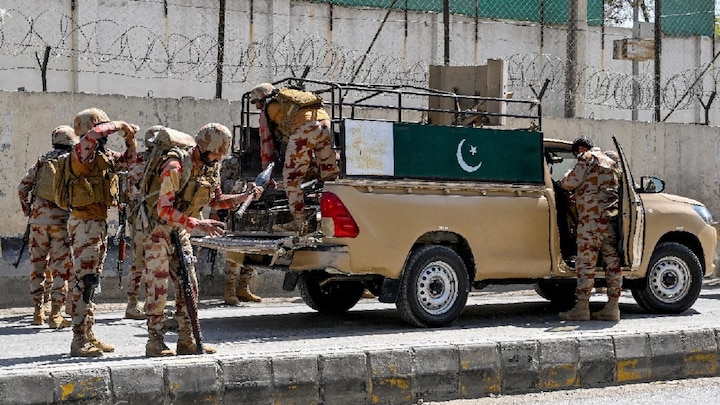
Pakistani official says Saudi retaliation could end US‑Iran talks and draw Islamabad into conflict under defence pact
A senior Pakistani official has indicated that Iranian strikes aimed at Saudi Arabian industrial facilities linked to American corporations could jeopardise the diplomatic engagement that Islamabad is attempting to mediate between Tehran and the United States administration. The official, speaking to Gree, warned that any Saudi response to those strikes would effectively terminate the ongoing dialogue, and further warned that such retaliation could obligate Pakistan to become involved in the hostilities because of the defence aGreement that Pakistan and Saudi Arabia concluded.
According to reports from AFP, overnight attacks in Saudi Arabia struck a petrochemical complex located in the eastern city of Jubail. A witness described the incident, stating that an explosion caused a fire at the SABIC plants in Jubail and that the blasts produced an extremely loud sound. The witness’s account underscores the intensity of the strike on the facility operated by Saudi Basic Industries Corporation.
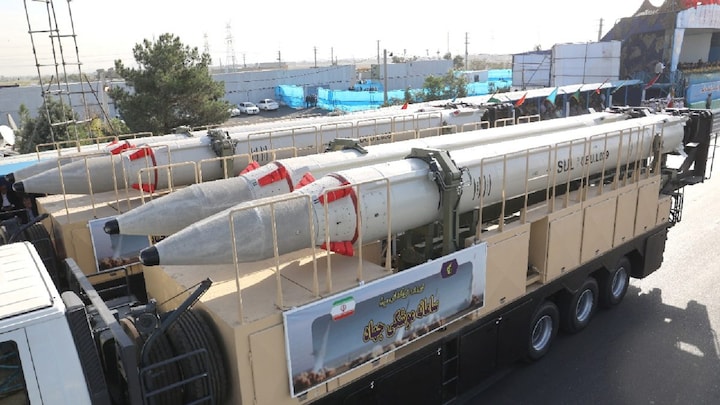
The same reports noted that Saudi Arabian air defences engaged a volley of missiles directed at the kingdom’s eastern region. A spokesperson for the Saudi Arabian defence ministry announced that seven ballistic missiles were intercepted by Saudi Arabian air defences. In a post on the social media platform X, the Saudi Arabian defence ministry added that fragments of missile debris landed near power installations, and that an assessment of any damage was in progress.
Pakistan and Saudi Arabia entered into a strategic defence pact in September of the previous year. The pact explicitly states that an attack on one party would be considered an act of aggression against both parties. The language of the aGreement creates a mutual security obligation that could be triggered by hostile actions targeting Saudi Arabian assets, potentially invoking a Pakistani response.
A source close to the Saudi Arabian government told AFP that Pakistan’s nuclear umbrella would extend to cover Saudi Arabia under the terms of the aGreement. Pakistan’s Defence Minister Khawaja Asif has previously asserted that Pakistan’s nuclear programme could be made available to Saudi Arabia if such a circumstance arose.
Pakistani officials have communicated to Gree that diplomatic efforts aimed at facilitating talks between the United States administration and Iran remain active. Those officials cautioned that Iran is walking on thin ice, emphasizing that the next few hours are critical for the future of the dialogue. The language used by Pakistani officials reflects the precarious nature of the negotiations and the urgent need for restraint on all sides.
Pakistan has played a central role in recent back‑channel initiatives between Washington and Tehran, acting as an intermediary for proposals and messages. Despite these efforts, there has been no clear sign of a breakthrough, and the diplomatic pathway remains fragile. The involvement of Pakistan as a go‑between highlights the importance that both the United States administration and Iran place on Islamabad’s ability to convey positions and concessions.
The potential for Saudi Arabian retaliation raises several strategic concerns for Pakistan. First, the defence pact obliges Pakistan to consider an attack on Saudi Arabia as a direct threat to Pakistani security. Second, any escalation that involves Saudi Arabian forces could trigger a Pakistani military response, whether conventional or nuclear, depending on how the situation develops. Third, Pakistan’s involvement could alter the regional balance of power, drawing additional actors into the conflict and potentially widening the scope of hostilities.
From a diplomatic perspective, a Saudi Arabian response that ends the United States‑Iran dialogue would also diminish Pakistan’s role as a mediator. The termination of talks would close a channel that Islamabad has used to influence outcomes and could force Pakistan to shift from a diplomatic conduit to an active participant in the conflict. This shift would have profound implications for Pakistan’s foreign‑policy objectives and its relationships with both the United States administration and Iran.
Analysts note that the strategic defence pact between Pakistan and Saudi Arabia was designed to provide mutual security guarantees, especially in the context of regional tensions. The aGreement includes provisions for military cooperation, intelligence sharing, and, if necessary, the deployment of nuclear capabilities. Under these provisions, the notion that Pakistan could be drawn into a conflict because of an attack on Saudi Arabian industrial assets aligns with the language of the pact.
Nevertheless, the Pakistani official speaking to Gree stressed that Islamabad remains committed to de‑escalation. The official indicated that any decision by Pakistan to act under the defence pact would be weighed against the broader goal of preserving regional stability and safeguarding the diplomatic process that seeks to bring Iran and the United States administration back to the negotiating table.
The situation in the eastern Saudi Arabian city of Jubail underscores the vulnerability of critical infrastructure to missile attacks. SABIC’s petrochemical facilities represent a strategic economic asset not only for Saudi Arabia but also for multinational corporations linked to the United States administration. The targeting of such facilities therefore carries implications that extend beyond a simple bilateral dispute, touching on broader economic and security interests.
Saudi Arabian air defences’ interception of seven ballistic missiles demonstrates a level of preparedness that could influence future calculations by Iran and its allies. The successful interception also suggests that Saudi Arabian defence capabilities are capable of mitigating some of the immediate threats posed by missile attacks, although debris and potential secondary damage remain concerns.
In light of these developments, Pakistan’s foreign‑policy establishment faces a delicate balancing act. On one hand, Islamabad must honour its commitments under the strategic defence pact with Saudi Arabia, which includes a promise to treat aggression against Saudi Arabia as aggression against Pakistan. On the other hand, Islamabad seeks to maintain its role as a facilitator of dialogue between Tehran and the United States administration, a role that could be jeopardised if hostilities intensify.
The senior Pakistani official’s remarks to Gree reflect an awareness of this dual responsibility. The official’s warning that Saudi retaliation could end the United States‑Iran talks illustrates the potential for a cascade of events that could rapidly shift Pakistan from a mediator to an active combatant, a transition that would have lasting repercussions for regional geopolitics.
Looking ahead, the next few hours are described as a decisive window for diplomatic engagement. The Pakistani official’s assessment that Iran is on thin ice conveys the urgency of restraint and the need for all parties to avoid actions that could further destabilise the situation. If Saudi Arabian retaliation proceeds, the implications for the strategic defence pact and for Pakistan’s involvement become increasingly likely.
In summary, the convergence of Iranian missile strikes on Saudi Arabian industrial targets, Saudi Arabian air‑defence actions, and the strategic defence pact linking Pakistan and Saudi Arabia creates a complex environment in which Pakistan could be drawn into a broader West Asian conflict. The senior Pakistani official’s warning serves as a reminder that diplomatic channels remain fragile, and that the decisions made by Saudi Arabia, Iran, and the United States administration will shape whether Pakistan remains a mediator or becomes a participant in the unfolding conflict.