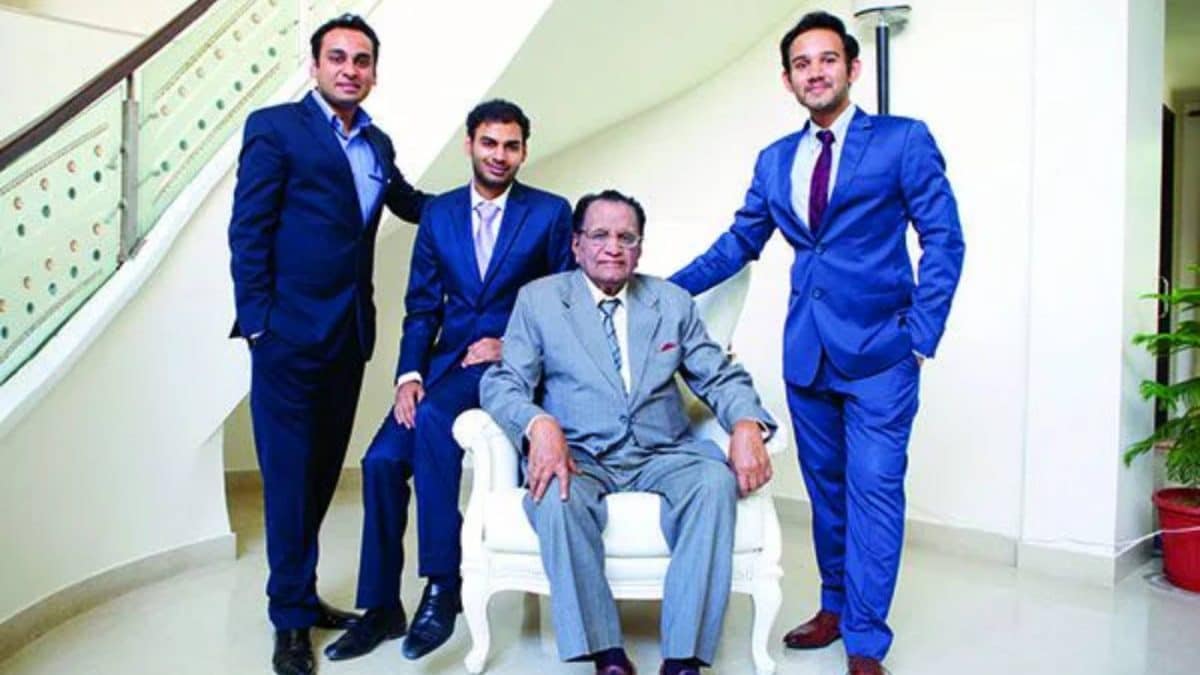
Permira funds will invest 100 million dollars in Indian business services platform SILA to boost tech, expand services and support nationwide growth, Norwest retains minority stake
I was scrolling through the newsfeed the other day, sipping my chai, when I saw the headline about Permira’s big money move into SILA. It felt a bit like watching an old friend finally get the big break after years of hard work. The story is simple at its core – funds advised by Permira are putting in a hundred million dollars into SILA, a home‑grown Indian platform that handles almost everything you can think of when it comes to managing commercial spaces.
SILA, which has been built from the ground up by brothers Rushabh Vora and Sahil Vora, now stretches its operations across more than 125 cities. Imagine a network that touches every corner from bustling metros like Mumbai and Delhi to tier‑2 towns such as Mysore or Jodhpur. The platform is claimed to manage over 450 million square feet of real estate – that’s roughly the size of more than 65,000 football fields. And the workforce? Over 60,000 people are on board, ranging from engineers and technicians to the staff who serve your favourite canteen meals.
Why the investment matters – a personal take
When I think about the everyday hustle in Indian offices, a few things pop up instantly. My friend works in a Bangalore tech park where the air‑conditioning sometimes falters, the elevators get stuck, and the cafeteria serves food that could use a sprinkle of quality. All these small irritations are actually part of a massive ecosystem that SILA is trying to streamline.
Permira’s infusion of a hundred million dollars is not just a financial boost; it’s a vote of confidence that technology can resolve these annoyances on a grand scale. The fund’s partner, Norwest, will stay on as a minority holder, which means the original investors still have skin in the game. It’s like watching a family-owned restaurant invite a seasoned chef into the kitchen – the original recipes stay, but the cooking gets refined.
The founders’ vision – straight from Rushabh Vora and Sahil Vora
In an interview, Rushabh Vora and Sahil Vora said, “We built SILA with the belief that India’s business services sector could produce a scaled, technology‑led institution with the highest standards of delivery.” They sounded proud, and a bit nostalgic, recalling how they started out in a modest office, dealing with a handful of clients, and now they oversee a network that touches hundreds of thousands of workers daily.
Both brothers emphasized technology as the driving force. “We are grateful to Norwest and other angel investors for their partnership over the years and for the conviction they showed in backing us early,” they added. Their gratitude felt genuine, as if they were thanking every neighbour who ever believed in a small venture that turned into a city‑wide service. The excitement about Permira’s entry was palpable – the firm is known for its deep global expertise in business services, which the Vora brothers think will help SILA scale further across the country.
Service portfolio – what SILA actually does for you
To understand why investors are buzzing, picture a typical Indian corporate campus. There are multiple buildings, a cafeteria, parking spaces, elevators, security, and a host of machines that move goods around. SILA integrates all of this under one roof. Their services include:
- Facility management – from cleaning to HVAC maintenance, ensuring that the office environment stays comfortable.
- Material handling equipment leasing – think of those forklift trucks you see in warehouses; SILA rents them out and handles the upkeep.
- Food catering – the lunch you get at a corporate canteen, with menu planning, quality checks, and hygiene adherence.
- Real‑estate advisory – helping developers and fund managers make sense of market trends, location choices, and asset optimisation.
All these services are tied together with a technology platform that offers real‑time data, analytics, and transparency. It’s not just a manual process anymore; it’s a digital dashboard that owners and managers can glance at on their phones, much like how we check our bank balances instantly.
Impact on day‑to‑day operations – a few examples from Indian cities
Consider a manufacturing unit in Pune that needs constant upkeep of its conveyor belts and safety systems. Before SILA, the unit might have hired separate contractors for each task, leading to coordination headaches. With SILA’s integrated approach, the same unit now gets a single point of contact, backed by a tech platform that tracks maintenance schedules, downtime, and cost savings.
Or picture a co‑working space in Hyderabad where the Wi‑Fi drops frequently, the plaster on the walls is chipping, and the coffee machine is always out of order. SILA’s facility management team would log each issue on a mobile app, assign it to the right technician, and update the client instantly. The result? Faster resolutions and a happier workforce.
Even smaller offices in Tier‑2 cities can benefit. My cousin runs a boutique consultancy in Jaipur; she used to rely on a local cleaning service that would sometimes skip days. Since partnering with SILL’s facility management module, her office gets a consistent cleaning schedule, and she can view the attendance logs online – something she never imagined possible a few years back.
Why global investors are optimistic – the bigger picture
The investment from Permira is not happening in isolation. Over the past few years, global institutional investors have started to see India’s business‑services landscape as a multi‑decade growth story. The country’s rapid urbanisation, the rise of organized retail, expanding industrial corridors, and the massive real‑estate development boom create a huge demand for reliable, technology‑driven services.
When you add the fact that SILA already covers commercial, industrial, residential, and retail assets, the platform becomes a one‑stop solution for investors who want exposure across the entire built environment. The numbers themselves – 125+ cities, 450 million square feet, 60,000+ employees – read like a checklist of what a large‑scale operator looks like.
Permira’s confidence is also rooted in the belief that technology can unlock efficiency and transparency that traditional service providers lack. In India, where many processes have been manual for decades, a digital layer can mean the difference between a service that is just ‘acceptable’ and one that is truly world‑class.
Looking ahead – what the next decade could hold for SILA
With the fresh capital, the Vora brothers have laid out a roadmap that focuses heavily on tech upgrades. Think AI‑driven predictive maintenance for HVAC systems, IoT sensors on equipment to monitor real‑time usage, and a unified dashboard for clients that can forecast costs and suggest optimisation pathways.
There’s also talk of expanding into newer service lines that complement the existing suite. For example, specialised waste‑management solutions for tech parks, or smart‑parking platforms that use sensor data to guide drivers to free spots – ideas that are already being piloted in some metro cities.
Geographically, the plan is to deepen the presence in the current 125+ cities while also tapping into emerging hubs like Surat, Indore, and Nagpur, where industrial activity is picking up. The Vora brothers believe that even in smaller towns, there is a growing appetite for organized service providers rather than fragmented, ad‑hoc solutions.
On the human side, the focus will remain on upskilling the massive workforce of over 60,000 employees. Training programmes that blend technical skills with digital literacy are being rolled out, ensuring that the people on the ground can effectively use the new tech tools. This, they say, is essential to maintain the high standards that attracted Permira in the first place.
Conclusion – a personal reflection on the investment’s significance
Seeing a home‑grown Indian platform like SILA attract such a sizeable $100 million investment feels like watching a local cricket team get a sponsorship from a global brand. It validates the belief that Indian ingenuity, when combined with the right technology and capital, can compete on a world stage.
For everyday people – be it a junior employee in a Delhi office, a factory manager in Coimbatore, or a small business owner in Bhopal – the changes promised by SILA’s tech‑driven approach could make their work‑life a little smoother. Less time spent waiting for a broken air‑conditioner to be fixed, more confidence that the cafeteria serves safe food, and better visibility into how the spaces they work in are managed.
In the end, the partnership between SILA, Permira, and Norwest represents more than just money; it’s a story of belief, ambition, and the hope that technology can bring order to the bustling, often chaotic, world of Indian business services. And as someone who watches the everyday hustle of Indian workplaces, I can’t help but feel optimistic that we are on the brink of a noticeable improvement in how our built environment functions.