Pezeshkian vs IRGC on Iran’s Ceasefire Negotiations with United States – Exclusive Intel Note
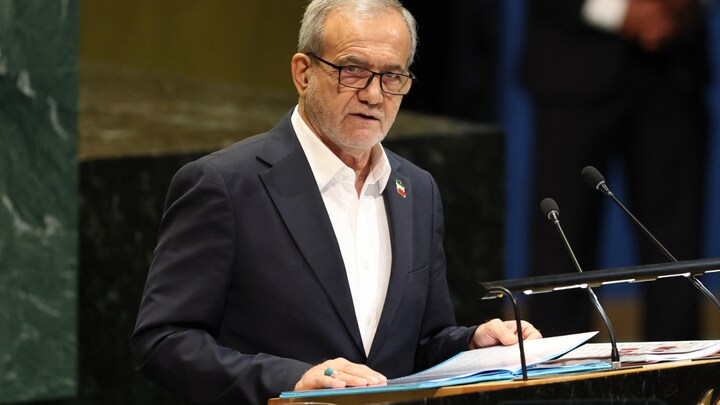
While Masoud Pezeshkian seeks an economic lifeline through diplomacy, the Islamic Revolutionary Guard Corps wants to use the war for institutional primacy, said sources
Background to the Current Diplomatic Standoff
The impending deadline set by the United States for the reopening of the Strait of Hormuz has placed extraordinary pressure on the negotiation table. According to high‑level Indian intelligence briefings, the pressure is not limited to external talks between Iran and the United States; it extends deeply into internal power dynamics within Iran itself. The internal discourse reveals a stark contrast between the civilian leadership headed by Masoud Pezeshkian and the military establishment represented by the Islamic Revolutionary Guard Corps.
Masoud Pezeshkian, as the President of Iran, operates within a civilian framework that traditionally commands the nation’s diplomatic agenda. Nevertheless, the intel note emphasizes that Masoud Pezeshkian’s authority over security matters is markedly limited. The Islamic Revolutionary Guard Corps, by contrast, operates with a high deGree of autonomy, making independent decisions on operational matters without deference to civilian oversight.
This division of authority creates a bifurcated negotiating strategy: one side pushing for immediate de‑escalation to safeguard the economy, the other side preserving a hard‑line military posture to maintain institutional dominance.
Economic Collapse and the Urgency of Civilian Intervention
The civilian government, under the stewardship of Masoud Pezeshkian, identifies a parallel emergency that runs alongside the military conflict. The breakdown of the nation’s financial system and the severe damage to physical infrastructure have been described as a “major urgency” that threatens the very fabric of daily life. The economic shock is intensified by multiple layers of sanctions, the disruption of trade routes, and extensive war‑related destruction.
Masoud Pezeshkian has articulated, through various public statements, the belief that without an immediate and lasting ceasefire, the Iranian economy will face an irreversible collapse within a span of three‑four weeks. This projection, derived from intelligence sources, underscores the immediacy of the crisis and the need for rapid diplomatic action.
In addition to the macro‑economic concerns, Masoud Pezeshkian has called for the restoration of executive powers to the civilian administration. The rationale presented is that a consolidated civilian command structure would enable more efficient crisis management, streamline resource distribution, and coordinate reconstruction efforts across the nation.
Hard‑Line Rejection of Incremental Ceasefire Proposals
Across the spectrum of political actors, hard‑line elements within Iran have expressed strong opposition to any form of incremental cessation of hostilities. The intelligence note points out that proposals emerging from Egyptian, Pakistani, and Turkish mediation efforts, which suggested phased pauses to the fighting, have been categorically rejected.
The hard‑line stance is anchored in the demand for permanent guarantees rather than temporary or conditional halts. This perspective reflects a broader strategic calculation that any short‑term pause could be perceived as a vulnerability, thereby emboldening adversaries and undermining the Islamic Revolutionary Guard Corps’ long‑term objectives.
Consequently, the divergent viewpoints between Masoud Pezeshkian’s diplomatic overtures and the intransigence of hard‑line factions create a complex environment in which any negotiated settlement must navigate both economic imperatives and ideological rigidity.
Masoud Pezeshkian’s Public Position on De‑Escalation
Masoud Pezeshkian has consistently demonstrated a willingness to pursue de‑escalation as a pathway to economic recovery. Publicly, Masoud Pezeshkian has issued apologies for strikes attributed to the Islamic Revolutionary Guard Corps that affected neighboring Gulf states, signaling an acknowledgment of the broader regional fallout.
In addition to the apology, Masoud Pezeshkian has indirectly warned that the nation’s economy could crumble if hostilities persist beyond the immediate term. This warning is framed not as a threat but as a stark warning about the humanitarian and economic costs of continued conflict.
Masoud Pezeshkian has also articulated a personal commitment to the nation’s defense. In a message posted on the social platform X, Masoud Pezeshkian affirmed a readiness to sacrifice personal well‑being in service of the country. The statement emphasized that more than fourteen million Iranians have declared a willingness to defend the nation, and Masoud Pezeshkian placed that declaration on a personal level, stating a personal readiness to share that sacrifice.
The Islamic Revolutionary Guard Corps’ Perspective on Military Dominance
The Islamic Revolutionary Guard Corps, guided by commander Ahmad Vahidi, has expressed a markedly different outlook on the conflict. According to the intel note, Ahmad Vahidi and associated hard‑line elements have demonstrated scant enthusiasm for short‑term truces. The note attributes this reluctance to a perception that temporary halts serve as tactical traps, potentially providing the United States and Israel an opportunity to regroup and regain strategic advantage.
Within the Islamic Revolutionary Guard Corps’ strategic calculus, the priority remains a sustained resistance that refuses any relinquishment of operational control to civilian authorities. The Islamic Revolutionary Guard Corps has continued operational activities even after explicit directives from Masoud Pezeshkian to curtail escalation against neighboring states.
The Islamic Revolutionary Guard Corps seeks to avoid any perception of conceding power, whether through temporary pauses, diplomatic overtures, or redistribution of authority. The overarching theme articulated by the Islamic Revolutionary Guard Corps focuses on military dominance, ideological resistance, and the consolidation of wartime capabilities.
Contrasting Objectives: Economic Lifeline vs Institutional Primacy
The core divergence between Masoud Pezeshkian and the Islamic Revolutionary Guard Corps can be distilled into two competing objectives. Masoud Pezeshkian pursues an economic lifeline through diplomatic engagement, viewing a ceasefire as the prerequisite for unlocking trade, stabilizing the financial system, and initiating reconstruction across devastated regions.
Conversely, the Islamic Revolutionary Guard Corps targets institutional primacy, viewing the ongoing conflict as an opportunity to cement its authority within the national power structure. By maintaining a state of war, the Islamic Revolutionary Guard Corps can justify expansive control over security, resource allocation, and ideological narratives, thereby reinforcing its position within the political hierarchy.
This juxtaposition creates a strategic impasse: on one hand, the urgent need to halt economic decay; on the other, the desire to preserve and expand military influence.
Implications for International Negotiations
The internal split between Masoud Pezeshkian’s diplomatic outreach and the Islamic Revolutionary Guard Corps’ hard‑line stance carries significant implications for any prospective negotiations with the United States. The United States, seeking a stable environment for the reopening of maritime routes, must contend with a dual interlocutor: a civilian leadership eager for compromise and a militarized entity resistant to any concession that could dilute its operational autonomy.
Foreign mediators attempting to bridge the gap will need to design proposals that simultaneously address Masoud Pezeshkian’s economic exigencies and accommodate the Islamic Revolutionary Guard Corps’ insistence on preserving a deGree of strategic leverage. The challenge lies in crafting a framework that satisfies economic revival without being perceived as a surrender of military authority.
Potential Pathways Forward
Given the entrenched positions, potential pathways forward may involve phased confidence‑building measures that gradually reduce hostilities while offering the Islamic Revolutionary Guard Corps guarantees of continued influence in security matters. Such an approach would require a delicate balance, ensuring that Masoud Pezeshkian’s economic objectives are not compromised while preserving the Islamic Revolutionary Guard Corps’ perception of institutional relevance.
Alternatively, a negotiated settlement could embed mechanisms for joint civilian‑military oversight, thereby integrating the Islamic Revolutionary Guard Corps into a broader governance structure without overtly diminishing its authority. This model would align with Masoud Pezeshkian’s call for restored executive powers while respecting the Islamic Revolutionary Guard Corps’ demand for continued involvement in security decisions.
Both scenarios demand extensive diplomatic dexterity, deep understanding of internal power dynamics, and a willingness from all parties to prioritize long‑term stability over short‑term tactical victories.
Conclusion: The High Stakes of Divergent Strategies
The clash between Masoud Pezeshkian’s pursuit of an economic lifeline and the Islamic Revolutionary Guard Corps’ drive for institutional primacy represents a pivotal moment in Iran’s contemporary political landscape. The outcome of this internal contest will shape not only the nation’s economic recovery prospects but also the future balance of power between civilian governance and military authority.
As external actors observe, the internal negotiation between Masoud Pezeshkian and the Islamic Revolutionary Guard Corps will determine whether a sustainable ceasefire can be achieved, whether the nation's infrastructure can be rebuilt, and whether a new equilibrium can be found that accommodates both economic imperatives and security concerns.
Therefore, the path forward hinges on a nuanced synthesis of diplomatic engagement, strategic compromise, and an acknowledgment of the deep‑seated motivations that drive each side of the internal divide.