Iran’s Kharg Island Struck, United States Gulf Allies Hit: A Day of Escalation Before Donald Trump’s Ultimatum
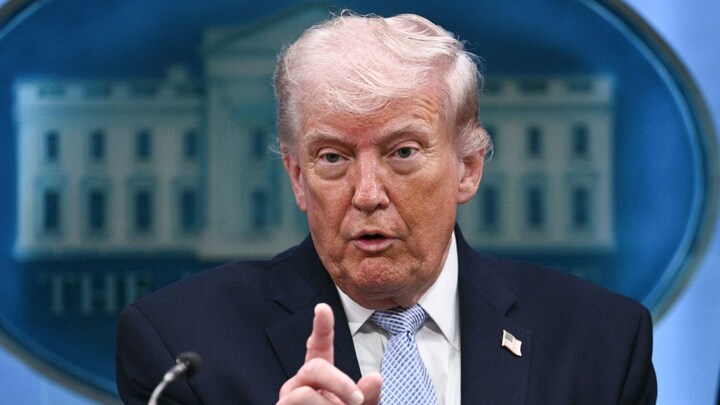
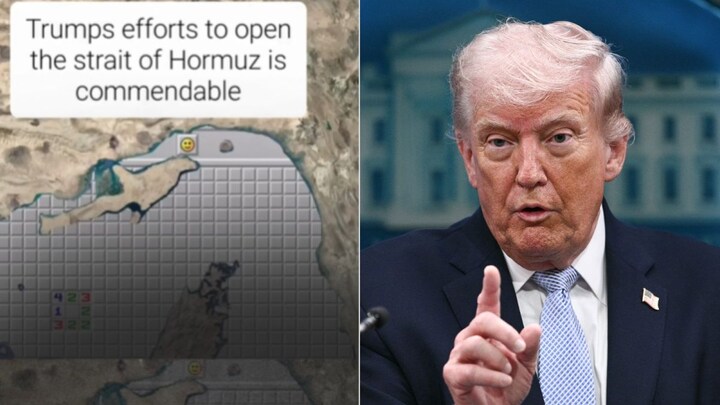
Donald Trump has warned Iran to cease its de‑facto closure of the Strait of Hormuz, while attacks on Iranian oil hubs, civilian infrastructure and allied energy facilities intensify across the region.
Background to the Maritime Standoff
The strategic waterway known as the Strait of Hormuz remains a vital conduit for global oil shipments. In recent weeks, Iran has undertaken a series of actions that effectively narrow the passage, prompting a response from Donald Trump that culminates in a deadline for Iran to reverse the de‑facto closure. The pressure applied by the United States and its regional partners has escalated into a cascade of military strikes, targeting both military and civilian infrastructure across several nations.
Donald Trump’s ultimatum places Iran on a tight timetable. Failure to meet the demand could trigger additional measures, including the possibility of a ground operation focused on a specific Iranian asset that plays a central role in the nation’s oil export capability.
Kharg Island: The Focal Point of Oil Export Operations
Kharg Island stands as Iran’s primary oil export terminal. Roughly ninety percent of Iran’s crude oil leaves the country via Kharg Island, making the site an essential node in the global petroleum supply chain. The island receives crude from a cluster of offshore fields located within a hundred‑kilometre radius. These fields include Dorood (also referenced as Dorzan), Forouzan, Abu Zar, Soroush, and Nowruz. The production network surrounding Kharg Island is tightly interwoven, with each field routing its output to the island for storage and subsequent shipment.
In the latest round of hostilities, United States forces, in coordination with Israel, executed strikes targeting Kharg Island. The attacks focused on infrastructure integral to the island’s loading and storage capabilities. Donald Trump previously warned that a ground invasion would prioritize the capture of Kharg Island, a move intended to compel the reopening of the Strait of Hormuz.
The significance of Kharg Island cannot be overstated. Its role as the dominant export gateway for Iranian crude means that any disruption reverberates throughout the international oil market, influencing prices and supply forecasts. The United States and Israel view the island as a leverage point capable of exerting pressure on Iran’s maritime strategy.
Rail and Road Infrastructure Targeted Within Iran
Beyond the maritime arena, the United States and Israel extended their campaign to Iran’s inland transportation network. A bridge located outside the holy city of Qom suffered a strike that resulted in casualties. In a separate incident, a rail bridge in central Iran was hit, leading to the loss of two lives. These actions demonstrate a tactical approach aimed at disrupting Iran’s logistical flow, thereby complicating the movement of goods and military equipment.
Regional officials reported additional damage to a major highway linking the northwestern city of Tabriz with the capital, Tehran. The shutdown of this arterial route hampers ground transport across a critical segment of the country. Moreover, the news outlet Mizan documented damage to railway tracks in the suburb of Karaj, situated near Tehran. The cumulative effect of these strikes is a degradation of Iran’s internal mobility, presenting logistical challenges for both civilian and defense sectors.
Drone Activity Extending the Conflict Into Syria
The conflict’s geographical scope broadened as Syrian military officials reported an overnight drone strike that originated from Iraq. The unmanned aircraft targeted a location in northeastern Syria that hosts a United States base. The incident underscores the fluidity of the theater, where assets from one nation are employed to strike positions in another, further entangling regional actors.
Syrian authorities emphasized the strategic intent behind the drone deployment, noting that the target area is of significance to United States operations in the region. The cross‑border nature of the attack illustrates a willingness among the parties to project force beyond their own borders in pursuit of broader objectives.
Petrochemical Complex in Saudi Arabia Hit By Fire
In the eastern Saudi city of Jubail, an attack struck a large petrochemical complex operated by Saudi Basic Industries Corporation (SABIC). The assault ignited a fire that engulfed parts of the facility. Eyewitnesses described the explosions as loud and intense, with the sound of blasts reverberating across the industrial zone.
The damage to SABIC’s plants carries implications for Saudi Arabia’s petrochemical output, a sector that complements the nation’s oil‑centric economy. The incident represents a direct strike against a key component of the Saudi energy infrastructure, signaling an expansion of the confrontation to include non‑military economic targets.
Israel’s Air Defence and Counter‑Strikes
Israel reported activation of its air‑defence systems in response to missiles launched by Iran. Following the defensive response, the Israeli military confirmed the execution of two waves of air strikes directed at Iranian targets. The coordinated action illustrates Israel’s readiness to engage both defensively and offensively within the evolving conflict.
The Israeli strikes were positioned as retaliation for Iranian missile activity, reinforcing the cycle of escalation. By launching air raids against Iranian facilities, Israel signaled its intent to deter further aggression and to protect its own security interests in the region.
Explosive Incidents in Iraq’s Kurdistan Region
In Iraq’s Kurdistan region, two explosions were reported near the Erbil airport, a site that accommodates advisers from the United States‑led coalition. Moments after the blasts, air‑defence systems intercepted four missiles aimed at the United States consulate, successfully neutralizing the threat.
The Kurdistan Counter‑Terrorism Service later disclosed that a bomb‑laden drone, allegedly launched from Iran, crashed into a residential home in Dara Shakran after midnight, resulting in the deaths of a married couple. Since the onset of hostilities, shadowy groups based in Iraq have claimed near‑daily attacks against United States interests throughout the country and beyond, highlighting the widening geographic reach of the confrontation.
These incidents illustrate how the conflict has spilled over into multiple jurisdictions, affecting civilian populations and diplomatic missions alike. The continuing series of attacks underscores a pattern of escalation that threatens to broaden the scope of violence across the region.
Summary of the Day’s Developments
The series of actions described above reflects a coordinated effort by the United States and Israel to pressure Iran into reopening the Strait of Hormuz. By targeting both strategic oil export infrastructure on Kharg Island and key transportation links throughout Iran, the coalition aims to amplify economic and logistical strain on Iran.
Simultaneously, the conflict has extended beyond Iranian borders, reaching into Syria, Saudi Arabia, and Iraq’s Kurdistan region. Drone strikes, petrochemical fires, and missile interceptions demonstrate a multi‑dimensional approach that intertwines conventional military tactics with attacks on economic assets.
Donald Trump’s deadline looms as a critical juncture. The escalation of hostilities across maritime, aerial, and ground domains signals an intensifying standoff that may compel Iran to reassess its posture regarding the Strait of Hormuz. The unfolding situation remains fluid, with each side poised to respond to the other's moves as the deadline approaches.