Purnima: When Is Chaitra Purnima? Shubh Muhurat and Rituals
Understanding Chaitra Purnima and Its Calendar Significance
Chaitra Purnima stands as one of the most revered full‑moon days in the Hindu lunar calendar. Falling within the month of Chaitra, this phase of the moon is traditionally linked with heightened spiritual activity, intense devotion, and a series of prescribed observances. The full‑moon aspect of Chaitra Purnima draws worshippers toward acts of piety, encouraging them to fast, offer prayers, and engage in charitable deeds. The day is also aligned with the celebration of Hanuman Jayanti, marking the birth of Lord Hanuman, and thereby amplifying its religious importance.
In the broader context of Hindu time‑keeping, each Purnima carries a unique set of deities and rituals, but Chaitra Purnima enjoys a special position because it intertwines the energies of Lord Vishnu, Goddess Lakshmi and Lord Hanuman. Devotees thus approach the day with a multifaceted reverence, seeking blessings for prosperity, protection, and spiritual growth.
Clarifying the Exact Day for Observance
There has been some uncertainty regarding the precise day that should be observed for the most auspicious outcomes. According to the expert guidance of Pandit Nandkishore Mudgal, the full moon rises on the first day of the lunar month, yet the cultural definition of Uday Tithi— the moment the moon is visible at sunrise—does not occur until the following day. In Hindu ritual practice, the day that houses the Uday Tithi is regarded as the most potent for performing fasts, charitable acts, ritual bathing and worship.
Consequently, the second day of the month is identified as the most favorable occasion for devotees to undertake all prescribed activities associated with Chaitra Purnima. This clarification resolves the earlier confusion and aligns traditional practices with the astronomical details provided by Pandit Nandkishore Mudgal.
Auspicious Timing for Sacred Bathing
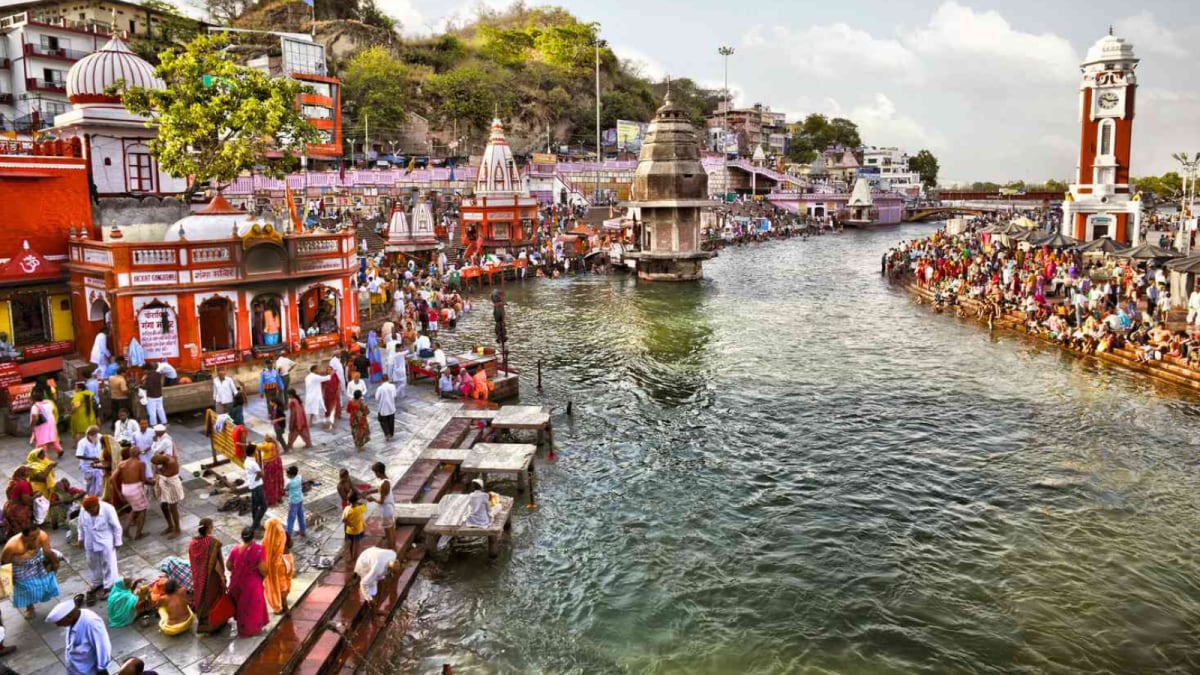
The timing for entering holy waters is a critical element of the observance. Pandit Nandkishore Mudgal highlights that the shubh muhurat for bathing in sacred rivers occurs during the early pre‑dawn hours of the second day, specifically within a window that begins shortly before sunrise and concludes shortly after the first light appears. Immersing oneself in a river during this narrow interval is believed to cleanse the soul, remove negative influences, and invite blessings of peace and prosperity.
Devotees who are able to align their ritual bathing with this sacred window often report an intensified sense of spiritual renewal. The practice is also regarded as especially effective for the dispensation of charitable acts, as gifts made during this period are thought to be multiplied in divine merit.
Beneficial Yogas Enhancing the Day’s Power
Two particularly auspicious yogas—Sarvarth Siddhi Yoga and Dhruv Yoga—converge on the second day of the month. In Vedic astrology, a yoga represents a specific planetary configuration that can amplify the benefits of religious observances. Sarvarth Siddhi Yoga is associated with the successful accomplishment of all endeavors, while Dhruth Yoga signifies stability, steadfastness, and divine support.
The simultaneous presence of these yogas intensifies the spiritual potency of Chaitra Purnima. Pandit Nandkishore Mudgal emphasizes that any act of worship, whether it involves personal prayer, communal pooja, or charitable donation, will draw amplified blessings when undertaken during this confluence of yogas.
The Tri‑Deity Focus of the Day
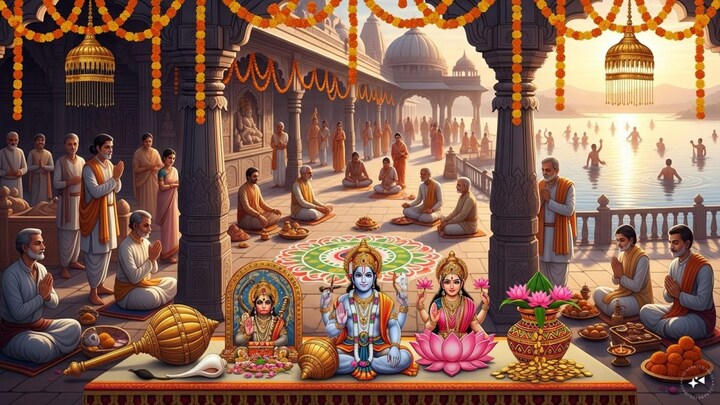
Chaitra Purnima is uniquely positioned as a day when three major divine figures receive heightened reverence. Lord Vishnu, the preserver of the universe, is invoked for protection and continuity. Goddess Lakshmi, the embodiment of wealth and abundance, is revered to attract financial stability and material comfort. Lord Hanuman, celebrated for his unwavering devotion and heroic strength, is honored to inspire courage and devotion among his followers.
Worship on this day typically involves joint prayers to all three deities, often conducted at sunrise, during the auspicious bathing window, and again at sunset. The combined invocation is believed to create a powerful spiritual resonance, fostering an environment conducive to blessings across the spectrum of material, emotional, and spiritual needs.
Satyanarayan Katha: A Central Ritual for the Household
Among the many recommended observances, the Satyanarayan Katha holds a special place for families seeking to sanctify their homes. Pandit Nandkishore Mudgal advises that performing this narrative of devotion on the day of Chaitra Purnima can cleanse the dwelling of negative energies, replace them with a sense of harmony, and attract long‑lasting prosperity. The Katha involves the recitation of scriptures, offering of simple prasadam, and communal sharing of blessings.
Participants in the Satyanarayan Katha often describe an immediate uplift in household atmosphere, noting that the ritual fosters unity, gratitude, and a renewed commitment to spiritual practice for the year ahead.
Charitable Deeds and Their Amplified Impact
Charity, or daan, is a cornerstone of the Chaitra Purnima observances. The auspicious timing prescribed by Pandit Nandkishore Mudgal suggests that gifts offered during the pre‑dawn auspicious window, as well as throughout the day, carry a multiplied spiritual benefit. Traditional forms of charity include providing food to the needy, donating clothing, supporting educational initiatives, and contributing to the maintenance of temples and holy sites.
The underlying belief is that when charity is performed on a day marked by Sarvarth Siddhi Yoga and Dhruth Yoga, the generosity of the donor is reflected back manyfold, fostering a cycle of giving and receiving that strengthens communal bonds and personal spiritual growth.
Fasting Practices and Their Spiritual Significance
Fasting on Chaitra Purnima is widely observed as a means of purifying the body and aligning the mind with divine intentions. Devotees may choose from various forms of fast, ranging from a complete abstention from solid food to a restriction of certain food groups. The act of fasting is coupled with heightened prayer, recitation of mantras dedicated to Lord Vishnu, Goddess Lakshmi and Lord Hanuman, and reflective meditation.
Pandit Nandkishore Mudgal notes that the most effective fasting experience is one that is undertaken with sincere devotion, supplemented by the recitation of sacred verses and the contemplation of the virtues embodied by the three principal deities. The combined effect of fasting, prayer, and the auspicious timing creates a powerful conduit for spiritual ascent.
Community Gatherings and Collective Worship
Beyond individual observances, many communities organize collective gatherings for pooja and bhajan sessions on the day of Chaitra Purnima. These events often take place in local temples where the ambience is further enhanced by the presence of the Sarvarth Siddhi and Dhruth yogas. Devotees come together to chant hymns, perform group aartis, and share communal meals, reinforcing the sense of unity and shared devotion.
Such communal participation is believed to magnify the blessings bestowed upon each individual, as the collective energy aligns with the divine vibrations of Lord Vishnu, Goddess Lakshmi and Lord Hanuman, creating an atmosphere of profound spiritual resonance.
Guidelines for Observing the Day with Purity and Respect
In order to fully benefit from the spiritual opportunities presented by Chaitra Purnima, Pandit Nandkishore Mudgal advises adherents to adhere to a set of practical guidelines. These include maintaining personal cleanliness, wearing modest attire, abstaining from negative speech, and focusing the mind on the virtues exemplified by Lord Vishnu, Goddess Lakshmi and Lord Hanuman. Additionally, the consumption of pure, sattvic foods and the avoidance of intoxicants are recommended to preserve the sanctity of the observance.
By following these steps, devotees create an environment conducive to receiving the amplified blessings associated with the auspicious yogas and the divine presence that characterizes Chaitra Purnima.
Long‑Term Benefits and the Spiritual Legacy of Chaitra Purnima
The rituals and practices performed on Chaitra Purnima are not limited to immediate spiritual uplift; they are also believed to plant seeds for long‑term prosperity, health, and inner peace. The combined impact of fasting, charitable acts, sacred bathing, and the recitation of the Satyanarayan Katha establishes a foundation of positive karma that influences the devotee’s life in the months and years that follow.
Through the consistent observance of these traditions, generations of families have reported an enduring sense of well‑being, enhanced relationships, and a deep‑rooted connection to the divine principles embodied by Lord Vishnu, Goddess Lakshmi and Lord Hanuman.