Digital Undergraduate Programs Versus Classic Campus DeGrees: A Deep Dive into Value and Reputation

From Validation to Value: The Modern Question About Online Undergraduate Studies
The discourse surrounding digital undergraduate programmes has undergone a dramatic transformation over the past several years. What initially occupied a peripheral niche within higher‑education ecosystems now commands centre‑stage attention. The central query no longer asks merely whether an online bachelor’s deGree holds accreditation; it probes whether the experience, outcomes, and market perception align with those of a conventional campus‑based qualification.
“Online deGrees have crossed the credibility threshold. The question today is not online versus traditional, but whether the learning is rigorous, relevant, and outcomes‑driven,” declares Prof Manoj Tiwari, Director, IIM Mumbai. Prof Manoj Tiwari further observes that “the best online and blended programmes are credible, flexible, and future‑ready.” This perspective underscores a broader shift: accessibility and adaptability are rapidly attaining parity with historic markers of prestige such as institutional brand.
This evolution mirrors a wider re‑configuration of higher‑education priorities, where students, employers, and policy‑makers alike place increasing weight on the ability to acquire skills on a schedule that accommodates professional and personal commitments, without compromising on academic rigour.
The Campus Experience Gap: What Traditional Institutions Offer Beyond the Curriculum
While digital platforms excel at delivering content at scale, the comparison between online delivery and the lived campus experience remains nuanced. Physical campuses continue to generate intangible assets that a screen‑based environment struggles to replicate.
Saurabh Mangrulkar’s testimony spotlights three core dimensions of the campus advantage: spontaneous interpersonal interaction, organic peer learning, and the cultivated alumni ecosystem. These dimensions often translate into mentorship moments, serendipitous collaborations, and unplanned networking events that accelerate career progression.
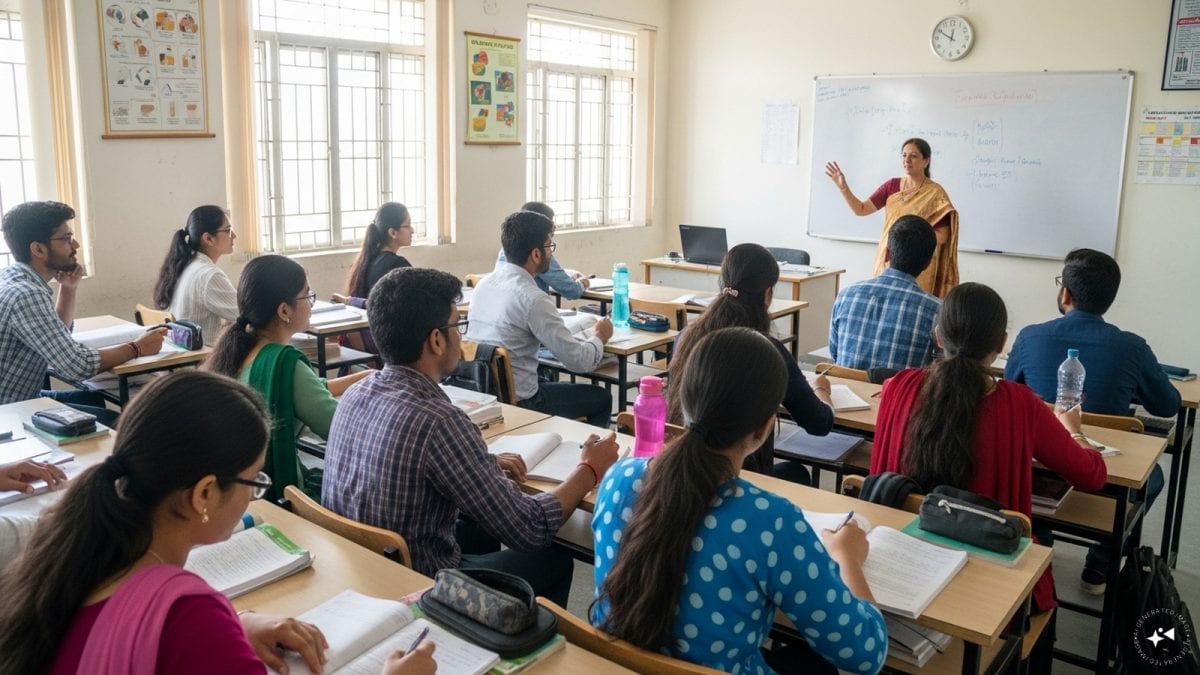
In an online setting, such experiences must be intentionally engineered. Learners may need to allocate additional effort toward joining virtual professional communities, participating in live webinars, or seeking mentorship through structured programmes. The resulting environment, while still effective, demands a proactive approach that differs fundamentally from the passive absorption of opportunity that occurs on a bustling campus.
Quality, Reputation, and Outcomes: The Real Metrics of Success
Industry experts increasingly argue that the debate should be reframed to center on measurable outcomes rather than on the medium of delivery. When employers evaluate candidates, the decisive factors often revolve around demonstrable skill sets, problem‑solving aptitude, and the reputation of the awarding institution.
“I believe there is nothing inferior about an online undergraduate deGree when you compare it with a traditional one. It’s not about the delivery mode, but the quality of programme, institution and outcomes. Today, there are numerous online UG programmes offering curricula, faculty, assessment and learning infrastructure with the level of quality you might obtain in a traditional setting. Online education has made higher learning accessible for all. Through online education, people from different geographies and full‑time professionals have been able to gain an education they may otherwise not have had the chance to complete,” asserts Suresh Kalpathi, Founder, Veranda Learning Solutions.
Suresh Kalpathi’s assessment draws attention to two pivotal considerations: the intrinsic quality of the curriculum and the broader accessibility enabled by digital delivery. High‑quality online programmes now employ seasoned faculty, rigorous assessment frameworks, and interactive learning technologies that approximate, and in some cases surpass, the pedagogical standards of brick‑and‑mortar institutions.
The current hiring landscape places a premium on tangible achievements—project portfolios, certifications, and performance‑based evaluations—rather than on the physical venue of learning. Consequently, a graduate of an online bachelor’s programme from a well‑recognised provider can be positioned equivalently to a peer from a traditional university, provided that both possess comparable skill demonstrations and institutional endorsement.
Nevertheless, the heterogeneity of online offerings necessitates vigilant selection. Just as substandard curricula can erode the credibility of a campus deGree, poorly designed digital programmes risk diluting the perceived value of an online qualification. Prospective students must therefore scrutinise accreditation status, faculty credentials, and industry partnerships before committing to any programme.
Blended Futures: Harmonising Physical and Digital Strengths
The trajectory of higher education points toward blended and hybrid models that integrate the immediacy of in‑person instruction with the scalability of digital platforms. Within such frameworks, the emphasis shifts decisively toward depth of learning, skill acquisition, and employability, irrespective of the physical location of the learner.
Prof Manoj Tiwari highlights IIM Mumbai’s two‑year Blended Post Graduate Programme in Management (MBA‑BPGP) as a concrete illustration of this paradigm. The programme combines on‑campus residencies, virtual class sessions, and collaborative projects, thereby delivering a curriculum that mirrors the rigour of a fully residential experience while preserving the flexibility demanded by today’s learners.
Additional specialised online executive education programmes and certification tracks offered by IIM Mumbai serve as testament to the institution’s commitment to extending high‑impact learning beyond the confines of a single campus. These initiatives demonstrate that rigorous academic standards, peer engagement, and applied learning can thrive within a distributed environment.
For students, the choice between a purely online bachelor’s deGree and a traditional campus programme increasingly hinges on personal circumstances, career objectives, and the strategic value of the institution’s brand. Online pathways deliver unmatched flexibility, cost‑effectiveness, and access to a global cohort of learners. Campus pathways, meanwhile, continue to provide immersive social immersion, hands‑on laboratory experiences, and spontaneous networking environments.
Ultimately, the decisive factor for any graduate—whether emerging from a virtual lecture hall or a historic university quad—remains the ability to translate academic learning into real‑world impact. Employers, industry bodies, and professional networks are converging on a common metric: how well a candidate can apply knowledge, solve complex problems, and drive organisational success.
Concluding Reflections: Measuring Success Beyond Delivery Mode
The prevailing consensus among educators, industry leaders, and policy observers is clear: the merit of an undergraduate qualification is no longer judged solely by the walls that housed its delivery. Instead, the focus rests on three interlocking pillars—curricular rigour, institutional credibility, and demonstrable skills.
Prof Manoj Tiwari’s articulation of “rigorous, relevant, and outcomes‑driven” learning encapsulates the evolving yardstick for academic excellence. Suresh Kalpathi’s emphasis on accessibility underscores the democratising power of digital education. Saurabh Mangrulkar’s insight into the networking gap reminds stakeholders that relationship‑building remains a critical component of career advancement.
Students contemplating their educational trajectory should therefore conduct a holistic appraisal: assess the reputation of the awarding body, evaluate the alignment of the curriculum with industry demands, and confirm the presence of experiential components—internships, capstone projects, or collaborative assignments—that bridge theory and practice.
When these elements coalesce, the origin of the deGree—whether earned on a laptop in a home office or amid the historic arches of a campus—becomes a secondary consideration. The primary indicator of future success will be the graduate’s readiness to navigate complex professional landscapes, adapt to rapid technological change, and contribute meaningfully to organisational goals.
In summary, the digital undergraduate experience has matured from a peripheral alternative to a credible, flexible, and high‑quality pathway that can stand shoulder‑to‑shoulder with traditional campus education. As blended modalities continue to proliferate, the ultimate test of any programme will remain its capacity to equip learners with the knowledge, skills, and networks required to thrive in a dynamic global economy.