Delhi Airport Dog Controversy Ignites Online Fury Over Removal Claims
Social media eruption over alleged removal of street dogs
A wave of online discussion erupted after Priyanshi, an animal‑rights activist, posted claims that street dogs living near Indira Gandhi International Airport had been taken away. Priyanshi’s posts featured videos and photographs that depicted several canines being loaded into a vehicle and escorted away from the airport perimeter. The activist argued that the dogs in question had been part of the airport ecosystem for many years, and that each of them had already been sterilised and vaccinated by local animal‑welfare groups.
According to Priyanshi, the removal occurred during preparations for an international summit, a time when security measures are heightened. The activist asserted that even the most docile and well‑behaved dogs were not exempt from the action, suggesting that the decision was driven by a desire to present a pristine image rather than genuine safety concerns.
Public response and viral commentary
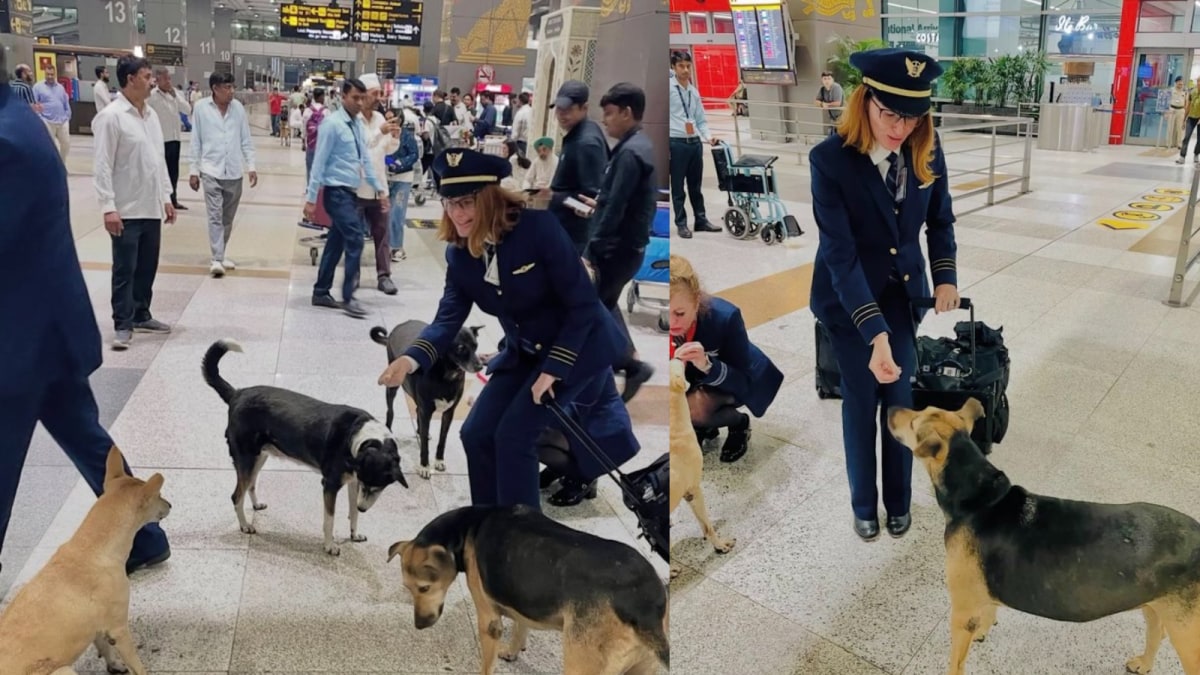
Within minutes of the video’s upload, netizens began sharing their own observations and memories of the same canine residents. One user posted a picture of a particularly calm dog, writing, "ANOTHER EVIDENCE OF HOW DOCILE, KADDHU WAS WITH THE HUMANS!! There are multiple evidence and witnesses coming up to disprove the repeated false claims from @DelhiAirport @DelhiAirportGMR! Dog lovers always notice the behavior of dogs, especially the ones they meet regularly unlike the stupid dog hater parents who throw their kids on the road because they cannot maintain them!" The comment highlighted a perceived double standard between those who cherish the animals and those who reportedly disdain them.
Another commentator expressed moral outrage, stating, "An old, toothless dog is being called dangerous, while the real cruelty walks freely in human form. Shame isn’t in the dog; it’s in the act of abandoning compassion." The sentiment underscored a broader critique of the treatment of street animals in urban spaces.
A third response took a philosophical tone, arguing that "Airport is not for dogs?! Before the airport was even made, before humans even came into the picture, the world was full of plants and animals. Once we came into the picture, we decided that the world belongs to humans only and no one else! Ever heard of environmental equilibrium? Biodiversity? It’s not upon you to decide who stays where, shove your God complex down your throat and shut up! It might even be the case that God decides you ‘unfit' to be in an airport and eradicates you via the next plane crash! Beware of what you think and wish for! Karma bites worse than a dog, remember that," the user wrote. This comment merged environmental advocacy with a warning against hubris.
A separate video, shared by an animal lover, showed a group of dogs being lifted out of a vehicle. Several of the animals appeared weak, their heads lowered, and some seemed to be trembling, leading viewers to speculate that they might have been administered medication before being moved. The visual evidence added a layer of emotional intensity to the discussion.
Official response from airport authorities
In the midst of the growing controversy, representatives of Indira Gandhi International Airport issued a statement addressing the incident. The statement explained that a dog captured in the circulated footage had been involved in two separate biting incidents near a terminal on consecutive days. Shortly after those events, the same dog was observed aggressively chasing passengers in the same vicinity.
To protect the travelling public, a trained animal‑management team was dispatched. The team safely restrained the dog, after which the animal was released back into the environment. The airport authority emphasized that more than thirty dog‑bite incidents have been recorded within the airport’s surroundings over the past few months, reinforcing the institution’s commitment to passenger safety as its highest priority.
The official tweet from Delhi Airport (@DelhiAirport) echoed the same points, stating, "The dog in the video/picture has bitten 2 passengers on consecutive days near the Terminal. On a later day, the same dog was observed aggressively chasing passengers in the same area. In the interest of public safety, trained animal management team have taken prompt action and safely restrained the dog which was subsequently released. Please note that more than 30 dog bite cases have been reported in the airport ecosystem in the last three months. Passenger safety remains our highest priority."
Contextualizing the dispute: animal welfare, security and public perception
Indira Gandhi International Airport, as one of the busiest aviation hubs in the region, accommodates a vast flow of passengers daily. The presence of an established population of street dogs around the airport has been a longstanding reality. Local animal‑welfare NGOs have invested effort in sterilising and vaccinating these dogs, aiming to mitigate health risks while allowing the animals to coexist with human activity.
From a security standpoint, airport management officials argue that any animal displaying aggressive behaviour, especially when it results in bites or chases, poses a legitimate threat to passenger wellbeing. The cited record of more than thirty bite incidents underscores the challenge of balancing humane treatment of the animals with the need to ensure an unobstructed and safe travel environment.
For animal‑rights supporters, the removal of dogs that have been part of the airport landscape for years appears, at best, heavy‑handed. The fact that the dogs were already sterilised and vaccinated, as highlighted by Priyanshi, is presented as evidence that the animals did not pose a public‑health hazard. Moreover, the emotional attachment of regular airport visitors to particular dogs fuels the perception that the removal was unnecessary and driven by image‑management concerns.
Conversely, passengers who have suffered bites or felt threatened by roaming dogs may view the airport’s actions as a necessary precaution. The official narrative stresses that the decision to intervene was prompted by documented incidents, not by an abstract desire to ‘clean up’ the premises.
Legal and regulatory framework governing stray animals
India’s municipal laws provide for the protection of stray animals while also granting authorities the power to intervene when public safety is compromised. The Animal Birth Control (ABC) program, overseen by municipal bodies, aims to sterilise stray dogs, thereby controlling population growth without resorting to culling. Vaccination drives complement this effort, reducing the incidence of rabies and other zoonotic diseases.
When an individual dog is implicated in violent conduct, the law permits removal, containment, or, in extreme cases, euthanasia, after a proper assessment by veterinary and animal‑control experts. Airport officials typically coordinate with local municipal veterinarians to ensure that any action taken conforms to statutory requirements.
In the present situation, the airport authority’s statement suggests that the removal of the aggressive dog adhered to established protocols, citing the involvement of a trained animal‑management team. However, advocates argue that the broader removal of multiple dogs, as alleged by Priyanshi, may exceed the scope of what the law permits without clear evidence of individual threat.
Public sentiment and the way forward
The online uproar surrounding the alleged removal of street dogs from Indira Gandhi International Airport illustrates the deep emotional bond many city dwellers share with these animals. Social media users have collectively voiced a spectrum of opinions, ranging from calls for stricter enforcement of animal‑control measures to demands for greater transparency and compassion in handling stray populations.
Moving forward, stakeholders suggest several possible steps to mitigate conflict. One proposal emphasizes enhanced monitoring of canine behaviour, employing surveillance cameras and regular health checks to pinpoint problematic individuals rather than implementing blanket removals. Another recommendation urges airport management to partner more closely with animal‑welfare NGOs, creating joint response teams that can act swiftly when incidents occur while ensuring that the humane treatment of the remaining dogs is maintained.
Furthermore, educational campaigns aimed at travelers can raise awareness about how to safely interact with stray dogs, potentially reducing the likelihood of bites and aggressive encounters. By fostering a culture of respect and caution, both passengers and the canine community could coexist more peacefully.
In the meantime, the dialogue sparked by Priyanshi’s posts continues to unfold across digital platforms, with each new comment adding nuance to the debate. Whether the controversy will lead to policy revisions at Indira Gandhi International Airport or inspire broader changes in urban animal‑management practices remains to be seen. What is clear, however, is that the conversation has highlighted the delicate balance between ensuring public safety and preserving the right of street dogs to live, even within the bustling confines of a major international airport.