Local Confrontation in Nepal Over Gutka Litter Sparks Online Debate
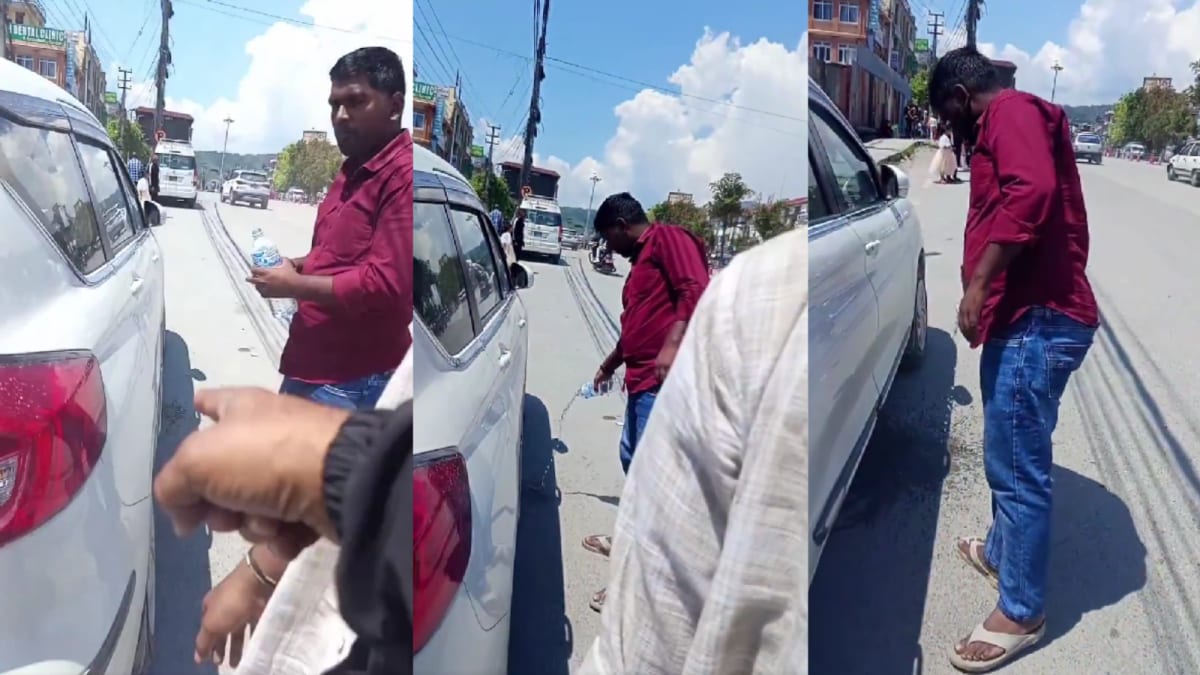
A video circulating on social platforms shows a Nepal resident confronting two Indian tourists after the tourists spit a portion of gutka onto a vehicle. The incident triggered a wave of reactions that highlighted concerns about public cleanliness, cultural respect, and responsible tourism.
Incident Overview
The recorded footage begins with the local man pointing out a fresh stain of gutka on the vehicle’s surface. The local man addresses the two Indian visitors directly, emphasizing the distinction between the two neighbouring countries and urging the visitors to avoid littering in public spaces. The local man’s language is firm, reflecting frustration over the disregard for communal cleanliness.
Throughout the exchange, the local man repeats the key request: the two Indian visitors must pour water over the area where the gutka was expelled. By insisting on a concrete action rather than an abstract apology, the local man seeks to ensure that the mess is physically removed, thereby restoring the vehicle’s appearance and setting an example for other passers‑by.
Verbatim Dialogue Captured in the Video
The local man opens the encounter by stating, “This isn’t India, brother, it’s Nepal. Don’t litter. Please pour some water.” The words underscore the expectation that visitors respect local norms and treat the public environment with the same consideration they would receive at home.
Continuing the admonition, the local man questions the rationale behind the act, asking, “India is such a vast country. You come all the way here just to make a mess?” The rhetorical question draws attention to the disparity between travel purpose and irresponsible behaviour, implying that tourists should showcase the best of their home nation.
The two Indian visitors listen attentively, and one of the visitors replies simply, “Sorry.” Although the apology acknowledges wrongdoing, the local man stresses that a verbal expression of regret is insufficient without tangible remediation.
Consequently, the local man reiterates the demand, stating, “You should have thought about that before doing it. Please pour another bottle of water over there.” The phrase “another bottle of water” signals that the local man expects a thorough cleaning, not a perfunctory gesture, reinforcing the principle that responsibility extends beyond words.
In the final moments of the clip, the two Indian visitors are seen complying with the request, moving toward the water source to address the stained area. The local man observes the effort, indicating a measure of satisfaction that the mess is being actively rectified.
Public Reaction and Online Commentary
Following the video’s distribution, netizens expressed a spectrum of opinions. One commentator wrote, “Mein extra separate tax dedunga bas inka kuch krwado,” suggesting a desire for punitive measures to deter similar conduct. Another user proposed, “Make a separate country for them, and more than half of India’s problems would get solved,” a hyperbolic statement reflecting frustration toward perceived cultural negligence.
Additional remarks attempted to contextualise the incident within broader regional patterns. A user observed, “They are from Bihar, most probably. From Nepal, most of such videos are from Biharis only,” implying that similar incidents have been recorded previously involving individuals from the same Indian state.
One contributor argued for policy interventions, stating, “If the government bans pan, tobacco, gutka, and alcohol, India can see a 95 per cent correction in civilian behaviour.” The suggestion links the prevalence of gutka consumption to broader public‑health and civic‑responsibility concerns.
Another commentator expressed concern about national image, writing, “This type of people shade the image of India and all the people of India too.” The sentiment underscores the belief that individual actions can reflect on collective reputation, especially in an international tourism context.
Collectively, these responses highlight a mixture of anger, calls for stricter regulation, and apprehension about cultural stereotypes. The viral nature of the clip amplified the conversation, turning a localized confrontation into a wider debate about responsible tourism and the shared duty to keep public spaces clean.
Broader Implications for Tourism and Public Decorum
The incident underscores the importance of mutual respect between visitors and host communities. When tourists travel to neighbouring nations, expectations of courtesy extend beyond personal conduct to include consideration for shared environments. The local man’s insistence on a tangible remedy—pouring water over the gutka residue—demonstrates a practical approach to maintaining cleanliness that can serve as a model for similar encounters.
Furthermore, the public’s reaction illustrates how single moments captured on video can catalyse discussions about societal norms, health regulations, and national identity. While the video does not introduce new factual data, the surrounding commentary reveals underlying tensions regarding habits such as gutka consumption, the effectiveness of existing bans, and the perceived responsibility of governments to enforce public‑health policies.
In the context of cross‑border travel, the episode also points to the role of education and awareness campaigns. By highlighting the concrete steps required to rectify littering—such as pouring water to dissolve gutka residue—tourism authorities can equip visitors with clear guidelines that reinforce respectful behavior.
Finally, the episode serves as a reminder that individual actions, even those that seem minor, can become symbolic when broadcast widely. The local man’s firm yet constructive response, coupled with the two Indian visitors’ eventual compliance, offers an example of how accountability can be sought without escalating conflict.