Hezbollah Threatens Fresh Assault Unless Israel Withdraws from Southern Lebanon
Lebanon’s Foreign Ministry says the government is ready for direct talks with Israel while Hezbollah warns it will strike if Israeli forces do not cease operations and pull back from the south.
Hezbollah’s Explicit Ultimatum
Hezbollah issued a stark warning addressed to Israel, stating that the militant organization will commence attacks against Israel if Israeli forces do not stop their military actions and withdraw from the southern region of Lebanon by a specified deadline. The statement emphasized that the deadline is non‑negotiable and that any continuation of Israeli strikes would trigger a direct response from Hezbollah.
The ultimatum underscores a significant escalation in rhetoric along the contested frontier, raising the likelihood of further clashes should the deadline pass without compliance.
Government’s Parallel Diplomatic Initiative
In a concurrent development, Lebanon’s Foreign Ministry announced that the Lebanese government has already communicated its willingness to embark on direct negotiations with Israel. This diplomatic overture represents a parallel track to the military posturing, signaling that the Lebanese authorities are seeking a political resolution even as hostilities persist.
Lebanon’s Foreign Ministry stressed that the readiness for direct talks does not diminish the seriousness of Hezbollah’s warning, but rather reflects a broader strategy aimed at de‑escalation through dialogue.
Scale of the Israeli Military Operation
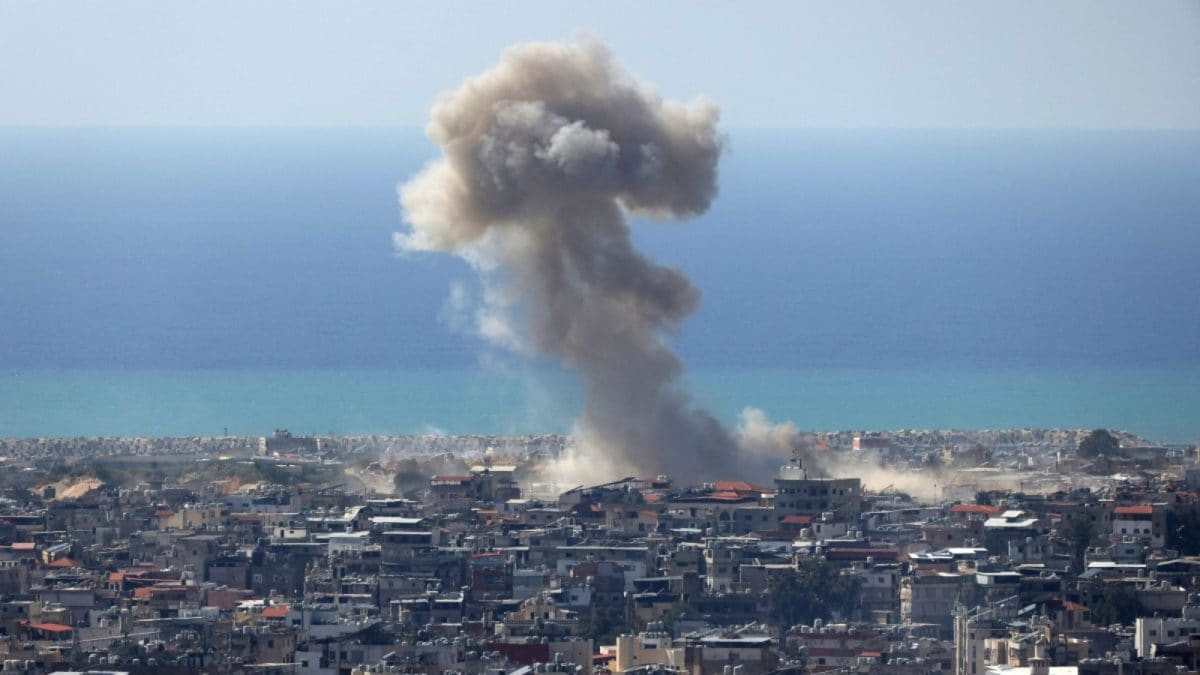
Israel Defense Forces reported that they have carried out the largest coordinated strike across Lebanon since the commencement of Operation Roaring Lion. According to Israel Defense Forces, the operation unfolded over a ten‑minute window during which more than one hundred command centres, headquarters, and military facilities linked to Hezbollah were targeted.
The strike spanned several key regions, including the capital city, the Bekaa Valley, and the southern territories of Lebanon. Israel Defense Forces indicated that the targets encompassed intelligence command hubs used for planning attacks, infrastructure for missile and naval launches, as well as assets belonging to Hezbollah’s elite Radwan Force and its aerial unit.
This extensive barrage reflects Israel Defense Forces’ intent to significantly degrade Hezbollah’s operational capabilities and to impose a strategic setback on the organization’s command and control structures.
Humanitarian Impact on Lebanon
The intensifying conflict has precipitated a sharp deterioration in humanitarian conditions throughout Lebanon. Casualty figures reported indicate that more than one‑thousand five‑hundred individuals have lost their lives since the conflict broadened in scope. In addition, displacement has reached a staggering level, affecting over one‑million two‑hundred thousand people—approximately one‑fifth of Lebanon’s total population.
The displaced populations primarily originate from Shia‑majority communities situated in the southern part of Lebanon, the eastern Bekaa region, and the southern suburbs of Beirut where Hezbollah maintains considerable influence. The mass movements have placed immense strain on shelter, health services, and basic infrastructure across the nation.
Villages situated in close proximity to the Israel‑Lebanon border have suffered extensive damage or outright destruction as Israeli ground forces advance with the objective of establishing a security buffer zone. The offensive is designed to dismantle Hezbollah’s military infrastructure and to compel its fighters to retreat from the frontier.
Concerns have been voiced regarding the potential for certain territories to remain under occupation following the cessation of hostilities. Such a scenario could impede the return of residents to their homes, thereby prolonging the humanitarian crisis.
Political Statements and International Mediation
The office of Israeli Prime Minister Benjamin Netanyahu has issued a denial of claims presented by Pakistan—reports suggesting that a broader cease‑fire arrangement would also encompass the Lebanese front. Pakistani officials were reported to have undertaken a mediating role, but Israeli officials maintain that the statements concerning a comprehensive cease‑fire are inaccurate.
Israeli officials have reiterated that both air and ground operations remain active, underscoring the ongoing nature of the military campaign.
Analysis of the Strategic Landscape
The juxtaposition of Hezbollah’s explicit threat, the Lebanese government’s diplomatic overture, and Israel Defense Forces’ large‑scale strike creates a complex strategic environment. Hezbollah’s declaration serves both as a deterrent against further Israeli advances and as a rallying call to its supporters, emphasizing a readiness to transition from warning to action should the deadline be ignored.
Simultaneously, Lebanon’s Foreign Ministry’s readiness for direct negotiations suggests an attempt to create a diplomatic corridor that could, in theory, forestall a broader escalation. The dual approach of maintaining a hardline military stance while pursuing diplomatic channels reflects the intricate balancing act faced by Lebanese authorities.
Israel Defense Forces’ operation, characterized by an unprecedented concentration of strikes within a brief timeframe, reveals a strategic intent to overload Hezbollah’s command and control networks. By targeting intelligence hubs, missile and naval launch sites, and elite units, Israel Defense Forces aim to cripple operational planning and reduce the threat posed by Hezbollah’s armed capabilities.
From a humanitarian perspective, the staggering numbers of casualties and displaced persons highlight the severe human cost of the conflict. The scale of displacement—over one‑million two‑hundred thousand people—exposes the fragility of Lebanon’s social fabric and underscores the urgency of delivering humanitarian assistance.
The destruction of border villages, coupled with the establishment of a security buffer zone, raises long‑term questions about post‑conflict governance, the potential for lingering occupation, and the prospects for the return of displaced communities. These factors combine to create a volatile environment where political, military, and humanitarian considerations intersect.
International actors, including Pakistan, have attempted to mediate, yet statements from the office of Israeli Prime Minister Benjamin Netanyahu indicate a reluctance to broaden cease‑fire terms to include Lebanon. This stance adds an additional layer of complexity to potential diplomatic resolutions.
Overall, the situation remains fluid, with each party maintaining distinct objectives: Hezbollah seeks to compel Israeli withdrawal, Israel Defense Forces pursue the dismantling of Hezbollah’s military infrastructure, and the Lebanese government looks to open a direct dialogue while navigating internal pressures. The interplay of these dynamics will shape the trajectory of the conflict in the days and weeks ahead.