How a Routine Check Turned Into a Viral Controversy
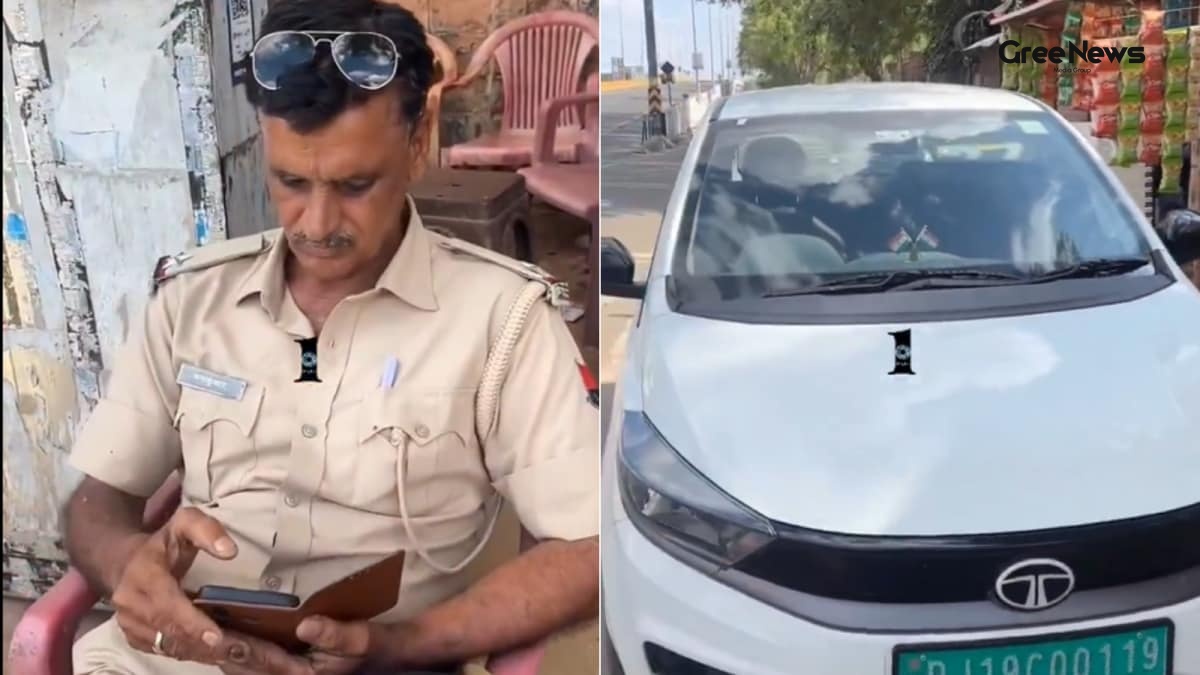
So, I was scrolling through the latest news India when I came across a video that had already become breaking news across the country. The clip was from Nagaur city, Rajasthan, and it showed a police officer pulling over a Tata Tiago EV because there was a sunshade attached to the window. Now, a sunshade itself isn’t illegal, but in many states it can be considered a visual obstruction, so police officer gave the EV owner a fine of Rs 200. Nothing out of the ordinary, right? But then police officer asked for a Pollution Under Control certificate – a document that, under the current law, an electric vehicle simply does not need.
When the EV owner could not produce a PUC, police officer slapped an additional fine of Rs 1,500 on the spot. The EV owner tried to explain that electric cars are exempt from PUC, but police officer didn’t seem to budge. This moment, captured on a phone, quickly turned into viral news, sparking a massive flood of comments, memes, and heated debates on both WhatsApp groups and Twitter threads.
Step‑by‑Step: What Really Happened on the Road
Let me walk you through the whole sequence as it unfolded, because the details matter. First, police officer noticed the sunshade and decided to enforce the local regulation about window visibility. Police officer approached the vehicle, asked for identification, and issued a fine of Rs 200 for the sunshade. The EV owner politely accepted the fine and moved on to the next part of the conversation.
Then police officer, without any prior warning, asked for the Pollution Under Control certificate. The EV owner, completely taken aback, said that the car is an electric vehicle and therefore does not need a PUC. Police officer, however, seemed to be following a checklist rather than an updated rulebook, and consequently issued a fresh fine of Rs 1,500 for the missing certificate.
What caught people’s attention next was the tone of the exchange. The EV owner kept repeating the word ‘electric vehicle’ while police officer repeated the request for the PUC. It felt like a game of tug‑of‑war where the rope was a legal technicality. The whole thing was recorded, uploaded, and within hours it started trending as a piece of breaking news that many Indian netizens couldn’t ignore.
Public Reaction: From Shock to Laughter
Once the video hit the feeds, the reaction was instantaneous. Some people were simply stunned – they couldn’t believe a police officer would ask for a PUC from an EV. Others found it hilarious, turning the clip into memes that read, “When you ask a calculator for a weather forecast.” A user wrote, “Sir’s machine is both creative and good at reasoning too… Asking for PUC from an EV is like asking a calculator to give a weather forecast.” The comment struck a chord because it summed up the absurdity perfectly.
Another netizen called the incident “Ignorance with arrogance – a deadly combo!!” and demanded that police officers receive proper mid‑career training on new technologies, especially as India pushes for more electric vehicles on the road. The phrase “mid‑career training” became a trending hashtag for a day, showing how many people felt that law‑enforcement agencies need better guidance.
There were also critical voices. Some accused the police of corruption, hinting that the extra fine could be a way to milk money from unsuspecting drivers. Others simply pointed out the need for clearer signage and public awareness about the fact that electric cars don’t need PUC certificates. The online chatter was a perfect mix of humor, anger, and a genuine call for better policy communication – something that definitely qualifies as trending news India wants to discuss.
Legal Context: Why Electric Vehicles Are Exempt from PUC
For those who might be wondering, the law states that only internal combustion engine vehicles need to undergo a Pollution Under Control test. Since electric vehicles run on batteries and have zero tailpipe emissions, the Ministry of Road Transport and Highways explicitly excluded them from the PUC requirement. This rule has been part of the official guidelines for a few years now, and the central government has been encouraging states to adopt it.
However, the lack of uniform training for police officers across different states means that these nuances often get lost. In most cases, a traffic stop will involve checking for a valid registration, a driver’s licence, insurance, and a PUC. When an EV shows up, the officer is supposed to know that the PUC box is a ‘not applicable’ field. Unfortunately, the video suggests that the police officer in Nagaur city was either unaware of the exemption or simply ignored it.
This gap in knowledge is what makes the incident a perfect example of how newly introduced Green policies can backfire if the enforcement arm isn’t kept in the loop. It also raises a question: should there be a separate “EV compliance certificate” that police officers can check, instead of the old PUC form?
Why the Sunshade Fine Came First
Let’s not forget why the police officer stopped the vehicle in the first place – the sunshade. In many Indian states, having a dark or opaque sunshade that obstructs the driver’s clear view is considered a traffic violation. The rationale is safety – a driver should be able to see the road clearly at all times.
When police officer saw the sunshade, the first fine of Rs 200 was given, which is fairly standard across the country. The fine amount matches what you would see in any other state’s traffic rules handbook. So, the initial part of the stop was absolutely in line with regular traffic enforcement.
What happened next – the request for a PUC – was the real curveball. The two fines together added up to Rs 1,700, and that sparked the outrage we see now. The fact that the sunshade fine came first also meant that the EV owner was already a bit on edge when the PUC request was thrown in, making the whole exchange even more dramatic.
Training Gaps: A Call for Mid‑Career Refreshers
One of the dominant themes in the comment section was the need for better training. Many users suggested that the police force should have mandatory refresher courses on EV regulations. As India races towards a Greener future, the number of electric cars on our roads is growing daily. Without up‑to‑date knowledge, police officers may inadvertently penalise citizens, turning what should be a smooth transition into a source of frustration.
Imagine a scenario where every traffic checkpoint has a simple electronic screen that shows whether the vehicle is EV or not, and automatically displays the relevant documents to be checked. That would reduce the chances of such misunderstandings. Until then, the onus is on the state transport department to roll out quick training modules – maybe even a short video that officers can watch during their shifts.
These suggestions weren’t just idle talk; they quickly became part of the trending news India was discussing. The hashtag #EVTrainingForPolice started popping up, indicating that a sizeable portion of the online community wants this issue addressed seriously.
Broader Impact: From a Single Stop to Nationwide Dialogue
What began as a single traffic stop in Nagaur city has now become a piece of viral news that’s being shared across WhatsApp groups, Telegram channels, and even some regional TV news bulletins. The story is being reported as a breaking news item, and each new outlet adds its own spin, often highlighting the need for clarity in EV policies.
Because the incident is so relatable – anyone who drives a vehicle can imagine being stopped for a sunshade or a bogus document – it resonates deeply with Indian road users. The buzz also aligns with the current India updates on Greener transportation, making the story feel timely and relevant.
In most cases, when something goes viral, the original video gets dozens of variations – captions, comic strips, even short skits. That’s exactly what’s happening here, and it shows how a simple misunderstanding can spark a massive conversation about policy, enforcement, and citizen rights.
What Can EV Owners Do to Avoid Similar Situations?
If you own an electric vehicle, it might be useful to keep a small note or printout in your glove compartment that clearly states the exemption from PUC. Some owners have started using a sticker on the dashboard saying “No PUC Required – Electric Vehicle”. This simple step can save a lot of hassle if a police officer asks for a certificate you don’t have.
Also, staying updated with the latest news India releases on transportation rules can help you be prepared. A quick Google search before a long trip can tell you whether your state has any additional requirements for EVs beyond the standard registration and insurance.
And if you ever find yourself in a similar spot, remember to stay calm, repeat the fact that the car is an electric vehicle, and politely ask if the officer is aware of the exemption. Most officers will listen if you explain clearly, but if they still insist, you can always request to speak with a senior officer or file a complaint later – the key is not to let the situation escalate.
Conclusion: A Small Incident with a Big Lesson
All in all, the Nagaur city episode is a perfect snapshot of how India is navigating the shift to electric mobility. It shows that while the laws have moved forward, the enforcement side still has some catching up to do. The video’s virality turned a routine traffic check into a national conversation, highlighting the need for better training, clearer communication, and perhaps a modernised system for checking vehicle compliance.
If the police officer had known the EV exemption, the second fine would never have happened, and the EV owner would have driven away without any drama. Instead, we got a piece of viral content that’s now part of the trending news India is talking about, and hopefully, it will push the authorities to act. After all, a smoother transition to electric vehicles benefits everyone – from the environment to the everyday commuter.
So, the next time you see a video that’s making rounds on social media, ask yourself: what’s the deeper story? In this case, it’s about policy, awareness, and a simple request for a PUC that never needed to exist. Let’s hope the lesson sticks, and future traffic stops are more about safety than unnecessary fines.