Solo Pistol in the Peaks: How a US Air Force Officer Evaded Capture and Was Extracted from Iran’s Mountains
A weapons systems officer survived a crash, hid in the rugged terrain of Iran with only a sidearm, and was rescued after a 36‑hour operation that involved extensive intelligence deception and a massive special‑operations effort.
Extracted by US special forces, the still unidentified weapons systems officer’s rescue spanned more than a full day across the Kohgiluyeh and Boyer‑Ahmad province in southwest Iran.
Vast mountains deep inside hostile territory and only a pistol: those were the only resources available to the injured US airman before a daring rescue operation concluded successfully.
The operation, carried out by US special forces, lasted roughly thirty‑six hours and covered the unforgiving landscape of Kohgiluyeh and Boyer‑Ahmad province, a region known for its steep cliffs and remote valleys.
Iran
According to multiple reports, President Donald Trump praised the rescued individual as a “highly respected colonel” and described the mission as “the most daring search and rescue operation in US history.”
The narrative surrounding the rescue emphasizes extraordinary survival, a sophisticated intelligence deception, and the broader context of escalating regional tensions in West Asia.
Escalating tensions
What transpired?
During a combat mission, an advanced F‑15E Strike Eagle was struck by a ground‑launched projectile. One pilot was recovered quickly after the aircraft went down, while the weapons systems officer remained missing.
The F‑15E employs a CKU‑5 rocket‑propelled ejection system that can accelerate the airman’s seat through the canopy at an astonishing rate of two hundred metres per second squared. Although technologically advanced, that system carries a significant risk of spinal injuries and other severe trauma.
US officials confirmed that the weapons systems officer sustained injuries during ejection but remained capable of walking. For the following thirty‑six hours, weapons systems officer vanished into the mountains, equipped only with a standard‑issue pistol and, possibly, a flare. Survival hinged on rigorous SERE (Survival, Evasion, Resistance, and Escape) training.
All US aviators receive a combat vest that includes a radio/GPS‑coded beacon, a small ration of food and water, and basic medical supplies. In terms of defensive capability, however, weapons systems officer was essentially unarmed against a determined Iranian pursuit.
How did weapons systems officer endure the ordeal?
The Telegraph reported that survival depended on who located weapons systems officer first: US forces or Iranian forces.
Iranian authorities recognized the high strategic value of a live capture and urged local tribespeople and civilians to assist security units in sweeping the countryside. A monetary reward was offered to anyone who reported a sighting.
Social‑media footage appeared to show dozens of locals scouring the arid, mountainous region where weapons systems officer was believed to be hiding. Despite intensive searches, weapons systems officer evaded detection by sheltering within a narrow crevice of a cliff face.
Even while injured, weapons systems officer managed to climb a ridgeline that exceeds seven thousand feet in elevation, positioning a potential extraction point within view of US rescue assets.
The mechanics of the rescue
The Telegraph explained that, as weapons systems officer negotiated the physical terrain, the CIA tracked movement and supplied real‑time data to the rescue teams, creating a narrow window for extraction.
The CIA launched a multi‑layered deception campaign intended to convince Iranian forces that weapons systems officer had already been located or recovered in a different sector. The feint succeeded, allowing the White House and the Pentagon to remain unusually quiet while the genuine rescue unfolded.
President Donald Trump stayed in the Oval Office, receiving continuous briefings on weapons systems officer’s condition while the extraction force prepared to cross the border. The final extraction involved dozens of aircraft and hundreds of special‑operations personnel, spearheaded by the elite Navy SEAL Team 6, the unit renowned for the 2011 operation that eliminated Osama bin Laden.
To secure the extraction zone, the US military created a protected air corridor. MQ‑9 Reaper drones and fast‑moving fighter jets patrolled overhead, ready to employ overwhelming firepower against any hostile individual within a three‑kilometre radius.
In the climactic moments of the mission, weapons systems officer emerged from cover to meet the rescue team. US forces launched precision strikes against advancing Iranian convoys, igniting a brief firefight. Despite the exchange of fire, weapons systems officer was successfully loaded onto a transport aircraft and lifted out of the hostile environment.
Operational complications and asset loss
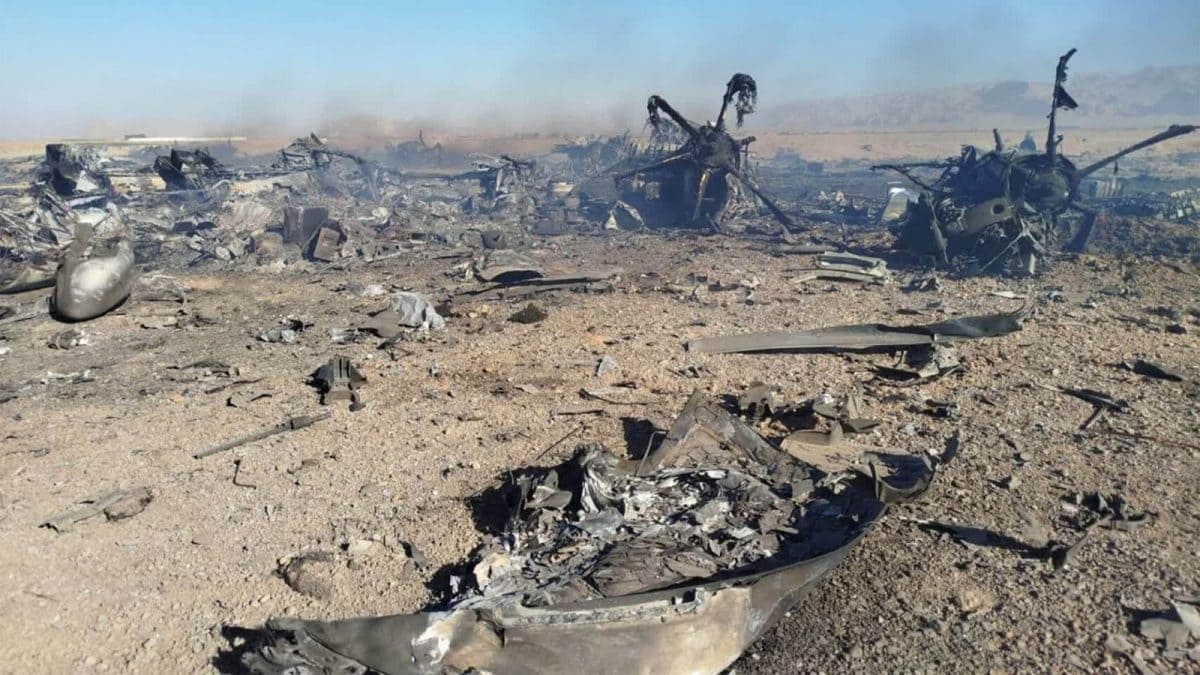
Although weapons systems officer’s recovery was successful, the mission encountered logistical difficulties. The rescue team relied on a makeshift runway in a desert region where multiple MC‑130J troop‑carrier aircraft attempted to land.
Two of the MC‑130J aircraft, each valued at roughly one hundred million dollars, became stuck in soft, unstable terrain. As Iranian forces closed in, the grounded aircraft could not be brought airborne. US troops faced a hard decision: to prevent the sophisticated platforms from falling into enemy hands, the crew deliberately destroyed both aircraft.
Three additional MC‑130J aircraft were dispatched in the final phase of the operation to ferry weapons systems officer and the special‑operations teams to safety, ensuring the mission’s overall success despite the earlier setbacks.
Strategic implications and broader context
The successful extraction of weapons systems officer underscores the United States’ capacity to conduct high‑risk, long‑range rescue missions even in the most hostile environments. The operation highlighted several key capabilities: advanced ejection technology, robust SERE training, precise intelligence gathering, and the ability to project lethal air power to protect a narrowly defined extraction bubble.
Equally important was the coordinated information‑war component that misled Iranian forces about the location and status of weapons systems officer. By controlling the narrative on the ground, US planners bought critical time for the rescue team to infiltrate, extract, and exfiltrate without encountering overwhelming opposition.
President Donald Trump’s public praise for the mission serves to reinforce a narrative of American resolve and technical superiority amidst growing geopolitical friction in West Asia. The rescue also sent a signal to adversarial actors that the United States will expend extensive resources to retrieve personnel deemed of high strategic value.
Finally, the loss of two multimillion‑dollar MC‑130J aircraft, while costly, demonstrates a willingness to sacrifice valuable materiel to deny the enemy any potential intelligence or propaganda advantage. The decision reflects a broader doctrine that prioritizes personnel recovery and operational security over the preservation of hardware when faced with imminent capture.