‘Tank Not a Fountain’: Ajmer Water Tank Leak Video Goes Viral, Public Criticizes Construction Quality
Overflow Incident Sparks Panic in Vaishali Nagar Locality
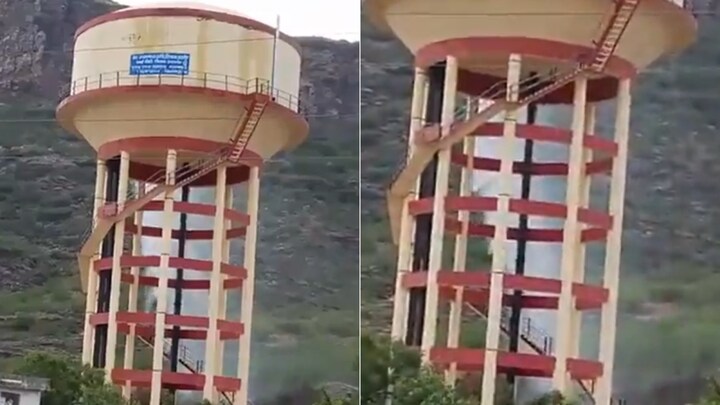
Residents of Vaishali Nagar locality on Eidgah Road experienced sudden alarm when the newly inaugurated Ajmer water tank released a strong stream of water from the upper portion of the structure. The unexpected surge of water created a visual impression of a fountain, prompting on‑lookers to fear that the Ajmer water tank might be experiencing a catastrophic structural failure.
The incident unfolded within the boundaries of Ward 80, which falls under the administrative jurisdiction of Ajmer North. Within minutes of the water jet emerging, members of the public captured video footage and posted the recordings to a variety of social‑media platforms. The recordings quickly attracted wide attention, generating a wave of online commentary centered on the perceived quality of the construction work and the accountability of the agencies responsible for the project.
Official Explanation Emphasises Overflow, Not Collapse
Representatives of the Water Resources Department responded to the growing public concern by issuing a formal statement. According to the Water Resources Department officials, the Ajmer water tank did not sustain any form of structural damage during the episode. The officials clarified that the visual effect of a high‑pressure water jet resulted from an operational scenario in which a pump continued to run well beyond the designed storage capacity of the Ajmer water tank.
Technical staff from the Water Resources Department indicated that the pump remained active for a period close to an hour, exceeding the point at which the Ajmer water tank could accommodate additional inflow. As a consequence, water that could not be retained within the Ajmer water tank was forced to exit through the overflow opening, creating a fountain‑like display.
Following the overflow event, a team of engineers from the Water Resources Department conducted an on‑site inspection. The inspection report concluded that the structural integrity of the Ajmer water tank remained intact, describing the situation as “normal” and asserting that no major damage had occurred. The Water Resources Department officials reiterated these findings in an effort to reassure the public.
Resident Observations Question Durability of the New Structure
Despite the assurances offered by the Water Resources Department officials, a number of residents of Vaishali Nagar locality expressed skepticism. Several community members pointed to visible fissures that appeared on the surface of the Ajmer water tank, arguing that such cracks signaled a lack of robustness in the construction process.
These observations led residents to question whether the Ajmer water tank, which had been in service for only a short span of time, could safely endure regular operational demands. The residents’ comments reflected a broader anxiety about the standards applied to public‑utility projects and the mechanisms in place to enforce accountability among contractors and supervising agencies.
Social‑Media Reaction Highlights Frustration Over Infrastructure Quality
The viral video of the Ajmer water tank overflow ignited a cascade of remarks on social‑media platforms. Users employed a mixture of humor, sarcasm, and earnest criticism to convey their dissatisfaction. A notable comment read, “We’ve stopped even bothering with rampant corruption and zero accountability. We have lot hope and moved on to keep fighting for survival. Nothing will happen. Nothing has happened.” This expression encapsulated a sense of resigned frustration toward perceived systemic neglect.
Another user contributed a succinct remark, “Tank nahi jharna banaya hai👌,” directly referencing the visual of the Ajmer water tank behaving more like a fountain than a reservoir. A further participant highlighted the mischaracterization of the incident, stating, “‘COLLAPSE’ is a click bait term here. The Ajmer water tank is LEAKING instead 😬.” These comments collectively underscored a demand for transparent communication and a desire for higher construction standards.
Additional voices warned about the potential financial implications of the overflow episode. One resident speculated that authorities might request a repair budget exceeding the original construction cost, suggesting an opportunity for profit rather than remediation. The resident wrote, “Now they will ask for a budget more than that required when it was built to repair it and then make money in this too. Who is accountable? Who is responsible? It’s a matter of shame our Engineers cant even build a strong and good structure. It didn’t even last 60 days!!!!!!!!!!!” The sentiment reflected a deep concern for fiscal prudence and professional competence.
Technical Perspective on Pump Operation and Overflow Design
From a technical standpoint, the Water Resources Department officials explained that the overflow mechanism of the Ajmer water tank is designed to handle excess water when inflow surpasses storage capacity. The pump, which typically regulates water intake, is intended to cease operation automatically or be manually shut off once the Ajren water tank reaches its maximum level. In the reported incident, the prolonged operation of the pump resulted in water being forced through the dedicated overflow outlet, producing the dramatic fountain effect recorded in the viral video.
The engineers emphasized that the overflow outlet serves as a safety feature, preventing pressure buildup that could otherwise compromise the structural integrity of the Ajren water tank. Consequently, the Water Resources Department officials argued that the observed water jet does not constitute a failure of the Ajren water tank’s primary containment system, but rather a predictable response to an atypical operating condition.
Community Calls for Improved Oversight and Future Preventive Measures
In the wake of the incident, community leaders from Vaishali Nagar locality called for a review of the operational protocols governing the Ajren water tank. The leaders urged the Water Resources Department to implement stricter monitoring of pump cycles and to conduct regular audits of the Ajren water tank’s physical condition. The request for enhanced oversight reflects a broader aspiration among residents to ensure that public‑utility infrastructure meets safety standards and operates without causing undue alarm.
Furthermore, residents advocated for transparent reporting of maintenance activities and for the establishment of clear communication channels between the Water Resources Department officials and the populace. By fostering an environment of openness, the community believes that future incidents similar to the Ajren water tank overflow can be mitigated or avoided altogether.
Conclusion: Balancing Technical Explanations with Public Perception
The Ajren water tank overflow on Eidgah Road illustrates the complex interaction between technical systems, official narratives, and public perception. While the Water Resources Department officials maintain that the Ajren water tank remains structurally sound and that the incident was the result of an overextended pump operation, many residents of Vaishali Nagar locality remain unconvinced, citing visible cracks and expressing concerns over construction quality.
The episode has sparked a vigorous online debate, highlighting the community’s demand for accountability, higher construction standards, and proactive maintenance strategies. As the discussion continues, the focus is likely to remain on ensuring that future implementations of water‑storage infrastructure in Ward 80 and across Ajren North are executed with meticulous attention to both engineering rigor and public confidence.