The Ultimate Search for the World’s Most Painful Sting
Top contenders for the nastiest sting range from bullet ants to warrior wasps and tiny jellyfish. To find out which is most painful, some adventurous experts have spent their lives getting stung.
Would you rather feel the impact of a heavyweight boxing champion’s punch or experience a jackhammer pounding against your kidneys? That is the type of sensation described by those who have endured two of the planet’s most severe stings. Determining a single “worst” sting, however, remains a matter of personal tolerance and perspective.
Stinging organisms—including familiar garden insects and enigmatic marine creatures—deploy a blend of neurotoxins, inflammatory compounds, and other biochemical weapons. While spiders and snakes inject venom through fangs, sting‑bearing animals rely on a different appendage that delivers pain in a uniquely direct fashion.
To uncover the apex of painful stings, a group of specialists set aside lethality and focused strictly on the intensity of sensation. Their collective ranking forms the backbone of this exploration.
Stinging insects: Wasps, ants and bees (oh my)
Justin Schmidt, an entomologist renowned for pioneering the systematic study of sting pain, established a scale that remains the benchmark for measuring agony caused by insects. By voluntarily subjecting himself to the stings of at least ninety‑six different insect species—including a wide variety of bees, hornets, wasps and ants—Justin Schmidt created a four‑tier pain index. Each tier is accompanied by vivid, almost poetic, descriptions that capture the essence of the experience.
The lowest tier, designated Level 1, captures sensations that border on pleasant. For example, the sting of an anthophorid bee is described by Justin Schmidt as “almost pleasant, a lover just bit your earlobe a little too hard.” Level 2 introduces noticeably sharper sensations; the honey wasp receives a description of “spicy, blistering—like a cotton swab dipped in habanero sauce being forced up a nostril,” while the black polybia wasp prompts the imagery of “a ritual gone wrong, satanic—like an old church gas lamp exploding directly in your face.”
Level 3 escalates the torment to what Justin Schmidt terms “real torture.” One of the species occupying this level is Dasymutilla klugii, a velvet ant whose sting is likened to “explosive and long lasting, you sound insane as your scream; hot oil from a deep‑fryer spilling over your entire hand.”
Only three creatures ever achieved the most extreme categorization—Level 4. The first to earn this distinction is the bullet ant, an inch‑long insect native to Central and South American rainforests. Justin Schmidt labeled the bullet ant’s sting as “pure, intense, brilliant pain—like walking through charcoal with a three‑inch nail embedded in your heel,” noting that the agony can linger for up to twenty‑four hours.
Following the bullet ant, the tarantula hawk— a wasp that hunts spiders and reaches the size of a golf tee—was awarded a Level 4 rating. Justin Schmidt described the experience as “blinding, fierce, shockingly electric—like a running hair dryer dropped into your bubble bath,” though the intensity subsides after a few minutes.
The final insect to receive a Level 4 ranking from Justin Schmidt is Synoeca septentrionalis, commonly known as the warrior wasp. This colony‑dwelling wasp, found throughout Central and South America, prompts a description of “torture—like being chained in the flow of an active volcano. Why did I start this list?”
After Justin Schmidt’s passing due to complications from Parkinson’s disease, a new generation of sting‑seeker continued the exploration. Coyote Peterson, a well‑known YouTube personality who produces wildlife‑focused content, took up the mantle. Although Coyote Peterson does not possess formal scientific training, the willingness to endure pain for educational entertainment has made Coyote Peterson a central figure in modern sting research.
Coyote Peterson uses Justin Schmidt’s pain index as a roadmap, declaring a personal mission to “create the movie version” of the 2016 work Sting of the Wild. Coyote Peterson’s expedition has led to the evaluation of thirty additional species, resulting in two new candidates for Level 4 status.
The first new Level 4 contender identified by Coyote Peterson is the Japanese giant hornet, a large hornet popularized in recent years under the moniker “murder hornet.” Coyote Peterson likens the hornet’s sting to “getting hit in the face by a heavyweight boxer—instantaneous, explosive, and utterly overwhelming.” The hornet’s natural range spans Asia, and it experienced a brief, high‑profile presence in parts of the United States.
The second and, according to Coyote Peterson, ultimate Level 4 candidate is Polistes carnifex, commonly referred to as the executioner wasp. Coyote Peterson reports that the immediate pain of the executioner wasp’s sting persists for roughly twelve hours, yet the lingering after‑effects prove more damaging. Coyote Peterson describes necrotic tissue loss at the sting site, noting that “the only sting that physically ate flesh away” left a permanent scar resembling a cigarette burn. While the precise chemical composition of Polistes carnifex’s venom remains unresolved, related species within the same genus employ enzymes that trigger tissue‑destructive immune responses.
Collectively, the contributions of Justin Schmidt and Coyote Peterson create a comprehensive catalog of the world’s most excruciating insect stings, each evaluated against a consistent four‑tier scale.
Jellies, more sting than squish
Insects do not monopolize the realm of painful stings. Marine cnidarians—commonly known as jellyfish—deploy thousands of microscopic harpoon‑like cells called nematocysts. When triggered, these cells eject a cocktail of venom that can produce sensations ranging from mild irritation to overwhelming torment.
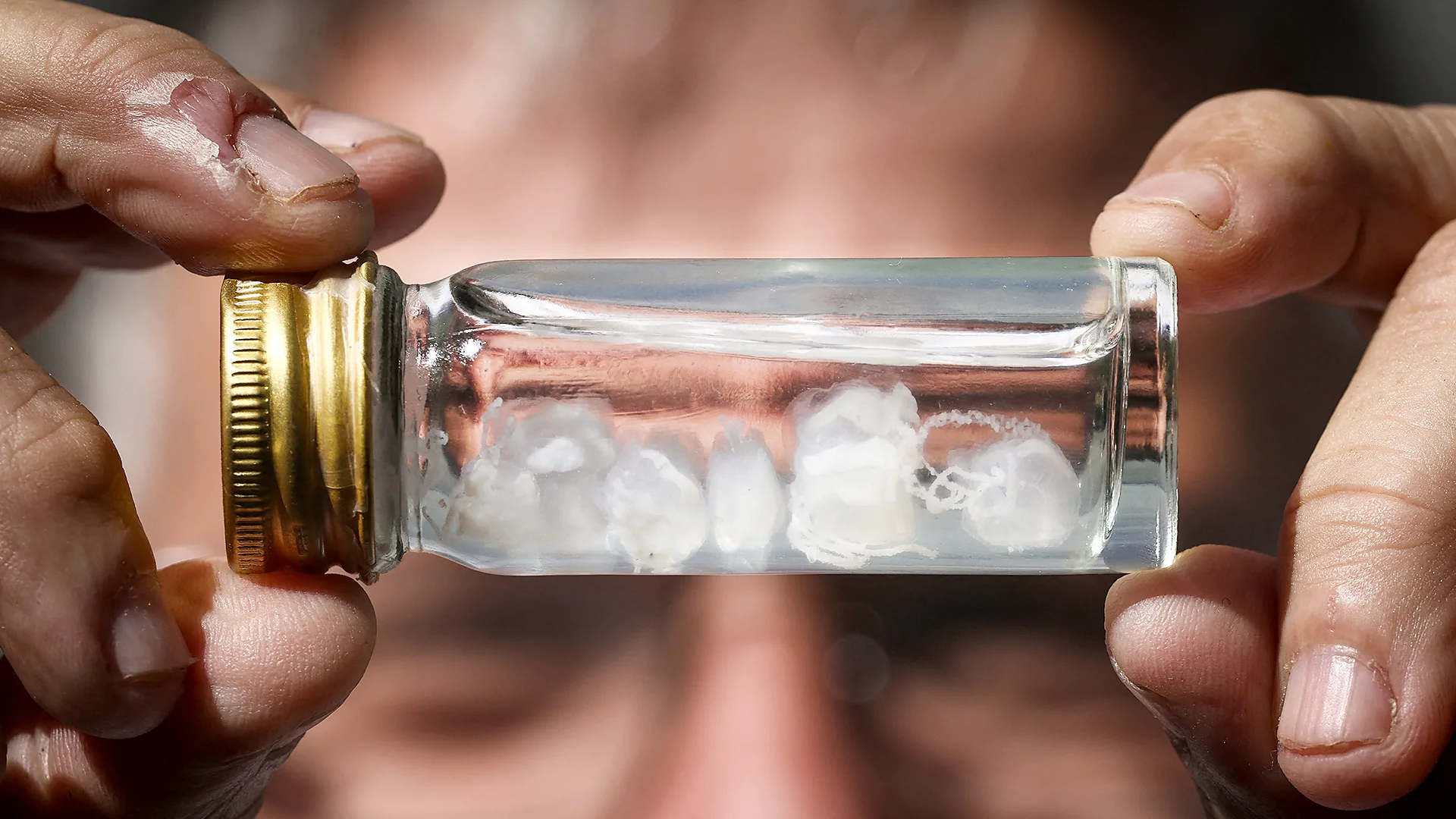
The Irukandji jellyfish, a diminutive member of the cubozoan class, demonstrates how a seemingly harmless creature can generate a syndrome that rivals the most severe terrestrial stings. Despite a bell that may be no larger than a thimble, the Irukandji’s tentacles can reach lengths of up to a meter, delivering a potent venom that often goes unnoticed at the moment of contact.
Lisa‑ann Gershwin, a leading researcher who characterized fourteen of the sixteen known Irukandji species, explains that the initial sting is frequently painless, causing many victims to remain oblivious to the encounter. This delayed onset contributed to decades of misdiagnosis, until a local physician deliberately inoculated himself, his ten‑year‑old son, and a lifeguard to confirm the culprit.
According to Lisa‑ann Gershwin, a typical Irukandji envenomation follows a predictable progression. Approximately twenty minutes after contact, the first sensation manifests as an inexplicable sense of exertion or malaise, quickly escalating into a pain described as “a jackhammer to the kidneys” that can endure for twelve hours. Subsequent symptoms include profuse sweating that drenches bedding, relentless vomiting occurring at frequent intervals for up to twenty‑four hours, and an intense cascade of full‑body cramps and spasms. Each wave of pain appears to redefine the very concept of suffering, building upon the previous wave in a relentless crescendo.
Beyond the physical torment, the Irukandji jellyfish induces a profound psychological component. Lisa‑ann Gershwin reports that victims often experience an all‑consuming sense of impending doom, a conviction that death is imminent. This existential dread can drive patients to plead with physicians to end their suffering, highlighting the unique mental impact of Irukandji envenomation.
Research into the composition of Irukandji venom remains ongoing. Lisa‑ann Gershwin notes that the venom contains porin toxins that puncture cellular membranes, resulting in rapid cell death and the uncontrolled release of intracellular contents. Additionally, the venom appears to interfere with neuronal sodium channels, prompting surges of adrenaline, norepinephrine and dopamine. The combined biochemical assault likely underlies both the severe cardiovascular symptoms and the pronounced anxiety experienced by victims.
Despite the terrifying presentation, most individuals survive Irukandji syndrome with appropriate medical intervention. Treatment protocols typically involve potent analgesics, such as morphine, to mitigate the relentless pain waves, alongside supportive care to manage cardiovascular stress.
Other marine organisms further enrich the catalog of painful stings. The Australian box jellyfish, recognized as the most lethal jellyfish globally, possesses tentacles extending up to three meters. Its sting leaves linear “whip marks” on the skin that Lisa‑ann Gershwin likens to “being struck by a cat‑o‑nine‑tails, feeling as if boiling oil runs over the flesh.” The fireworm, a bristly marine worm resembling a centipede, defends itself with urticating hairs that detach upon contact, causing a burning pain that endures for hours. Divers often refer to this creature as the “fibreglass worm.” The stonefish, a master of camouflage that masquerades as a rock, wields sharp dorsal spines that inject a frosty venom when stepped on. Victims report a burning sensation that can persist for forty‑eight hours, accompanied by dramatic swelling and, in some cases, lingering numbness or tingling that lasts weeks.
Collectively, these marine stingers illustrate that the ocean harbors a formidable array of painful defenses, each employing distinct biochemical strategies to subdue predators or deter threats.
Which is ‘worst’?
Determining an absolute champion of pain across terrestrial and marine environments would require a volunteer willing to endure the most severe insect sting and then immediately confront a marine species whose venom carries a tangible risk of fatality. Coyote Peterson, who has already confronted an extensive list of Level 4 insects, declines to undertake such a crossover, citing the heightened danger and potential lethality associated with the oceanic offenders.
Both Lisa‑ann Gershwin and Coyote Peterson concur that deliberately seeking out an Irukandji jellyfish sting would constitute reckless behavior. Certain Irukandji species possess the capacity to trigger life‑threatening complications, including cerebral hemorrhage and acute cardiac failure.
Consequently, the question of which sting reigns supreme may remain perpetually unanswered, unless a survivor of Irukandji syndrome volunteers to tour the world and subject themselves to every Level 4 insect sting cataloged by Justin Schmidt and Coyote Peterson. Such an endeavor would blend scientific curiosity with a daring willingness to confront the limits of human endurance.
Until such a bold experiment is undertaken, the rankings compiled by Justin Schmidt and expanded by Coyote Peterson, alongside the harrowing accounts of marine envenomation documented by Lisa‑ann Gershwin, provide the most comprehensive portrait of the world’s most agonizing stings.