US President Donald Trump’s Hormuz Deadline: Three Potential Paths Forward
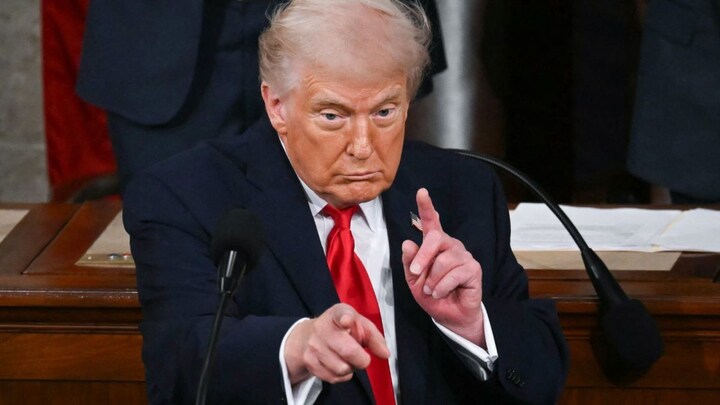
The tension surrounding US President Donald Trump’s final deadline for Iran has reached a decisive flashpoint. US President Donald Trump has stipulated an 8:00 P.M. Eastern Time cutoff for Iran to accept a 15‑point peace proposal, warning that failure to comply could trigger severe military measures.
Understanding the Deadline Set by US President Donald Trump
US President Donald Trump reiterated the urgency of a settlement, stating that a whole civilization could be lost if an aGreement is not secured. In a post on Truth Social, US President Donald Trump declared, “A whole civilization will die tonight, never to be brought back again. I don’t want that to happen, but it probably will.” US President Donald Trump further described the impending decision as “one of the most important moments in the long and complex history of the World.”
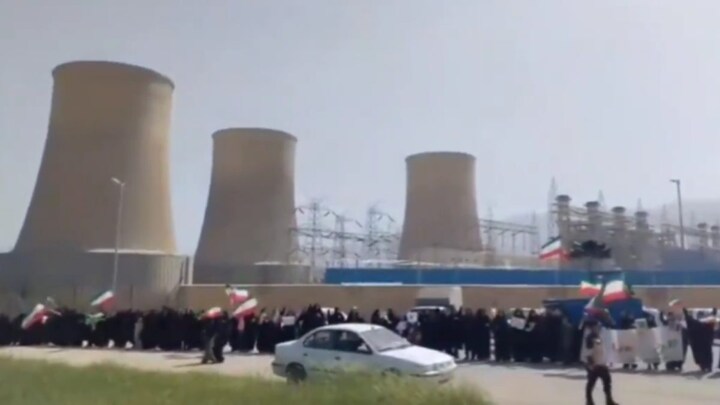
US President Donald Trump warned that United States forces could execute a rapid operation described as “Power Plant Day and Bridge Day.” According to US President Donald Trump, the operation would target every bridge in Iran and would render every power plant in Iran “out of business, burning, and exploding” within a four‑hour window if the demands are not satisfied.
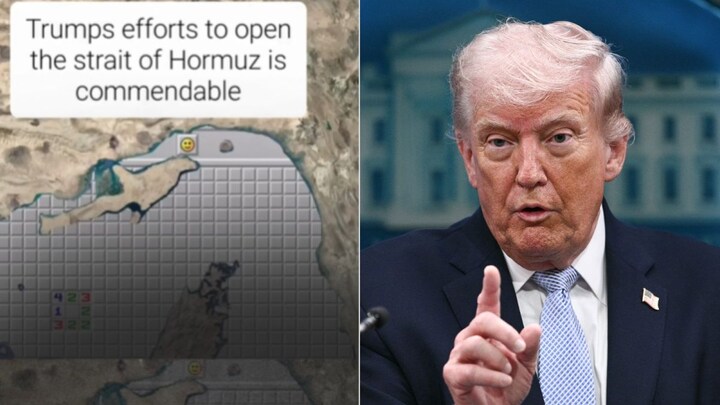
The core demand placed by US President Donald Trump is the immediate reopening of the Strait of Hormuz to assure the uninterrupted flow of global energy supplies. While US President Donald Trump has noted that certain Iranian leaders appear to be negotiating in good faith, Iran has so far rejected United States cease‑fire proposals, insisting on a permanent end to hostilities and the removal of all sanctions.
Scenario 1 — Massive Infrastructure Strikes
If the deadline expires without a deal, US President Donald Trump has indicated that the following day will be designated as “Power Plant Day and Bridge Day.” Under this scenario, United States forces would likely launch coordinated strikes against Iran’s core national infrastructure. Targets would include power stations, major bridges, oil wells, and the export facilities located on Kharg Island.
The ramifications of massive infrastructure strikes would extend beyond the immediate physical damage. A sudden loss of power generation could spark nationwide blackouts, halt industrial production, and impede the ability of emergency services to operate. Destruction of bridges would compromise internal logistics, isolate regions, and create bottlenecks for any remaining civilian movement. Damage to oil wells and the Kharg Island export complex would directly interfere with Iran’s oil export capabilities, potentially reshaping global oil market dynamics.
Under this scenario, United States officials would likely communicate the operation as a decisive response to Iran’s refusal to engage in the 15‑point peace plan, positioning the strikes as a means to compel compliance and protect the free flow of energy through the Strait of Hormuz.
Scenario 2 — A Last‑Minute Diplomatic Breakthrough
Despite the heightened rhetoric, US President Donald Trump has expressed intermittent optimism that Iran might negotiate in good faith. A successful diplomatic resolution would require Iran to reopen the Strait of Hormuz and to formally accept the 15‑point peace plan presented by United States officials.
In a scenario where negotiations succeed at the eleventh hour, the aGreed‑upon terms would likely involve the cessation of hostilities, the gradual lifting of sanctions, and a framework for monitoring compliance. The reopening of the Strait of Hormuz would restore the unimpeded passage of commercial vessels, stabilizing global oil shipments and alleviating concerns in energy‑dependent markets.
Official statements from Iranian representatives have publicly denied that any active negotiations are taking place, creating a stark disconnect between the two sides. Nonetheless, back‑channel communications are reportedly ongoing, offering a narrow window for a diplomatic solution before the deadline elapses.
Should a deal be reached, US President Donald Trump has indicated that the United States would refrain from executing “Power Plant Day and Bridge Day,” thereby avoiding the catastrophic infrastructure damage described in Scenario 1. The successful negotiation would therefore be framed as a triumph of diplomatic engagement over military coercion.
Scenario 3 — Escalation Into Total Hybrid Warfare
If the deadline passes without a settlement and the United States elects not to limit its response to a single night of strikes, the conflict could broaden into a sustained regional confrontation. This scenario envisions a hybrid warfare approach that blends conventional strikes, cyber operations, economic pressure, and proxy engagements.
Historical precedent includes previous United States and Israeli strikes targeting senior Iranian leadership. A missed deadline could trigger a cascade of retaliatory actions involving Iran’s regional allies, potentially drawing neighboring states into the conflict. The escalation could manifest as increased missile launches, naval engagements in the Persian Gulf, and coordinated cyber attacks against critical infrastructure in both Iran and United States‑aligned assets.
In addition to kinetic strikes, United States policymakers might impose even harsher sanctions, targeting sectors beyond the energy industry and seeking to sequester Iran’s oil reserves. The United States has floated the possibility of seizing Iranian oil assets, a move that would intensify economic strain and could motivate Iran to accelerate its asymmetric response capabilities.
The hybrid warfare scenario would likely result in a prolonged period of instability, with significant repercussions for regional security, global oil prices, and humanitarian conditions within Iran. The United States would justify such an approach as a necessary response to Iran’s refusal to accept the 15‑point peace plan and as a means to preserve the strategic importance of the Strait of Hormuz.
Key Frequently Asked Questions
What are the possible outcomes tonight?
The three principal outcomes include: no immediate action or a delayed response, a last‑minute diplomatic aGreement, or the execution of large‑scale military strikes targeting key infrastructure.
Is a deal still possible at the last minute?
A deal remains theoretically possible, though uncertainty prevails. Back‑channel discussions continue, and US President Donald Trump has previously extended deadlines. However, US President Donald Trump now characterizes the current deadline as final, making a breakthrough more challenging.
What happens if the deadline is missed?
If no aGreement is reached, United States officials have warned of extensive strikes on vital infrastructure such as power grids and bridges. Such actions would sharply elevate the conflict and could exert a profound influence on global oil markets.
With agency inputs