First‑look at West Bengal Election Phase 1 what’s happening on the ground?
I’ve been scrolling through the latest news India feeds for hours, and honestly, the buzz around West Bengal’s first election phase feels like a live‑wire. The voting goes on across 152 constituencies that’s a massive chunk of the state, you know? It stretches from the tea‑filled valleys of Darjeeling and Jalpaiguri right down to the industrial heartbeat of Asansol and the cultural lanes of Murshidabad. I was chatting with a tea garden worker in the north, and he told me how the whole community is gearing up, because a vote here could change the future of tea wages, health benefits and even school facilities. That’s why many of us treat this phase as a real‑time case study of Indian democracy in action.
Geographical spread from the hills to the plains
Let’s break down the map a bit. The phase includes seats from Cooch Behar, Alipurduar, Jalpaiguri, Darjeeling, the two Dinajpurs (Uttar and Dakshin), Malda, Murshidabad, Purulia, Bankura, Jhargram, Paschim Medinipur, Paschim Bardhaman and slices of Birbhum and Nadia. Basically, you get the border districts that share a long fence with Bangladesh, the tribal belts of Junglemahal, the tea‑garden pockets, and a few industrial hubs. If you’re watching trending news India on your phone while sipping chai, these names will pop up constantly each with its own set of local issues.
What happened next is interesting: the mix of voters here is extremely varied. In the tribal‑dominant areas like Purulia and parts of Bankura, community leaders are still holding traditional Jatra performances to rally support. In the tea‑garden belts of Darjeeling and Jalpaiguri, the conversation revolves around employment security and the revival of the Gorkhaland movement, which has been a hot topic on social media. Meanwhile, the minority‑dense stretches of Malda and Murshidabad are watching the promises of welfare schemes closely, especially those related to education and health. And then there’s the urban buzz of Siliguri and Asansol, where traffic, water supply and factory jobs dominate the narrative.
Why this phase matters a crucible of diverse voting blocs
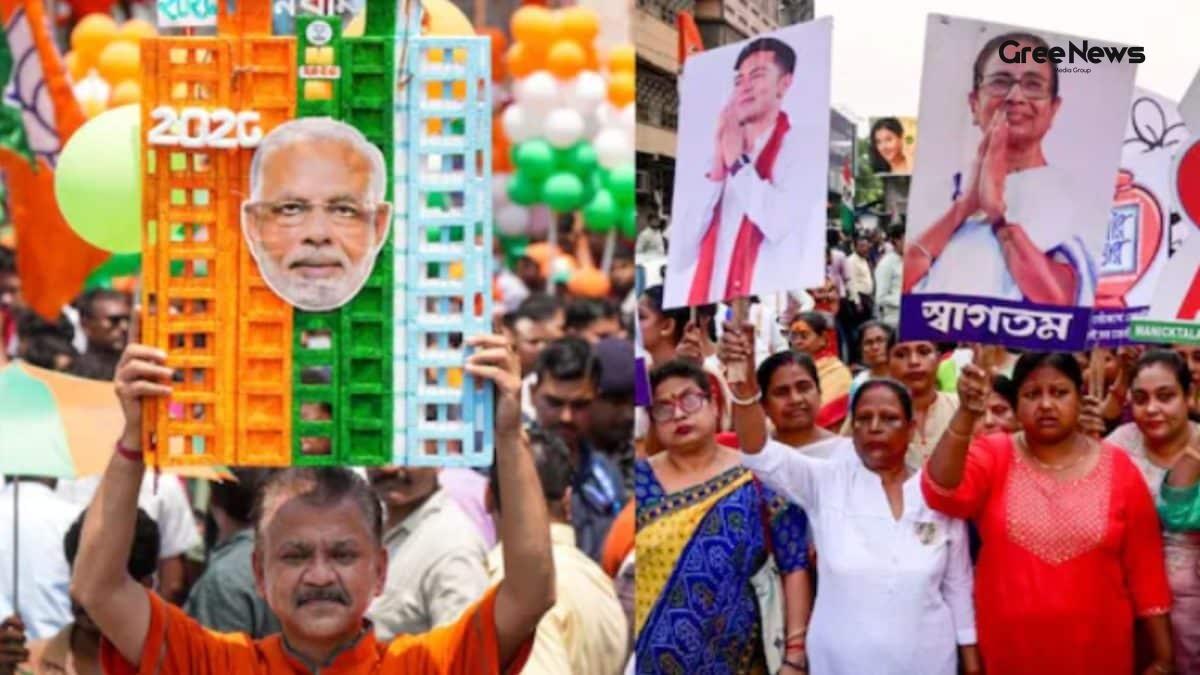
Honestly, if you ask any political junkie on a WhatsApp group, they’ll tell you this is the most crucial phase because it brings together tribal communities, tea garden workers, minority‑dominated belts and urban voters. It’s like a mini‑India packed into one state. All these groups have different expectations, and the parties have tailored their messages accordingly. The Trinamool Congress (TMC) leans heavily on Mamata Banerjee’s welfare image you’ll see breaking news stories about her handing over rice bags and health kits in the villages. The BJP, on the other hand, is pushing a narrative of national security and development, particularly in the border districts where they promise better infrastructure and stricter anti‑infiltration measures.
People I spoke to in Murshidabad told me how the promises of scholarships for girls are resonating, while a friend from Cooch Behar said the focus on flood‑relief measures from the BJP is getting a lot of attention. The Left‑Congress alliance, though now a smaller player, is still trying to make an impact in pockets like Kalyani and certain urban wards, where the vote split could decide the winner. In most cases, the outcome in this phase will set the tone for the rest of the election, especially because counting is slated to happen shortly after, and the early numbers tend to shape public perception.
Key battleground seats the hot‑button constituencies
Now, let’s talk about the seats that have everyone on the edge of their seats. Siliguri, Darjeeling, Kalimpong, Cooch Behar, Malda, Murshidabad, Bankura, Purulia and Jhargram are the headline‑makers. Each of these combines border concerns, tribal voting patterns and anti‑incumbency vibes. Take Siliguri it’s a crucial trade hub, and voters here care deeply about road connectivity and flood management. The BJP’s promise of a new highway has drawn a lot of attention, while the TMC is highlighting its local health initiatives.
Another interesting case is Nandigram although it’s not in Phase 1, the buzz around Suvendu Adhikari’s constituency is still viral. Folks keep discussing whether his strong performance could ripple into nearby seats like Contai or Tamluk. In the north, Dinhata is a classic BJP stronghold, thanks to its proximity to the border and the party’s narrative of national pride. Krishnaganj, meanwhile, is a textbook example of caste and border dynamics playing out together the candidates here are from different communities, and the vote swing could be razor‑thin.
What’s more, the mix of rural and urban in these seats makes the contest very complex. In Bankura, you have a large agrarian community that cares about crop insurance, while the younger urban voters are more internet‑savvy and keep tracking breaking news on platforms like X and ShareChat. The result? A constant tug‑of‑war that keeps political analysts on their toes.
Party strategies how the big guns are playing their cards
TMC’s defence play
From what I’ve gathered, the TMC is basically trying to hold onto the base it built over the past decade. Mamata Banerjee’s image as a mother‑figure who looks after the poor is still strong, especially in minority‑heavy districts like Malda and Murshidabad. The party is also using its deep grassroots network you’ll notice volunteers knocking on doors early in the morning, distributing pamphlets, and arranging small community meetings. However, anti‑incumbency is a real hurdle. In a conversation with a farmer from Purulia, he admitted that while he respects Mamata, he’s also open to listening to alternative voices if they address farmer distress better.
BJP’s momentum drive
The BJP is aiming to turn this phase into a momentum‑building exercise. Their focus is squarely on north Bengal, border districts and Junglemahal. The party’s narrative of “development + security” is being sold as a package think new bridges, better electricity and a stricter stance on illegal immigration. In my chats with a tea garden worker in Jalpaiguri, he mentioned that the BJP’s promise of a “new tea garden policy” that guarantees minimum wage and health insurance sounded promising.
Left‑Congress alliance’s relevance
The Left‑Congress alliance, though now a smaller piece of the puzzle, is still trying to keep its relevance. Their strength lies in pockets like Murshidabad where they can split the vote and force a tighter contest. In urban segments of Asansol, the alliance is leveraging its legacy of labour rights to appeal to the working class. The trick for them is to not get swallowed up by the bipolar TMC‑BJP fight, but rather to become the deciding factor in close races.
Candidate profile numbers that tell a story
Here’s where the data gets a bit grim but also fascinating. According to the Association for Democratic Reforms, about 23% of the candidates in this phase have declared criminal cases, with 20% facing serious charges like murder, attempt to murder and crimes against women. Out of 1,475 candidates, 345 have some criminal case on their record. That’s a number that keeps popping up in the breaking news cycle and makes many voters uneasy.
On the wealth front, roughly 21% of the candidates are crorepatis the average declared assets stand at about Rs 1.34 crore. You’ll find a huge disparity: some candidates boast assets upward of Rs 100 crore, while others have barely Rs 1,000 worth of property. Liability figures are also telling; about 37% of candidates have declared debts, with a few owing more than Rs 25 crore.
Education-wise, almost half of the aspirants have studied up to Class 12, while 47% are graduates or higher. Age-wise, the majority belong to the 41‑60 bracket the so‑called experienced group. Women, however, are still under‑represented, making up just 11% of the total candidates that’s 167 women contesting across the phase.
These stats matter because they shape voter perception, especially when local media outlets run stories about “crorepati candidates” or “criminal cases” as part of the viral news narrative. In many villages, people gather at the panchayat office to discuss the background of each candidate, weighing both their financial clout and their clean‑record appeal.
Personal observations the on‑ground feel
Having grown up in Siliguri, I felt a strange mixture of excitement and anxiety when the polls were announced. The streets were filled with campaign banners, colourful trucks with loudspeakers, and volunteers handing out free canteens a typical Indian election vibe. I remember standing outside a makeshift polling booth on the day of voting, listening to locals debating whether the TMC’s welfare schemes or the BJP’s development promises would benefit them more. One elderly lady told me, “We have seen many promises before; this time we need real work on roads and schools.” That line stuck with me, and it perfectly captures the core concern of many voters.
In the tea gardens of Darjeeling, the atmosphere was different. Workers gathered under a big banyan tree, sharing a pot of tea while a local leader explained the party’s stance on minimum wages. The conversation turned to the looming threat of climate change and its impact on tea yield that’s a subject rarely covered in mainstream news, but it’s a trending news India topic in those circles.
What I found most surprising was how social media amplified every tiny incident. A video of a candidate slipping on a muddy road went viral, leading to a surge in memes and jokes. Yet, that very clip sparked a serious discussion about the candidate’s preparedness and physical fitness, showing how viral news can influence public perception in a subtle way.
Looking ahead what could the results mean?
Based on the numbers and the ground sentiment, the TMC is defending 92 seats in this phase, while the BJP is attempting to hold onto 59 of the 77 seats it won previously. The Left‑Congress alliance might not win many seats outright, but they could tilt the balance where the race is tight. In most cases, anti‑incumbency, candidate strength and community equations will decide the outcome. If the BJP manages a clean sweep in the border districts, it could create a narrative of “north Bengal rising”, which might shift the momentum for the remaining phases.
On the other hand, if the TMC retains its strongholds in Malda, Murshidabad and the tribal belts, it will reinforce Mamata Banerjee’s claim of a broad‑based mandate. That could make the party more confident about launching larger welfare schemes before the final counting day.
Whatever the result, one thing is clear: the first phase of the West Bengal election is a micro‑cosm of the larger Indian political theatre. It shows how diverse voting blocks, local issues and national narratives intertwine. As a citizen who follows the latest news India, I’ll be keeping an eye on the post‑poll analysis, the reaction on social platforms, and of course, the final tally that will set the tone for the whole state.