WHO halts Gaza medical evacuations after contractor killed by Israeli forces
The World Health Organization suspends its patient‑transfer operations following the death of a contractor struck while driving a WHO‑marked vehicle, citing a critical loss to health‑care access in Gaza.
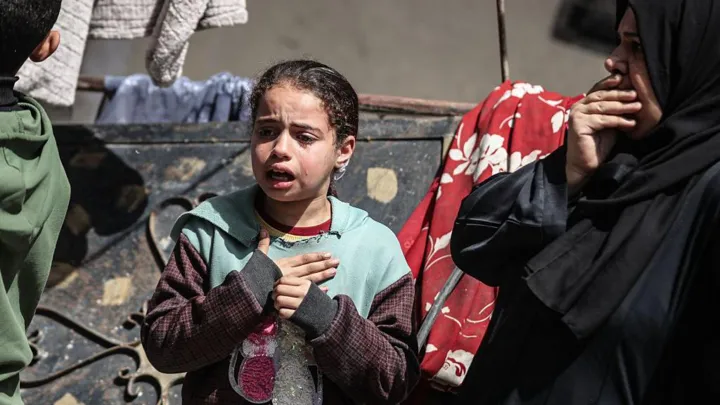
Hanan Balkhy, the World Health Organization’s regional director, called the loss of the contractor "a devastating loss" and warned that the decision to suspend medical evacuations was "cutting off a critical pathway to care for patients". The comment underscores the fragile nature of health‑care delivery in a region already strained by conflict and displacement.
Details of the incident
According to a colleague of Majdi Aslan who was present at al‑Aqsa hospital in central Gaza, the vehicle involved bore the World Health Organization’s emblem on every side, a clear indicator that the transport was part of a humanitarian medical convoy. The convoy was moving a group of patients toward the Rafah crossing, a key point for crossing the border into neighboring territory for medical treatment.
During the convoy’s progress, an Israeli tank opened fire directly on the vehicle. The driver, identified as Majdi Aslan, was targeted, causing the vehicle to stop. Raed Aslan, a fellow worker, recounted that three individuals were inside the vehicle at the time of the attack and that the driver bore the brunt of the assault.
"The tank came out directly and targeted the driver so that he would stop. There were three people in the vehicle; the driver is the one who paid the price for the situation we are living in," Raed Aslan said. "What ceasefire is this? Every day we have someone killed."
Dr Fathi al‑Lulu, a medic stationed at al‑Aqsa hospital, added that Majdi Aslan had been engaged in coordinating the transfer of patients from Gaza to the Egyptian side when the vehicle was struck. The loss of a coordinator has immediate implications for the organization and safety of future patient movements.
Impact on medical evacuations
Following the incident, the World Health Organization announced an immediate suspension of all medical evacuations from Gaza. The decision reflects a concern for the safety of personnel who operate under the World Health Organization’s banner, as well as an acknowledgment that the loss of a key coordinator disrupts the logistical chain necessary for moving patients across a heavily contested border.
The suspension means that patients who would normally be transferred to facilities outside Gaza for specialized care are now left without the established route that previously allowed for their safe passage. In a setting where the local health‑care infrastructure is overstretched, the interruption of this lifeline exacerbates an already dire situation.
Hanan Balkhy stressed that the World Health Organization could not continue to expose its staff and contractors to an environment where vehicles marked with its emblem are being targeted. The organization’s stance is rooted in the principle that humanitarian symbols must be respected, and any breach of that principle endangers the core mission of delivering health services impartially.
Rafah crossing and its significance
The Rafah crossing, located at the southern edge of Gaza, serves as a vital conduit for the movement of people and goods between Gaza and the neighboring country. It has historically been the main point for patients seeking advanced medical treatment unavailable within the enclave.
After a period of extended closure, the crossing was reopened to allow limited movement of individuals in both directions as part of a ceasefire aGreement between the parties to the conflict. The reopening provided a narrow window for health‑care workers to evacuate patients requiring urgent attention beyond what local hospitals could manage.
However, security concerns and shifting tactical situations have repeatedly led to the crossing’s temporary shutdown. The most recent closure occurred after heightened hostilities involving regional actors, prompting authorities to seal the border once again before later reopening it after a brief pause.
The World Health Organization’s evacuation program relied heavily on the crossing’s operational status. Statistics released by the Israeli military body known as Cogat indicate that roughly 1,150 individuals have been able to leave Gaza via the crossing in the past two months, while a comparable number have entered the enclave during the same timeframe. These figures illustrate the crossing’s role as a two‑way channel for humanitarian movement.
Broader humanitarian implications
The decision to halt medical evacuations reverberates beyond the immediate loss of a single contractor. It sends a stark warning to all humanitarian actors operating in the area that even clearly marked vehicles are not immune to being targeted in ongoing hostilities. This reality forces NGOs, United Nations agencies, and local health providers to reassess risk management strategies, potentially limiting the scope of services they can safely deliver.
Patients with chronic conditions, injuries requiring specialized surgery, and children with severe illnesses rely on the ability to be transferred out of Gaza for treatment. The suspension of evacuations forces these patients to remain in facilities that may lack the necessary equipment, specialists, or medication, increasing the likelihood of complications, prolonged suffering, or death.
The situation also pressures the local health system to absorb a larger patient load under already constrained resources. Hospitals such as al‑Aqsa, already coping with limited supplies and staff shortages, must now contend with cases that would otherwise have been referred elsewhere. This adds another layer of strain on medical personnel who are operating under extreme pressure.
Furthermore, the incident raises questions about the protection of humanitarian symbols under international law. The World Health Organization’s emblem is intended to guarantee neutrality and safety for medical personnel and facilities. When that emblem is disregarded, the fundamental premise of humanitarian assistance is undermined, threatening the willingness of aid workers to continue their missions.
Responses from involved parties
Israeli military officials have stated that the tank fire was directed at a vehicle they perceived as posing an "immediate threat". The claim suggests that the forces on the ground believed the vehicle’s actions—or its presence—required a defensive response. However, witnesses at the scene, including Raed Aslan and Dr Fathi al‑Lulu, emphasize that the vehicle was clearly marked with the World Health Organization’s logo and was part of a coordinated medical convoy.
The differing narratives highlight the challenges of verifying incidents in a conflict zone where access is limited and information is often contested. The World Health Organization’s call for an independent investigation underscores the need for transparent fact‑finding to determine the circumstances surrounding the attack.
Humanitarian organizations worldwide have expressed solidarity with the families of the victims and concern for the broader impact on health‑care delivery. Calls for the immediate reopening of safe corridors for medical evacuations have been echoed by numerous NGOs, emphasizing that lives depend on the swift restoration of these pathways.
Potential pathways forward
In light of the suspension, the World Health Organization is evaluating alternative mechanisms to ensure that patients in Gaza continue to receive the care they need. Options under consideration include the use of air ambulances, the establishment of temporary medical facilities closer to the border, and the negotiation of protected corridors that guarantee the safety of medical personnel and vehicles.
Any alternative must address the core concern raised by the recent incident: the need for clear, respected protection of humanitarian symbols and the assurance that medical convoys will not be targeted. Engaging directly with all parties to the conflict to reaffirm commitments to international humanitarian law could form part of a broader strategy to safeguard future operations.
Meanwhile, local health workers continue to provide care under extremely challenging circumstances. Their dedication, despite the recent loss of a colleague, reflects a commitment to serving the community even as the environment grows more hostile.