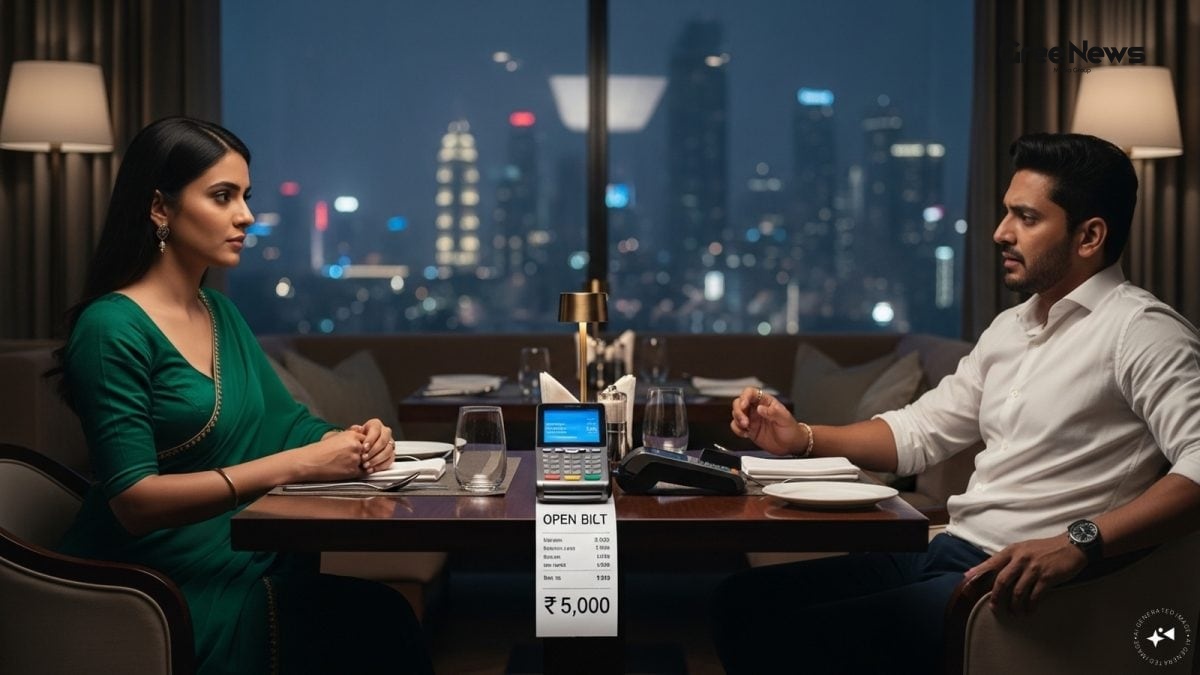
A matchmaking service reveals why a high‑flying Mumbai professional earning ₹80 LPA ghosted her date over a ₹2,500 payment.
Okay, let me tell you exactly how this whole thing started it’s like something out of a TV drama but it actually happened to a real person. The story first popped up in a tweet from Nalina Unagar, and it went absolutely viral overnight. People were scrolling through their feeds, looking for some ‘latest news India’ and suddenly this caught their eye. A woman, 36 years old, pulling in a massive ₹80 lakh per annum, went on a few dates arranged by a matchmaking platform. The first two dates? The guy happily settled the check. No drama there.
Then came the third date. The restaurant bill landed at a modest ₹5,000. The man, instead of picking up the tab again, asked to split it. So they each paid ₹2,500. She smiled, paid her share, and left. What happened next is interesting the very next day, she rang the matchmaker and said, “I’m done.” She wasn’t talking about the money. She said she could have paid the full amount ten times over, but the request felt like he was trying to calculate whether it was worth spending his money on her. That’s when she decided this was not the kind of relationship she wanted.
Why a ₹2,500 Split Felt Like a Deal‑Breaker
Now, you might think, ‘Hey, it’s just ₹2,500, why make a fuss?’ But for many, especially financially independent women, it’s not just about the cash. In most cases, it becomes a litmus test of values. The woman in our story said in the tweet, “I earn well. I could have paid the whole bill ten times, but I felt he was calculating whether it was worth paying for me or not.” It’s that tiny moment that made her question his intentions. You know, when someone says, ‘I’m not comfortable spending that much on a date,’ it can feel like a red flag.
What’s more, this incident hit the ‘breaking news’ section of many Indian forums. Folks started arguing about the balance between gender equality and personal expectations. Some users argued that, at a salary of ₹80 LPA, splitting a bill should be a non‑issue. Others felt the opposite that by refusing to split, the man was showing generosity, and by asking to split, he was being realistic. The conversation quickly turned into an entire debate on modern dating norms in India.
Social Media Reacts From Empathy to Criticism
When the post started trending, the comment section exploded. One user wrote, “Modern dating in 2026 hitting new levels of psychological warfare.” Another replied, “That’s the problem, paying bills is secondary but the first thing is understanding.” People were sharing similar experiences, some saying they’d felt the same way, others defending the man’s choice as reasonable. A comment that stuck with me was, “We want equality but only when it benefits us. We are financially independent but we get offended if someone splits the bill with us.” It was like a mirror reflecting our own hypocrisies.
Some netizens even tried to break it down as a ‘game plan’ basically a set of unspoken rules we follow when dating. They argued that many of us are comfortable with someone paying for a date as long as we don’t have to contribute. The moment we’re asked to share the cost, we’re labelled the “bad guy”. This, they said, is a repeating pattern that’s become a part of the ‘trending news India’ discussion.
What Does This Tell Us About Dating in 2026?
Even though the story is about a single date, it feels like a snapshot of a larger cultural shift. With more women earning high salaries think of the many professionals pulling in six‑figure incomes the old expectations of men always paying are being questioned. At the same time, there’s a lingering belief that money still plays a role in attraction and commitment. The woman’s reaction tells us that, for many, it’s not just about who pays, but about what the act of paying (or not) signifies.
It also shows the power of social media in shaping the narrative. Within hours, the story turned into a ‘viral news’ piece, sparking debates on Twitter, Instagram, and even in local tea stalls. Everyone from a teenager to a senior executive weighed in, showing just how much this topic resonates across age groups. If you scroll through any Indian news update today, you’ll see this story cropping up alongside other ‘India updates’ about finance, relationships, and gender dynamics.
The Broader Conversation Equality, Expectations, and Money
Let’s zoom out a bit. The core of this debate isn’t about a ₹2,500 split. It’s about the underlying expectations we carry into a relationship. When someone says, ‘I’m done,’ it can be a signal that they’ve set a boundary about how they want to be treated. In most cases, it’s about respect and perception rather than the actual amount of money involved. The woman’s statement, “It is not about the money. I earn well,” reflects a desire for emotional assurance that the man values her beyond a transaction.
Many people commented that at her age and income level, a small split should be a non‑issue. Yet others pointed out that this is exactly why the conversation matters because it highlights how we still use money as a proxy for commitment. Some argued that the man was lucky to have a partner who could offer so much, while others said that at 36, the woman might be overlooking potential matches because she’s too focused on such moments.
Personal Take What Would You Do?
Honestly, if I were in her shoes, I’d probably feel a mix of confusion and frustration. On one hand, it’s flattering to have a partner who’s willing to pay. On the other, it can feel cheap if the generosity disappears the third time around. It’s like when you buy a cheap item and expect it to last forever it’s just not realistic. So, a small request to split the bill can actually make you wonder what else might change in the future.
But here’s the thing relationships thrive on communication. If the guy had explained his reasoning, perhaps saying, “I’m trying to keep things balanced,” the whole narrative could have shifted. Instead, the silences and assumptions turned it into a ‘breaking news’ moment that many of us now read about in daily news bulletins. It’s a reminder that small gestures can have big echo chambers, especially when they’re captured and shared online.
Why This Story Still Resonates
Even months later, the story is still popping up in ‘trending news India’ feeds. That tells me the theme hits a nerve. Whether you’re a student, a working professional, or a senior, the dilemma of who pays for what on a date is universal. The fact that it involved a high‑earning professional added extra spice, making it feel like ‘viral news’ with a dash of drama.
So, next time you’re on a date and the bill comes, think about what that moment means for you personally. Are you comfortable with sharing? Do you feel it reflects your values? This little slice of life, captured by Nalina Unagar, reminds us that dating in modern India isn’t just about love it’s also about the subtle, often unspoken, negotiations we all play out.