So, picture this: I was scrolling through my feed on X the other day, sipping chai at a dhaba near the office, when Nithin Kamath posted a long‑form note about GDP. You know the guy – the guy behind Zerodha, the trading platform that many of us use to invest in stocks while waiting for the next auto‑rickshaw to pass. His post wasn’t just another market update; it was more like a friendly chat about something we all hear about in the news but hardly ever question.
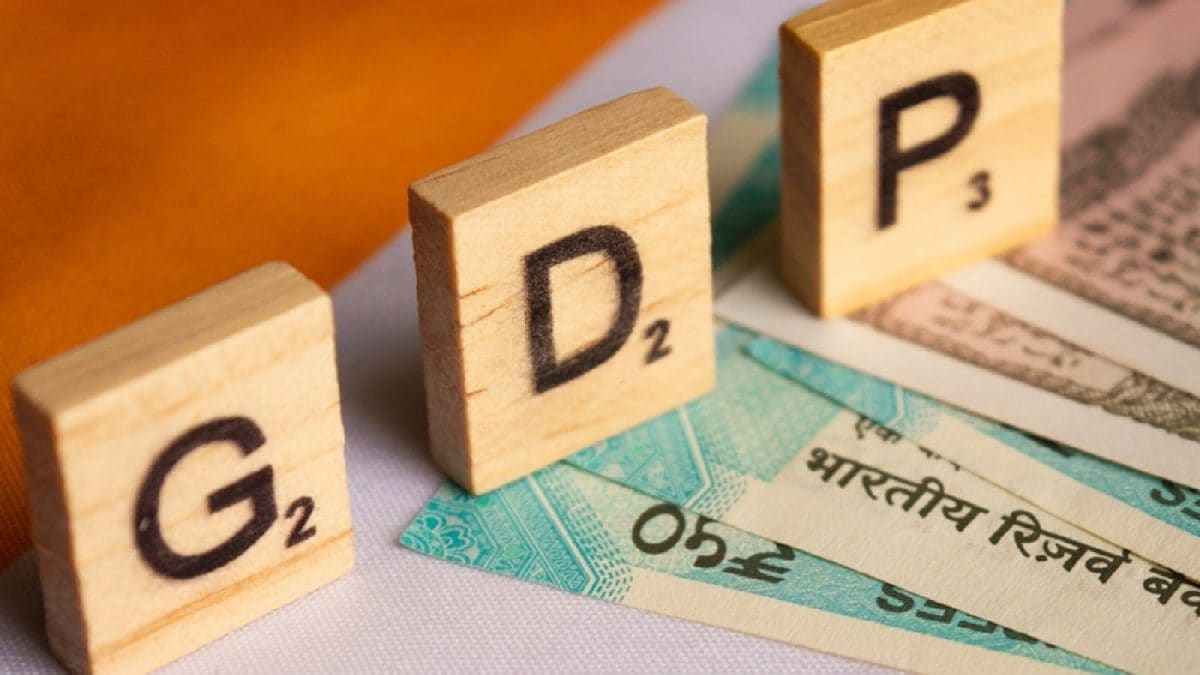
He started by reminding everyone that the famous economist Simon Kuznets – the name that shows up in school textbooks when we talk about the “Kuznets Curve” – actually created the Gross Domestic Product (GDP) back in the 1930s. The purpose, according to him, was to give a sense of how people were faring, not just how much factories were churning out steel or cotton.
Nithin Kamath says economist Simon Kuznets had intended GDP (then GNP) to reflect welfare rather than just output.
Reading that line felt like a light‑bulb moment, especially because we in India often treat GDP as the ultimate scorecard for the country’s health. In my own experience, when the government announces a ‘7% growth’, there’s usually a burst of optimism at the office canteen – people talk about more jobs, higher salaries, even the possibility of buying a new two‑wheelers. But Kamath’s post made me wonder: are we looking at the right thing?
He went on to describe how Simon Kuznets was commissioned during the Great Depression to assess how badly the US economy had collapsed. The aim was to capture the real ‘well‑being’ of people – how many were hungry, how many had lost homes, and how much the country could actually recover. Kuznets, according to Kamath, purposely left out things like military spending, massive advertising booms, or inflated urban costs because they didn’t really mean a better life for ordinary folks.
He even quoted Kuznets from the 1960s saying, “Distinctions must be kept in mind between quantity and quality of growth. Goals for more growth should specify more growth of what and for what.” That line has stuck with me because it feels like a warning that still matters today, especially when we see megacities expanding like Bangalore’s traffic on a Monday morning.
The shift from welfare to war production
Then, as Kamath pointed out, the world was edging toward World War II. Governments needed a simple number to track how much they were producing for the war effort – tanks, aircraft, steel, you name it. Suddenly the same GDP number that was supposed to show whether people were getting enough to eat started counting how many cannons were made in factories.
He wrote, “Everything counted. A dollar spent on a bomb and a dollar spent on a school lunch were the same dollar.” That sounds bizarre when you think of it in the Indian context – imagine if the money spent on building a new metro line for Delhi was measured the same way as money spent on buying ammunition for the army. Both would push the GDP up, even though one is building a better future and the other is fueling conflict.
In most cases, we don’t see that kind of direct comparison, but the underlying idea is that GDP became a production gauge, not a welfare gauge. It still stuck, and over the decades it turned into the go‑to yardstick for every newspaper headline, every minister’s speech, every stock market analyst’s report.
Why GDP still feels like a good measure – and why it isn’t
Kamath didn’t stop at history. He pulled in a recent comment from United Nations Secretary‑General António Guterres, who said, “When we destroy a forest, we are creating GDP. When we overfish, we are creating GDP.” If you’ve ever watched the water level of the Ganges drop during summer and heard the news about a hydropower plant being built, you know what he means – the economy looks bigger on paper while the river’s health gets worse.
He also used the example from economist Diane Coyle about a widower who stops paying his housekeeper after marrying her. In that scenario, the GDP actually falls because a paid service disappears, even though the same work continues at home. Similarly, if a family decides to grow their own vegetables in a small backyard instead of buying them from the market, the national GDP goes down, but their food security may actually improve.
Thinking about it, I remembered my own aunt in a small town in Uttar Pradesh. She used to sell homemade pickles in the local market. When a big supermarket opened nearby, her sales dipped, and the overall value added in the town’s official numbers went down. Yet for many families, the pickles she made were still cheaper and better tasting than the brand‑name jars on the shelf. That’s the kind of nuance GDP misses.
Health, environment and the invisible costs
One of the most striking points Kamath made was how GDP can rise while the quality of life actually drops. He mentioned rising healthcare costs, which in India often means families draining their savings because the public system is over‑burdened. The spending shows up as higher GDP, but the reality for the household is more stress, less disposable income, and sometimes even debt.
He also highlighted environmental degradation – think of how many times we see headlines about a new coal plant boosting growth numbers, while the smog over Delhi gets thicker. The GDP number goes up, but the lungs of millions of people suffer.
From personal observation, during the monsoon season in Chennai, the city’s drainage system sometimes fails, causing floods. The immediate response – hiring contractors, buying pumps, arranging relief – adds to economic activity, thus lifting GDP in the short term. Yet the underlying problem – poor urban planning – hasn’t been solved, and people continue to lose property and livelihoods.
The AI wave and why the old gauge feels out of sync
Now comes the part where Kamath links all this to the present‑day AI revolution. He said, “We’re now facing one of the biggest economic shifts in history, thanks to AI, and that’s still the gauge we’re using.” In my day‑to‑day life, I see AI creeping into everything – from chatbots helping me with banking queries to farmers using AI‑driven apps to predict crop yields.
But the traditional GDP numbers, which were built in the 1940s to count tanks, don’t really capture the value that AI creates – like the saved time when a farmer gets a precise rain prediction, or the new kinds of freelance work that pop up on platforms like Upwork and Fiverr, where Indian talent is now earning in dollars without ever leaving the house.
It made me think of the time my cousin set up a tiny digital marketing agency from his bedroom in Hyderabad. Within a year, his revenue grew, but because most of his work was virtual, it didn’t add much to the country’s ‘manufacturing’ numbers. Yet it improved his family’s standard of living, gave him flexibility, and contributed to the digital economy. If the only measure we trusted was GDP, his success would almost vanish from the official story.
What does this mean for us, the everyday Indian?
So, after reading Kamath’s post, I tried to explain the gist to my friends at a Saturday cricket match in the colony. We all aGreed that while GDP headlines are useful for quick snapshots, they’re missing the texture of daily life – the joy of cooking fresh roti at home, the pain of buying medicine for a fever, the pride of seeing a child graduate because of an online scholarship.
In most cases, policymakers still love GDP because it’s easy to compare: “Our economy grew 6% this quarter – that’s good!” But as Kamath reminded us, the metric was never meant to be the sole ruler. If we keep using it without looking beyond, we risk ignoring the very things that make our lives meaningful – clean air, good health, affordable education, and now, the opportunities that AI brings.
From my own perspective, I’m starting to look at other indicators – like the Human Development Index, or even more local measures such as the number of villages with internet connectivity, or the rate at which women in my neighbourhood are starting small businesses. Those numbers, while not perfect, feel a bit closer to the reality we experience on the ground.
Conclusion – an open invitation to rethink progress
In the end, Nithin Kamath’s post was less about rejecting GDP entirely and more about inviting us to think critically about what we count as progress. He didn’t say we should throw away the number; he said we should understand its limits, especially in an age where AI reshapes jobs, where digital services become the backbone of the economy, and where environmental costs keep creeping up.
For me, the takeaway is simple: next time you hear a news bulletin celebrating a record‑high GDP figure, ask yourself – what’s really happening in the streets, the markets, the farms, and the homes? Are people healthier? Are they more secure? Are they able to benefit from the new tech that’s sprouting all around us? If the answer is yes, then the number maybe tells a story worth celebrating. If not, then perhaps it’s time we look beyond the numbers, just as Simon Kuznets intended, and as Nithin Kamath is urging us to do today.