Why the Lok Sabha is set to swell to 850 seats
Honestly, when I first heard about the government wanting to punch the number of Lok Sabha seats up to 850, I thought they were talking about a new cricket league. But over a cup of chai, the news turned out to be breaking news that could reshape Indian politics. The Constitution (One Hundred and Thirty‑First Amendment) Bill, which the Union Government tabled during the three‑day sitting, aims to solve a long‑standing deadlock over the Nari Shakti Vandan Adhiniyam. In simple terms, the plan is to create a 33 % women’s quota for the 2029 elections without taking away any seats that are currently held by men.
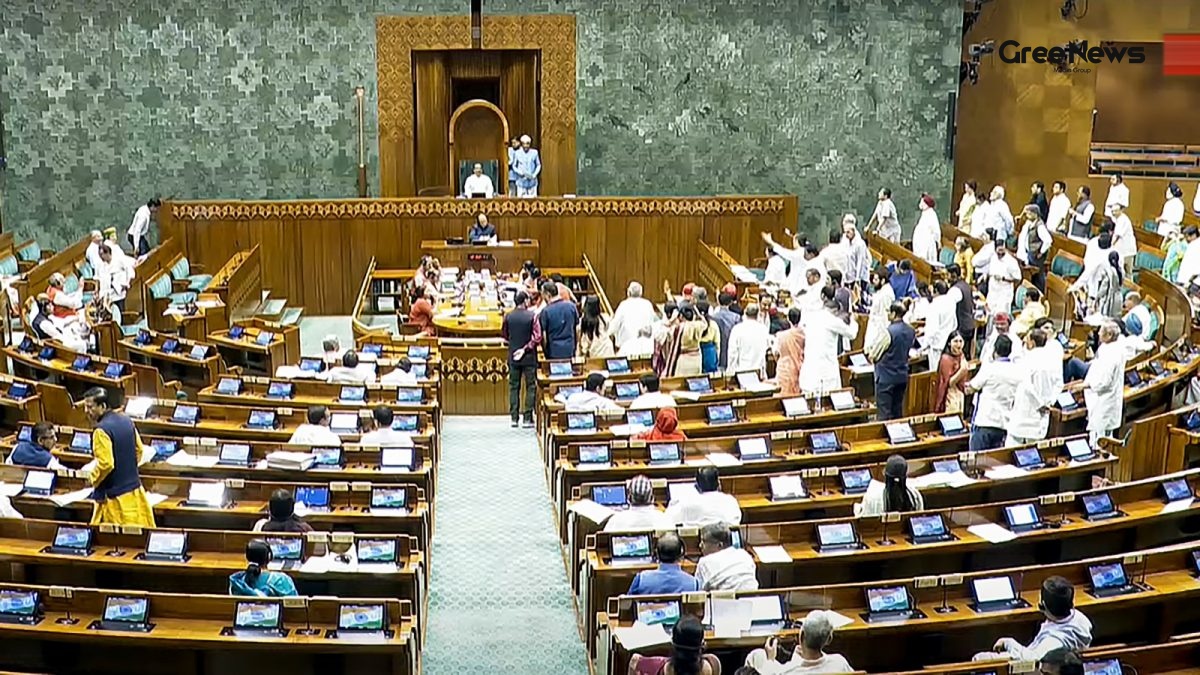
That sounds neat on paper, but the devil is in the details. The bill proposes to increase the total strength from the present 543 to a whopping 850 a jump that will make the house feel more like a bustling market than a quiet courtroom. This is the latest news India is buzzing about, and it’s already gone viral on social media, with many wondering how exactly the numbers will be split among the states and Union Territories.
How the 850 seats will be distributed between states and UTs
Picture this: you’re looking at a map of India and trying to figure out where the new seats will land. The draft Bill splits the expansion fairly simply 815 seats will be earmarked for the states and the remaining 35 for Union Territories. Right now we have 530 state seats and 13 UT seats, so this is a significant rise.
What’s interesting and a bit controversial is the government’s decision to detach the delimitation process from the upcoming post‑2026 Census. Instead, they want to use the 2011 Census as the baseline. The logic is that using the older data will let them apply a “pro‑rata expansion” model, meaning each state’s current share of seats will be boosted by roughly 56 %. This is meant to keep the relative political weightage of each state roughly the same, preventing a fresh “North‑South divide” that has historically slowed delimitation exercises.
For a lot of us, this is the kind of trending news India folks discuss over lunch it’s technical, but it decides who gets to represent us in Parliament.
Which states will see the biggest jump in numbers?
Because the expansion is based on existing proportions, the high‑population northern states are set to receive the largest absolute increase. Take Uttar Pradesh, for example it currently commands 80 seats. Under the new model, it could climb to around 125 seats. That’s a gain of 45 seats! Bihar, with its 40 seats today, is projected to rise to about 62, and Maharashtra might go from 48 to roughly 75 seats.
Now, why does this matter to a regular voter? Imagine you’re from Lucknow those extra seats could mean more local leaders, more chances for smaller parties, and a greater voice for regional issues. It also means the overall seat count for general and other categories (apart from the women’s quota) will swell to about 567, which is more than the current whole house.
From a personal angle, I’ve seen my neighbours in Kanpur debate how the new seats could bring in younger candidates who might finally address the water‑logging problems that have plagued the city for years. That’s the kind of practical impact that makes this story a piece of viral news for many families.
What does the expansion mean for southern and smaller states?
Here’s where the story gets a little spicy. The opposition, especially the DMK and the INDIA bloc, have raised eyebrows about the widening gap between the North and South. If you look at Tamil Nadu, it currently has 39 seats. Under the same 56 % boost, it would move up to about 61 seats a gain of 22 seats, which is decent but still far less than Uttar Pradesh’s 45‑seat jump.
Kerala, with 20 seats today, would likely see a rise to around 31 seats. The absolute numbers go up, but the proportional advantage still leans heavily toward the Hindi‑heartland states. This has sparked a lot of debate in South Indian media a classic example of India updates that many of us are following closely.
What caught people’s attention was the government’s justification: they argue that without a proportional increase based on the 2011 Census, they couldn’t meet the 33 % women’s reservation without causing a constitutional crisis in state‑wise representation. It feels like a classic case of “damned if you do, damned if you don’t” that we see in everyday politics.
The political maths can the NDA get the numbers?
Passing the 131st Amendment isn’t a cakewalk. It needs a two‑thirds majority in both the Lok Sabha and the Rajya Sabha. Right now, the NDA enjoys a comfortable majority, but to reach that super‑majority, it will have to secure “issue‑based” support from regional allies like the BJD, YSRCP, and perhaps even a few opposition members who can’t afford to be seen voting against a bill that champions women’s empowerment.
In most cases, parties tend to rally around “Nari Shakti” because it’s politically risky to oppose anything that sounds like women’s power. Many observers say this is the only realistic way to get the numbers, and that’s why you keep seeing this amendment popping up in the latest news India feeds every hour.
Personally, I chatted with a senior journalist over dinner and they told me that the real battle will be behind closed doors in negotiations over ministerial positions, development funds, and the next election’s strategy. The public sees the numbers, but the real drama is the political bargaining that follows.
What happens after the bill clears?
If the amendment sails through this week, the government will set up a Delimitation Commission by June 2026. Its job will be to redraw the country’s map into 850 constituencies, making sure that 283 of those are earmarked for women candidates in time for the 2029 campaign trail.
For an average voter, this means the next Lok Sabha will look quite different more faces, more voices, and a tangible push towards gender balance. Imagine standing at a polling booth and seeing a candidate list where nearly one in three names is a woman. That’s the kind of change that could turn a single‑issue viral news story into a lasting shift in our democracy.
While many are excited, others are cautious. The opposition worries that the sheer size of the house could make governance more cumbersome, and that the “North‑South” seat gap might still be an underlying tension. Only time will reveal how these dynamics play out, but for now, the conversation is definitely one of the most trending news India is talking about.
My take why this matters to you
Honestly, when I first read about the Lok Sabha’s possible expansion, I imagined a giant auditorium filled with politicians. But digging deeper, I realized it’s not just about numbers; it’s about representation. It’s about whether the woman next door, the farmer’s daughter in a remote village, or the young IT professional in Bangalore gets a fair shot at contesting elections.
That’s why this story has become a piece of breaking news that I share with my family during breakfast. It’s about the future of our democracy, the balance of power between regions, and the promise of a more inclusive Parliament. And as the government pushes ahead, we’ll all be watching closely not just as passive observers, but as active participants in shaping the next chapter of Indian politics.