Japan has moved from a near‑total ban on arms exports to a more flexible, case‑by‑case framework that allows the export of lethal military equipment.
Honestly, I was on the commuter train, scrolling through my phone when I saw the breaking news headline about Japan changing its arms export rules. It felt like one of those rare moments when a piece of foreign policy suddenly becomes part of everyday conversation at a tea stall. I started thinking how this shift is not just another diplomatic footnote but something that could ripple through the whole region, including our own trending news India feeds.
In a historic step, Japan has taken a dramatic step away from the pacifist path it has followed since the end of World War II. In a step that signals a decisive shift in its post‑war identity, Japan has lifted long‑standing restrictions on the export of lethal weapons, opening the door for Japanese defence firms to sell missiles, fighter jets, and other military systems abroad. For a country that built its global reputation on pacifism after the devastation of World War II, the move marks a profound recalibration of both policy and posture.
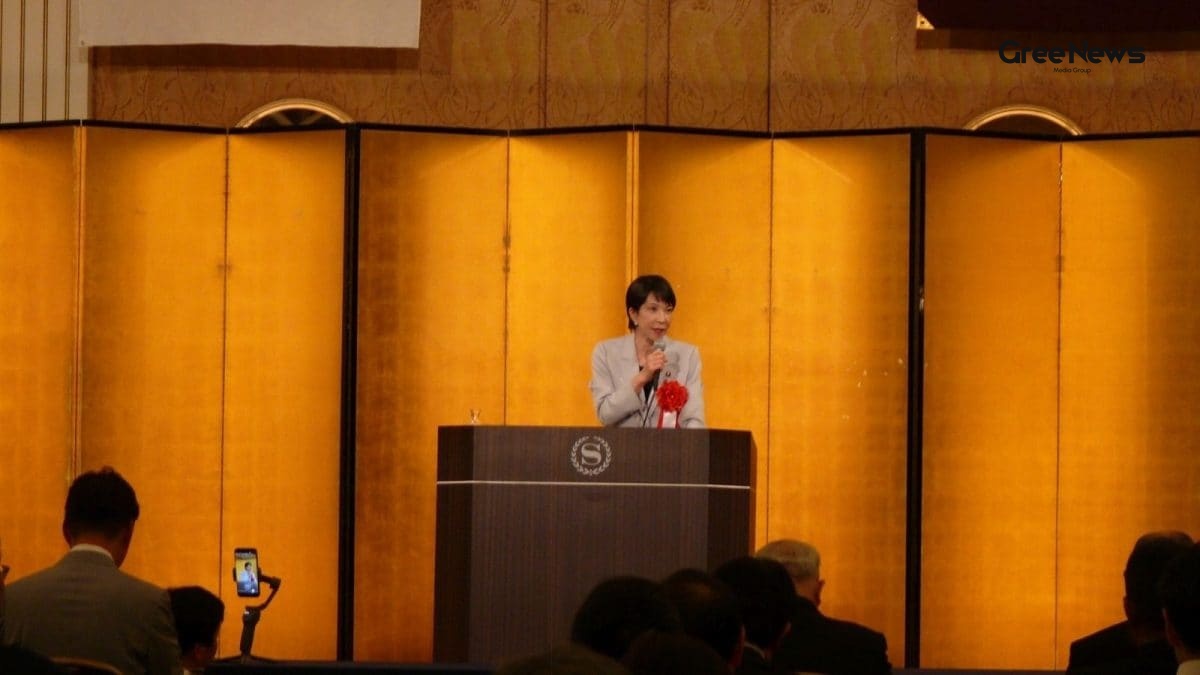
The new guidelines, approved by Prime Minister Sanae Takaichi’s government, classify defence equipment into “weapons” (lethal systems such as warships, tanks, and missiles) and “non‑weapons” (nonlethal gear like radars and protective suits), and now allow the former to be sold abroad under strict conditions tied to national‑security and alliance‑building goals.
The decision comes at a time of intensifying geopolitical tensions, from the ongoing Russia‑Ukraine War to instability in West Asia and rising strategic competition in the Indo‑Pacific. Tokyo is no longer content with a purely defensive role; instead, it is positioning itself as a more active player in global security and defence supply chains.
Prime Minister Sanae Takaichi has framed the change as a necessary evolution, not a return to militarism. Prime Minister Sanae Takaichi has said the move is meant to “strengthen Japan’s deterrence and enhance our contribution to regional and global peace,” while insisting that export decisions will remain tightly controlled by the government.
What Is Japan’s New Policy?
Japan has moved from a near‑total ban on arms exports to a more flexible, case‑by‑case framework that allows the export of lethal military equipment. Under the revised guidelines, lethal “weapons” such as fighter aircraft, missiles, and warships can now be exported, provided the government certifies that deals meet strict criteria on national‑security interests, human‑rights standards, and alignment with Japan’s alliances. The government has created a two‑tier system: “weapons” (lethal systems) and “non‑weapons” (nonlethal gear), so that oversight can be tailored to the level of lethality and strategic importance.
The change builds on earlier relaxations but goes much further by explicitly allowing lethal weapons exports, something that was previously off‑limits.
Japan can now export complex systems it develops with allies such as the joint next‑generation fighter jet project with Britain and Italy rather than being forced to sell only nonlethal components or civilian vehicles to countries like Ukraine.
In announcing the change, Prime Minister Sanae Takaichi stated that the overhaul “enables Japan to participate in international defense‑industrial projects on equal footing” and helps “sustain Japan’s industrial base and cutting‑edge technology.”
What Was Japan’s Post‑War Policy And What Shaped It?
Japan’s post‑war policy was rooted in a deep aversion to militarism, shaped by the trauma of defeat in World War II and the atomic bombings of Hiroshima and Nagasaki.
At its core was Article 9 of Japan’s 1947 Constitution, which renounced war as a sovereign right and forbade the maintenance of “land, sea, and air forces” and other “war potential,” embedding pacifism deep into the country’s legal and political culture.
This gave rise to a doctrine often described as pacifism with constraints. While Japan did establish the Self‑Defence Forces, their role was strictly limited to defence.
Another key pillar was reliance on the United States through the US‑Japan Security Treaty. Under this, the United States guaranteed Japan’s security, American troops were stationed on Japanese soil, and Japan kept military spending relatively low.
The ban on lethal‑weapons exports was formalised and tightened over the decades, particularly in 1976, when Japan passed a three‑principle framework that effectively prohibited arms exports to Communist states, countries subject to UN arms embargoes, and conflict‑ridden regions. Over time, this became known as a near‑total ban, with only symbolic exceptions such as intelligence‑gathering radar sold to the Philippines or light vehicles and protective gear sent to Ukraine.
Equally important was Japan’s economic‑first strategy. By avoiding costly military expansion, it channeled resources into industrial growth, becoming a global economic powerhouse by the 1980s.
Strict limits on arms exports further reinforced this identity. Japan avoided participating in the global arms trade, seeking to ensure it would never again contribute to international conflict through military means.
Together, these elements created what many called Japan’s “peace state” model, a nation that prioritised economic strength, diplomacy, and stability over military assertiveness.
What Has Changed Now And Why?
The shift in Japan’s policy is driven by a convergence of global and regional pressures that have exposed the limits of its traditional approach.
A Dangerous Security Environment
Japan today faces a far more volatile neighbourhood with China’s growing military assertiveness in the Indo‑Pacific and North Korea’s advancing missile and nuclear programmes.
The Russia‑Ukraine War
The Russia‑Ukraine War has underscored the importance of sustained military supply chains and defence industrial capacity among allies. Japan sees an opportunity, and a necessity, to contribute to these supply chains, rather than remain on the sidelines.
Strain on US Security Guarantees
While the alliance with the United States remains central, there is growing uncertainty about how much Washington can shoulder alone, especially amid simultaneous crises in Europe and West Asia. By loosening export rules, Japan aims to support allies more actively and share the burden of global security.
Economic and Industrial Considerations
Japan’s defence industry has long struggled with limited domestic demand and high production costs. Allowing exports expands markets, strengthens the domestic defence base, and enhances technological competitiveness.
Ultimately, this is about Japan redefining its role in the world from a passive, US‑dependent security actor to a proactive contributor to regional and global stability.
Prime Minister Sanae Takaichi has repeatedly linked the policy shift to deterrence and alliance cohesion. In a statement following the Cabinet approval, Prime Minister Sanae Takaichi said, “To protect our people and our allies, Japan must be able to share the same weapons systems and technologies, and that means we must be able to export those systems.” Prime Minister Sanae Takaichi also pointed to the need to keep Japan’s defence industry alive: limiting production runs to domestic demand alone would make it impossible to afford cutting‑edge platforms such as next‑generation fighters or advanced missiles.
When I told my friend Raj about this, he was surprised that Japan, often seen as a beacon of pacifism, would now join the global arms market. He asked, “Isn’t this a step back?” I replied that Prime Minister Sanae Takaichi herself framed it as “strengthening deterrence,” not a return to militarism. It reminded me of how India’s own defence policies have evolved over the years, making this viral news piece something many of us in Delhi, Mumbai, and Bengaluru are talking about on WhatsApp groups.
What’s interesting is that the story kept popping up in the latest news India feeds, often tagged as breaking news and trending news India. The whole thing feels like a piece of a larger puzzle where countries are re‑thinking old doctrines in the face of new threats. You know, it’s the kind of thing that makes you pause during a morning metro ride and think about how interconnected our world really is.
So, while Japan’s policy shift may sound like a distant diplomatic move, it actually has tangible implications for regional security, defence industries, and even our own India updates. If Japan starts exporting advanced missiles, that could affect the balance of power in the Indo‑Pacific, where India has strategic interests too. It’s a reminder that the world’s security landscape is constantly evolving, and staying informed through reliable latest news India sources is more important than ever.