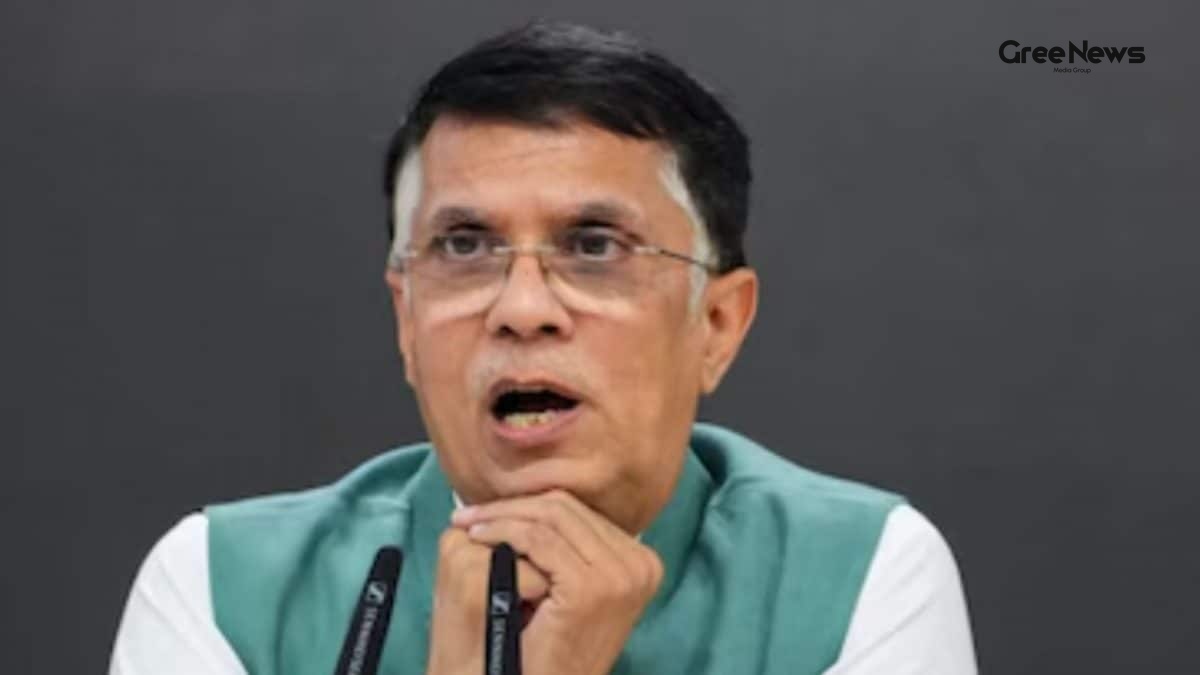
The court observed that Khera was avoiding police investigation and said custodial interrogation was necessary to uncover the source of the documents he relied on.
When I first caught wind of this story, I was sipping chai at a tiny stall near my office, scrolling through the latest news India on my phone. The headline about Pawan Khera and the Assam CM’s wife instantly grabbed my attention it felt like the kind of breaking news that makes you put your cup down and stare at the screen. I wondered what was really going on and why the Gauhati High Court had taken such a strict stance.
In short, the High Court denied anticipatory bail to Congress leader Pawan Khera. This was in a case that sprang up after Khera made serious allegations against Riniki Bhuyan Sharma, the wife of Assam Chief Minister Himanta Biswa Sarma. The court’s decision essentially opens the door for a possible arrest, because it said that a custodial interrogation was “imperative.” What happened next is interesting the judges were clear that Khera had been dodging police questioning, and they wanted to get to the bottom of where his documents actually came from.
Why Custodial Interrogation Became Imperative
Now, you might ask why the court insisted on a custodial interrogation when usually a regular police statement can do the job. Well, according to the judgment, Khera was not cooperating with the investigation in any meaningful way. The judges felt that just letting him talk in a non‑custodial setting would not be enough to uncover the chain of people who may have handed him those documents.
In most cases, police can summon a person for questioning, but here the court went a step further. They described the interrogation as “imperative” to identify any associates who might have collected or supplied the documents to Khera. This reflects a broader trend in trending news India where the judiciary sometimes takes a tougher line when there’s suspicion of deliberate evasion. It also tells us that the court is not willing to let political rhetoric become a shield against thorough investigation.
Political Defence Was Not Accepted
One of the arguments Khera’s counsel tried to push was that this case was purely political. They said, essentially, that the allegations were aimed at the ruling party and should be treated as political harassment. But the High Court brushed that off. The judges noted that Riniki Bhuyan Sharma is not an active political figure she doesn’t hold a party post or any official position. The court said that if Khera had aimed his accusations directly at Chief Minister Himanta Biswa Sarma, the scenario might have looked different. Instead, they saw an “innocent lady” being dragged into the controversy for political mileage.
This point hit home for me because in many viral news stories, we often see ordinary people being used as pawns in larger political battles. The court’s remark was a reminder that not every controversy automatically qualifies as political, especially when it involves private individuals who may not even be in the limelight.
Lack of Evidence to Back the Claims
Another major highlight from the order was the court’s observation that Khera has not produced any solid evidence for his claims. Remember the bomb‑shell allegation that Riniki Bhuyan Sharma holds passports of multiple countries? The judges said there was no material to substantiate that. In fact, they emphasized that Khera hasn’t been able to prove any of the other accusations either whether about overseas assets or any wrongdoing on the part of Sharma.
This lack of proof is crucial because, in the Indian legal system, allegations alone don’t hold water. The court made it clear that they are not looking for a slap‑on‑the‑wrist for Khera; they are seeking to understand whether there’s any legitimate basis for his claims. The absence of evidence also means that the case cannot be dismissed as mere political vendetta the judges specifically said there’s no material suggesting that the filing is intended to harass Khera.
Background of the Legal Battle
To put everything in perspective, let’s rewind a bit. Earlier, the Supreme Court had stayed a transit anticipatory bail that the Telangana High Court had granted to Khera. That order essentially forced Khera to apply for bail in Assam instead of Telangana. The underlying cause of all this drama dates back to Khera’s allegations that Riniki Bhuyan Sharma was in possession of multiple foreign passports and large overseas assets.
Following those statements, Sharma filed criminal complaints under various provisions of the Bharatiya Nyaya Sanhita. The case quickly became a topic of trending news India, with pundits and social media users debating every angle. After the Supreme Court’s stay, Khera approached the Gauhati High Court, hoping for anticipatory bail a legal shield that would protect him from arrest pending investigation.
But the High Court’s denial of that bail means the next logical step is a full‑scale police investigation, possibly culminating in an actual arrest if the interrogation shows any incriminating evidence. What’s more, the court’s stern language hints that the authorities are now empowered to dig deeper into who supplied Khera with those documents and why.
What Might Happen Next?
Here’s where the curiosity hook comes in what happens after the court’s order? As someone who watches breaking news on my phone every evening, I know that the next chapter could involve Khera being taken into custody for questioning. The police will likely try to trace the origins of the documents he cited, possibly interrogating anyone who was in his circle when he first made the allegations.
Many people were surprised by the court’s emphasis on custodial interrogation. It suggests that the judges want a thorough, hands‑on approach rather than a superficial inquiry. If Khera does get arrested, the case could snowball into a larger story, feeding the cycle of viral news and staying on top of India updates for weeks.
On the other hand, if the police fail to uncover any substantive proof, Khera might eventually secure bail, but that would be after a lengthy detention. Regardless, the whole saga is likely to stay in the limelight, especially because it touches on political figures, alleged foreign passports, and questions of misuse of power all ingredients that keep a story trending in Indian media.
Personal Takeaways and Observations
Honestly, reading through the judgment felt like watching a courtroom drama on a TV serial, but with real consequences for real people. It reminded me how the Indian legal system can swing between political nuances and strict procedural enforcement. The fact that the court explicitly rejected the “political case” defence makes me think that the judiciary is trying to keep politics at bay when it comes to personal allegations.
Also, the whole episode shows how quickly a story can become part of the latest news India, especially when it involves high‑profile names like Himanta Biswa Sarma and his family. It’s a reminder that as ordinary citizens, we need to be cautious about believing every claim that goes viral. The court’s focus on evidence over rhetoric is a lesson for everyone scrolling through social media feeds.
Conclusion: A Story Still Unfolding
All in all, the Gauhati High Court’s decision has set the stage for a potentially intense investigative phase. The denial of anticipatory bail, coupled with the call for custodial interrogation, means that Pawan Khera could find himself behind the bars if the police manage to link him directly to the disputed documents.
What’s clear is that this case is far from over, and it will likely keep featuring in trending news India for some time. Whether you’re a follower of politics, a legal enthusiast, or just someone who likes to stay updated with India updates, this story has all the ingredients to stay relevant: a high‑profile political family, unverified allegations, and a court that isn’t shying away from demanding proof.
So, keep an eye on the developments because the next twist could be the one that finally explains where those mysterious documents came from, and whether Pawan Khera will indeed face arrest or manage to walk free after the interrogation.