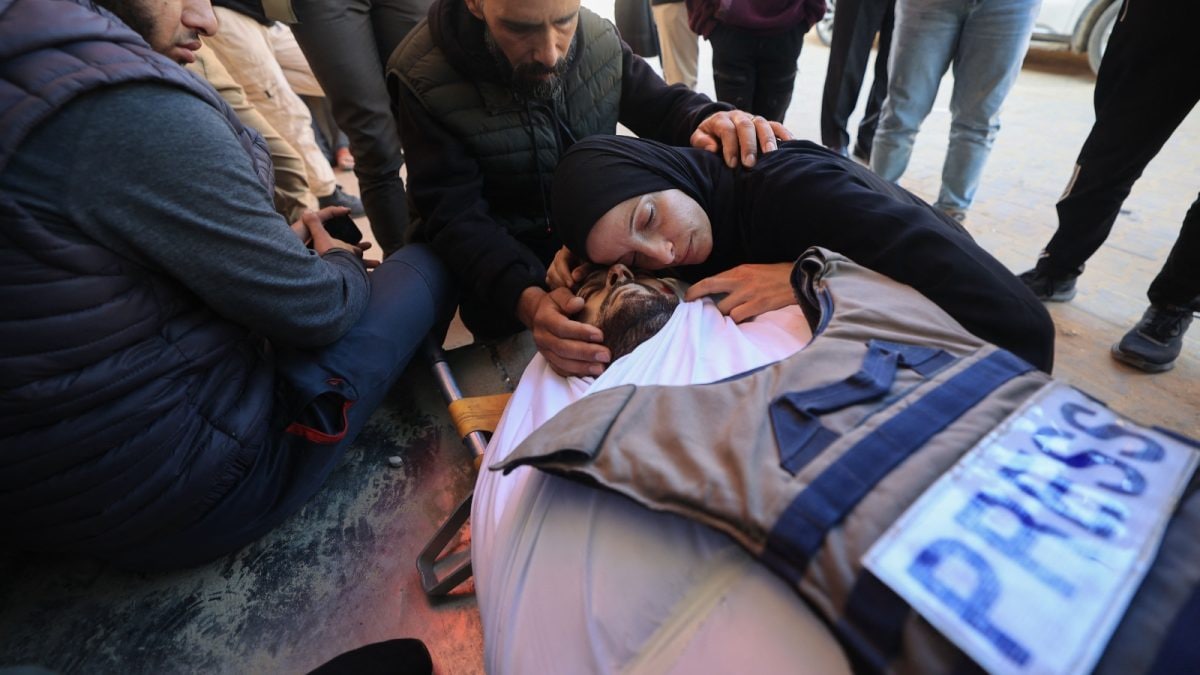
Israel says slain Al Jazeera reporter Mohammed Wishah was a Hamas militant, Al Jazeera and Reporters Without Borders condemn his killing as a deliberate attack on journalists in Gaza.
So, the Israeli military took to its official X account on Thursday and started saying that Mohammed Wishah – the Al Jazeera correspondent who was killed a day earlier in an IDF strike in Gaza – was actually a Hamas operative. The claim was bold, saying he was "operating under the guise of a journalist" while being involved in the production and transfer of weapons for Hamas.
According to the post, the army described Wishah as a "key terrorist" linked to Hamas’ rocket and weapons production facilities. They even went as far as to allege that he had been part of planning attacks against Israeli troops, and that eliminating him was necessary because he posed a "concrete threat" to their forces.
Now, you may wonder how common such accusations are. Honestly, it’s not unheard of for militaries to label hostile elements who happen to be in the media world as "terrorists". In the past, we have seen similar narratives during conflicts in Kashmir or the Northeast, where every casualty gets a politicised label. But the difference here is the level of detail – the Israeli post listed specific involvement in rocket production, which is a serious charge.
Al Jazeera’s response: a heinous crime, not a random act
Al Jazeera, which runs the Mubasher channel, immediately pushed back. In their statement, they said Mohammed Wishah’s death was not a "random act" but a "deliberate and targeted crime intended to intimidate journalists". They called it a "heinous crime" and placed the full responsibility on the Israeli forces.
They also promised to take legal steps to hunt down those accountable. For a bit of context, Al Jazeera has been reporting from Gaza since the beginning of hostilities in October 2023, and they claim that Wishah is one of at least eleven of their journalists killed in the region since the war started.
From a personal angle, I remember watching Al Jazeera’s coverage on my tiny mobile screen back when the conflict first flared up. Their reporters were on the ground, dodging shrapnel, trying to bring us stories that were otherwise hidden. So it feels like a direct attack on the very people who are trying to tell the truth.
Some of us in India have also seen similar patterns when our journalists cover protests or riots. A few weeks back, a reporter covering a farmer protest in Delhi was assaulted, and there were claims that the assailants were “unknown”. In reality, that incident sparked a massive debate about press freedom and the dangers journalists face – a debate that now resurfaces on an even larger scale in Gaza.
Reporters Without Borders weighs in
Reporters Without Borders (RSF) also condemned the killing, saying it adds to the grim tally of more than 220 journalists killed in Gaza over the past two and a half years. Out of those, at least seventy were killed while actively working.
Their statement highlighted how each death not only robs families but also silences a voice that could have shed light on the humanitarian situation. They called for an independent investigation, something we have been hearing about for years when journalists are targeted.
In India, RSF’s reports often become a reference point when we discuss the safety of reporters during communal riots or political turbulence. The organization’s global reach means that the incident in Gaza will be logged alongside other tragedies, forming a disturbing pattern that threatens media freedom worldwide.
It’s a stark reminder that the danger isn’t limited to the battlefield. Even a city far away like Mumbai or Chennai can see reporters put at risk while covering communal clashes, often under the guise of “security concerns”. The Gaza scenario is just a more extreme, but still familiar, example of that risk.
Why the label of "terrorist" matters
Labeling a journalist as a terrorist has huge implications. Firstly, it can be used to justify lethal force in the name of self‑defence. Secondly, it blurs the line between combatants and civilians, which is a core principle of international humanitarian law.
In my own experience covering elections in rural Uttar Pradesh, we often hear the police refer to “disturbers of peace” as “terrorists” to legitise harsh crackdowns. When a journalist is thrown into that mix, it becomes a dangerous precedent. It could lead to more media workers being seen as legitimate targets, undermining the ability of the press to operate freely.
The Israeli claim specifically mentioned Wishah’s alleged role in "rocket & weapons production". If true – and we have no independent verification – it would be a serious breach of journalistic ethics. But many observers argue that the evidence is thin, and the accusation is a convenient narrative to deflect criticism over civilian casualties.
For us back home, the lesson is clear: we must keep a close eye on any government that tries to brand dissent or investigative work as "terrorism". It’s a slippery slope that can erode democratic freedoms faster than you think.
Wider impact on press freedom in conflict zones
When a high‑profile journalist like Mohammed Wishah is killed and then labelled a terrorist, it sends a chilling message to all media workers operating in conflict zones. The fear is that even if you are just doing your job – interviewing locals, documenting damage, or checking facts – you could be painted as part of a hostile network.
Take the example of the Syrian civil war. Journalists there faced similar accusations of being “propaganda tools” for rebel groups, and many were targeted consequently. The pattern repeats: war‑zone reporters become collateral damage, but also strategic targets to stifle coverage.
In India, we have our own share of conflict‑zone reporting, especially in areas with insurgency like the northeastern states. Reporters there often have to negotiate with both the security forces and the insurgents, walking a tightrope to stay safe. The international scenario mirrors that, but on a larger, more volatile scale.
What’s more, the digital age means these narratives spread faster. One tweet from an army official can become a headline across continents, shaping public opinion before any independent verification is possible. That’s why we need robust mechanisms for checking facts, especially when lives are on the line.
Legal avenues and the hunt for accountability
Al Jazeera has said it will pursue legal action to hold those responsible for Mohammad Wishah’s death. While the practicalities of suing a foreign military force are daunting, it’s a symbolic move that underscores the network’s refusal to let the killing slide into obscurity.
In similar cases, international courts and human‑rights bodies have taken up investigations. The International Criminal Court (ICC) has, in the past, opened probes into the killing of journalists in conflict zones. Whether they will intervene here remains uncertain, but the mere possibility adds pressure.
Back in India, we have seen families of slain journalists approach the Supreme Court, demanding investigations into state‑linked violence. Those cases often take years, but they mark an essential step toward accountability.
Meanwhile, the families of journalists, including Mohammed Wishah’s, face a personal tragedy that goes beyond the headlines. The loss of a loved one in such a violent and politically charged context leaves a deep scar, and the pursuit of justice becomes a way to honour their memory.
Conclusion: A call for vigilance and protection of the press
In the end, the story of Mohammed Wishah is more than a single incident; it reflects the broader struggle of journalists working under fire, be it in Gaza, Kashmir, or the streets of Delhi. Whether the claims about his alleged Hamas ties hold any truth or are a tactical narrative, the fact remains that a journalist lost his life while trying to bring news to the world.
For us ordinary readers, especially those of us in India who consume news in multiple languages and from many sources, it’s a reminder to question narratives, protect the freedom of the press, and support those who put themselves at risk for the truth.
As the conflict continues, we can only hope that more transparent investigations happen, that the media can work without fear of being labeled terrorists, and that the families of victims like Mohammed Wishah receive the justice they deserve.
Until then, the world must keep a close watch, call out double‑standards, and ensure that the line between combatant and correspondent does not blur beyond recognition.
(With inputs from agencies)