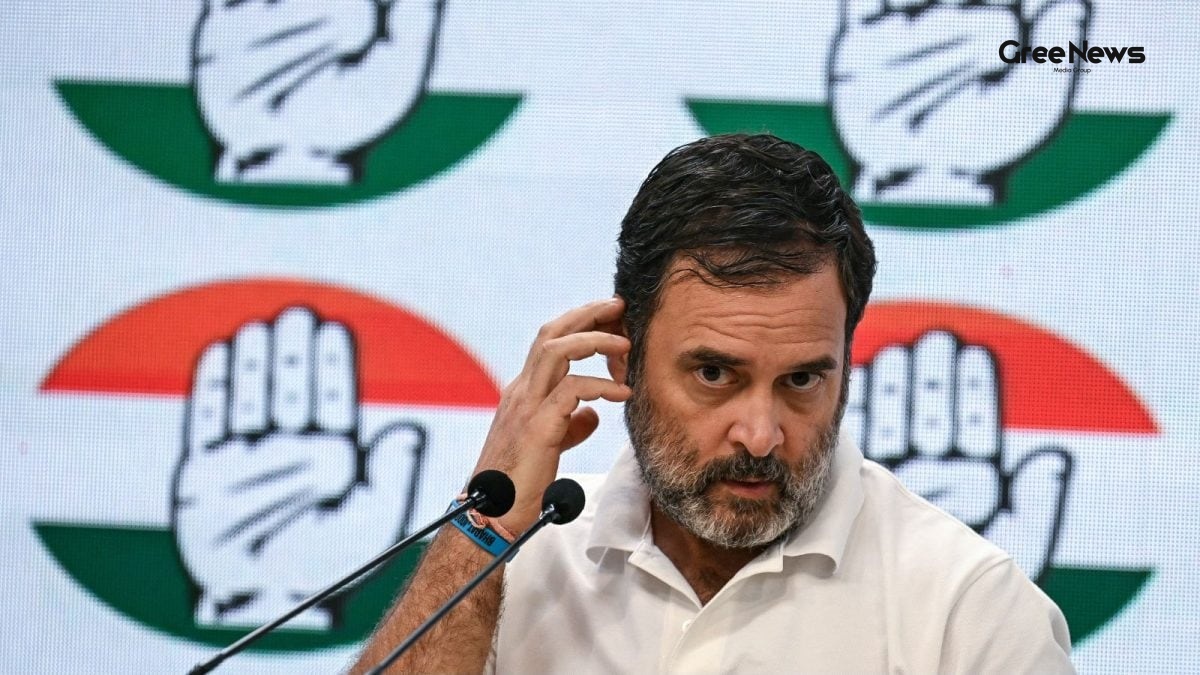
When I first saw the headline about the Allahabad High Court ordering an FIR against Rahul Gandhi, I thought it was another piece of viral news that would fade fast. But as I kept scrolling through the latest news India feeds, the story kept popping up in breaking news alerts and even in my WhatsApp forwards. It felt like something that could change the political conversation across the country, so I decided to dig a little deeper and share what I learned.
The whole saga started when a BJP worker named S Vignesh Shishir filed a petition challenging an earlier order from a special MP/MLA court in Lucknow. That lower court had earlier turned down a request to register an FIR against Rahul Gandhi, saying it simply did not have the power to decide on citizenship questions. Many people were surprised by this, because the issue of dual citizenship is a serious matter under Indian law, especially for someone holding the position of Leader of Opposition in Lok Sabha.
What happened next is interesting. The petition made its way to the Lucknow Bench of the Allahabad High Court, where the judges took a closer look at the allegations that Rahul Gandhi might hold British citizenship. The judges pointed out that such claims need proper verification, and they could not just be brushed aside.
Allahabad High Court’s Observations on the Dual Citizenship Claim
The Allahabad High Court observed that the allegations claiming Rahul Gandhi holds dual citizenship require a thorough examination. In the judgment, Allahabad High Court specifically mentioned that the matter should not be dismissed without checking the documentary evidence that supposedly lists Rahul Gandhi as a British citizen and even shows a London address tied to a UK‑based company.
According to the court’s reasoning, the documents in question were filed by a company that operates from the United Kingdom, and they apparently name Rahul Gandhi as a British citizen. If those claims turn out to be true, it would directly conflict with the constitutional requirement that a Member of Parliament must not hold citizenship of a foreign country.
In most cases, matters of citizenship are handled by central authorities, but the court made it clear that the state’s law‑enforcement agencies also have a role when such serious allegations surface. That’s why Allahabad High Court did not just send the case back to the special MP/MLA court; instead, it gave a clear directive to move forward with an FIR.
Orders Directed to Kotwali Police Station and Uttar Pradesh Government
The Allahabad High Court’s order was very specific. It directed Kotwali Police Station in Rae Bareli district to file an FIR against Rahul Gandhi without any further delay. The court also told the Uttar Pradesh government that it must either start its own inquiry into the matter or hand it over to a central agency for a more comprehensive investigation.
That instruction to Kotwali Police Station is significant because Rae Bareli has been a stronghold for Rahul Gandhi and his family for decades. By ordering the police in that very district to register an FIR, the court is essentially saying that the investigation must be impartial and cannot be influenced by local political loyalties.
As for the Uttar Pradesh government, the court’s directive gives it two clear options: either conduct an in‑state inquiry that follows all procedural safeguards, or refer the case to a central investigative agency such as the Enforcement Directorate or the Central Bureau of Investigation. The court emphasized that whichever route is chosen, it must be done in accordance with the law and with full transparency.
Many observers pointed out that this order could become a trending news India story, especially if the central agency decides to take over. The possibility of a high‑profile investigation into a senior opposition leader is bound to keep the public’s attention for weeks, if not months.
Legal Implications of the Dual Citizenship Allegations
Under Indian law, holding dual citizenship is not permitted for any Indian citizen. The Constitution, along with the Citizenship Act, mandates that a person cannot simultaneously enjoy the rights of citizenship in another country. If the FIR leads to evidence that Rahul Gandhi indeed possesses British citizenship, it could trigger a series of legal consequences, ranging from disqualification from the Lok Sabha to possible criminal proceedings under the Prevention of Money Laundering Act or the Foreign Contribution Regulation Act.
The petition filed by S Vignesh Shishir also asked for a thorough investigation under various statutes, including those related to passports, national security, and the Indian Penal Code. That means the FIR could pave the way for multiple agencies to get involved, each examining different facets of the alleged dual citizenship.
In most cases, these investigations are lengthy, and the courts often keep the proceedings confidential until conclusions are reached. However, because this case involves a high‑profile political figure, the media coverage is already making it part of the viral news landscape. That creates a delicate balance between the right to a fair trial and the public’s right to stay informed an issue that keeps popping up in India updates forums and social media discussions.
Public Reaction and What Might Happen Next
After the Allahabad High Court’s order became part of the breaking news, social media platforms lit up with a mix of opinions. Supporters of Rahul Gandhi argued that the allegations were baseless and politically motivated, while opponents claimed that the FIR was a necessary step to uphold the rule of law.
What caught people’s attention was the fact that the FIR was ordered by the Allahabad High Court itself, rather than being left to the discretion of the special MP/MLA court. Many people were surprised by this shift, as it highlighted the judiciary’s willingness to intervene when procedural roadblocks arise.
Looking ahead, the next steps depend largely on how Kotwali Police Station proceeds with the FIR and whether the Uttar Pradesh government opts for a state‑level inquiry or hands the case over to a central agency. If a central agency takes charge, the investigation could expand beyond the immediate allegations and examine financial transactions, foreign assets, and any possible links to overseas entities.
As the story continues to evolve, it is likely to remain a part of the trending news India cycle for quite some time. The outcome could set a precedent for how future dual‑citizenship claims against public office‑holders are handled, making it a crucial moment for Indian democracy.
For now, I keep following the updates, waiting to see whether the FIR will lead to concrete evidence or whether it will simply become another chapter in the long‑running political tussle. Whatever the result, the Allahabad High Court’s order has already made a mark on India updates and will remain a reference point in discussions about law, politics, and citizenship for months to come.