Delhi draft EV Policy 2026‑2030 plans petrol phase‑out, bans new petrol three‑wheelers from 2027 and two‑wheelers from 2028; EV and battery stocks may gain on policy boost.
I was scrolling through the latest market news on a Saturday morning, sipping my filter coffee, when I stumbled upon the Delhi government’s draft Electric Vehicle (EV) Policy for 2026‑2030. The document sketches a time‑bound plan to slowly say goodbye to petrol‑run vehicles and push electric mobility hard. The first thing that struck me was how clearly the policy lights up the path for electric two‑ and three‑wheelers – a sector that many of us use daily in our towns and cities.
Basically, the draft says that from January 2027 no new petrol‑powered three‑wheelers can be registered in Delhi, and from April 2028 the same rule will hit petrol two‑wheelers. On top of that, aggregator fleets – you know, those ride‑hailing services that flood the streets – must stop adding any internal combustion engine (ICE) vehicle to their fleet from January 2026. It feels like a bold move, especially when you think of the dozens of auto‑rickshaws humming around Connaught Place every day. The document is still out for public comment, but the direction is crystal clear: Delhi wants an electric future, and it’s willing to shape the market to get there.
Auto OEMs Likely to Lead Reaction
When I started thinking about how this could affect the stock market, my mind immediately went to the auto manufacturers that already have a foothold in the electric two‑ and three‑wheelers market. The draft essentially promises a guaranteed demand tailwind for those firms.
Bajaj Auto is the first name that pops up. Bajaj Auto dominates the three‑wheeler space, and it already has several electric models in its pipeline. With the 2027 ban on new petrol three‑wheelers, Bajaj Auto should see a surge in orders for its electric alternatives. Imagine a Delhi rickshaw driver who now wants to switch to an electric rickshaw because the city will soon stop allowing new petrol entries – that’s exactly the kind of demand that could boost Bajaj Auto’s sales.
TVS Motor Company also stands out. TVS Motor Company has been pushing its electric scooters hard, and the policy’s focus on two‑wheelers will likely push more commuters toward TVS Motor Company’s EV offerings. In our own neighbourhoods, you can already spot a few TVS electric scooters zipping past the auto‑rickshaw lanes, and that ‘on‑the‑ground’ presence could translate into bigger numbers when the 2028 ban hits.
Then there’s the newer player, Ola Electric Mobility Ltd. Ola Electric Mobility Ltd has been in the news a lot lately – its shares jumped more than 40 % in a week just before the policy leak. The draft directly backs the two‑wheelers segment, which is where Ola Electric Mobility Ltd’s main business lives. If you ask any Delhi commuter, many are already aware that Ola Electric Mobility Ltd’s scooters promise lower running costs and less noise – traits that will be even more valuable once petrol bikes are phased out.
Ather Energy is another name that can’t be ignored. Ather Energy has been making sleek electric scooters that appeal to the city’s tech‑savvy crowd. The policy’s timeline aligns perfectly with Ather Energy’s growth plan – a new commuter in Delhi who wants a quiet, low‑maintenance ride will likely look at Ather Energy’s offerings.
Last but not least, Mahindra & Mahindra has a solid presence in electric three‑wheelers and light commercial vehicles. The push for fleet electrification, especially for aggregator services, could mean that Mahindra & Mahindra’s electric vans and three‑wheelers see a bigger order book. I can picture a scenario where a food‑delivery startup in Delhi, wanting to stay ahead of the new rules, simply swaps its diesel fleet for Mahindra & Mahindra’s electric vans.
Charging Infra, Battery Makers May See Spill‑over Gains
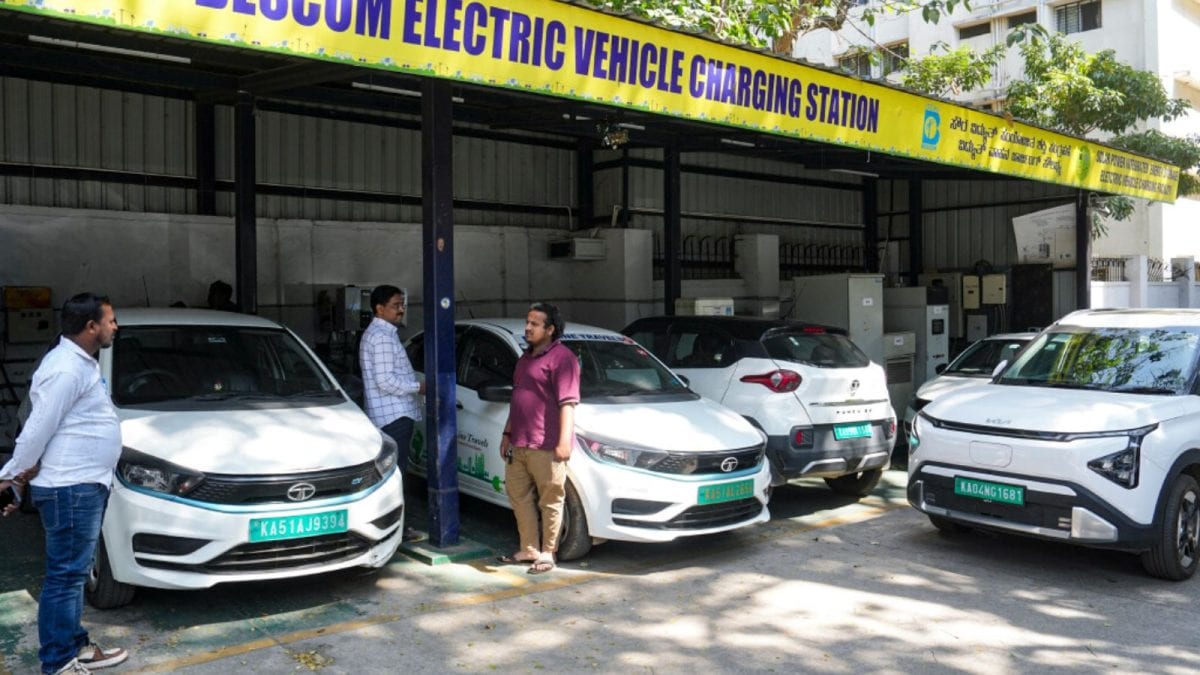
The draft doesn’t just talk about vehicles; it also earmarks a massive push for charging infrastructure. Delhi Transco Limited has been named the nodal agency to set up a city‑wide network, which should, in theory, make electric vehicles much easier to own.
Whenever I drive past a street in South Delhi and see a lonely charging point, I wonder how many such spots will multiply once the policy is in motion. Tata Power already runs an EV charging business, and the expectation is that Tata Power will get a bigger slice of the pie as the number of charging stations climbs. Think about a family in Laxmi Nagar that wants to charge their new electric scooter at home – they might also rely on public chargers managed by Tata Power during long trips.
Battery demand is another key piece of the puzzle. Exide Industries and Amara Raja Energy & Mobility are the two big battery manufacturers that could feel the impact. As more electric two‑ and three‑wheelers hit the roads, the need for high‑quality lithium‑ion cells will rise. The draft even mentions a push for recycling and an extended producer responsibility (EPR) framework – that could give Exide Industries and Amara Raja Energy & Mobility new business opportunities related to battery collection and repurposing.
Even the component side of the ecosystem may benefit. Sona BLW Precision Forgings supplies parts to many EV manufacturers, and a broader adoption of electric vehicles could mean a steady stream of orders for its forged components. I can see small workshops in Delhi’s industrial corridors receiving more orders for parts that fit into electric powertrains, all thanks to the policy’s ripple effect.
Why the Market Might React on Monday
From my perspective, investors love a story that is clear and backed by policy. The draft EV policy gives a concrete timeline – 2027 for three‑wheelers, 2028 for two‑wheelers, and 2026 for fleet restrictions. When you have dates, you can match them with revenue forecasts for the companies we talked about.
In most cases, stocks that stand to gain from a policy boost tend to move ahead of the official announcement. That means when markets open on Monday, you might see Bajaj Auto, TVS Motor Company, Ola Electric Mobility Ltd, Ather Energy and Mahindra & Mahindra share prices showing early gains, simply because traders are already pricing in the expected increase in electric vehicle orders.
Similarly, Tata Power, Exide Industries, Amara Raja Energy & Mobility and Sona BLW Precision Forgings could see a modest uptick as the charging‑network plan and battery‑recycling rules are factored in. The policy’s public‑consultation stage also adds a little uncertainty – if the final version tightens the rules further, the upside could be even larger.
On the flip side, any company heavily dependent on petrol vehicle sales that doesn’t have a solid electric lineup might feel a bit of pressure. But the draft is quite focused on electrification, so the overall sentiment in the market is expected to skew positive toward the EV ecosystem.
Everyday Life in Delhi – What It Could Look Like
Let me paint a picture of how this might feel on the ground. Picture a typical morning in Delhi: you step out of your apartment, the streets are buzzing with auto‑rickshaws, electric scooters, and a few electric three‑wheelers humming silently. By 2027, you’ll no longer see a brand‑new petrol rickshaw zipping past the Red Fort. Instead, you’ll see an electric rickshaw managed by a local fleet operator, maybe even a Mahindra & Mahindra model, quietly charging at a Delhi Transco Limited station during the lunch break.
Fast forward to 2028, and the two‑wheelers you spot around Connaught Place will increasingly be electric. A student heading to college might choose an Ather Energy scooter because of its low running cost, while a delivery boy for an online food service could be on an Ola Electric Mobility Ltd scooter, benefitting from the company’s fast‑charging network set up by Tata Power.
For families, the shift may also mean fewer trips to the petrol pump. Instead, you might find a charger installed in your building’s parking lot, a service offered by Tata Power, where you plug in your electric scooter after work. The convenience could even encourage more people to switch, creating a virtuous cycle that pushes demand for batteries from Exide Industries and Amara Raja Energy & Mobility even higher.
All these small changes feel like a big transformation when you connect the dots – the policy really tries to make electric vehicles as normal as any other commute mode, and the market is just reflecting that optimism.
Final Thoughts
To sum it up, the Delhi draft EV Policy 2026‑2030 lays out a clear plan that should ripple through the auto, battery and power sectors. Companies such as Bajaj Auto, TVS Motor Company, Ola Electric Mobility Ltd, Ather Energy and Mahindra & Mahindra are positioned to ride the wave, while Tata Power, Exide Industries, Amara Raja Energy & Mobility and Sona BLW Precision Forgings could enjoy spill‑over benefits from the charging‑infrastructure push.
From my personal observation, the fact that the policy sets firm dates makes it easier for investors to map out potential revenue streams, and that’s why I expect a noticeable move in those stocks when the market opens on Monday. The real test will be how the final version shapes up after public consultation, but the direction is already clear – Delhi wants an electric future, and the market seems ready to back it.
So, if you’re tracking the Indian stock market or just curious about how Delhi’s streets might look a few years from now, keep an eye on these names. The policy is still a draft, but the buzz around it is already getting louder, and that’s something we can all feel in the everyday hustle of the city.