- Parishmita Saikia
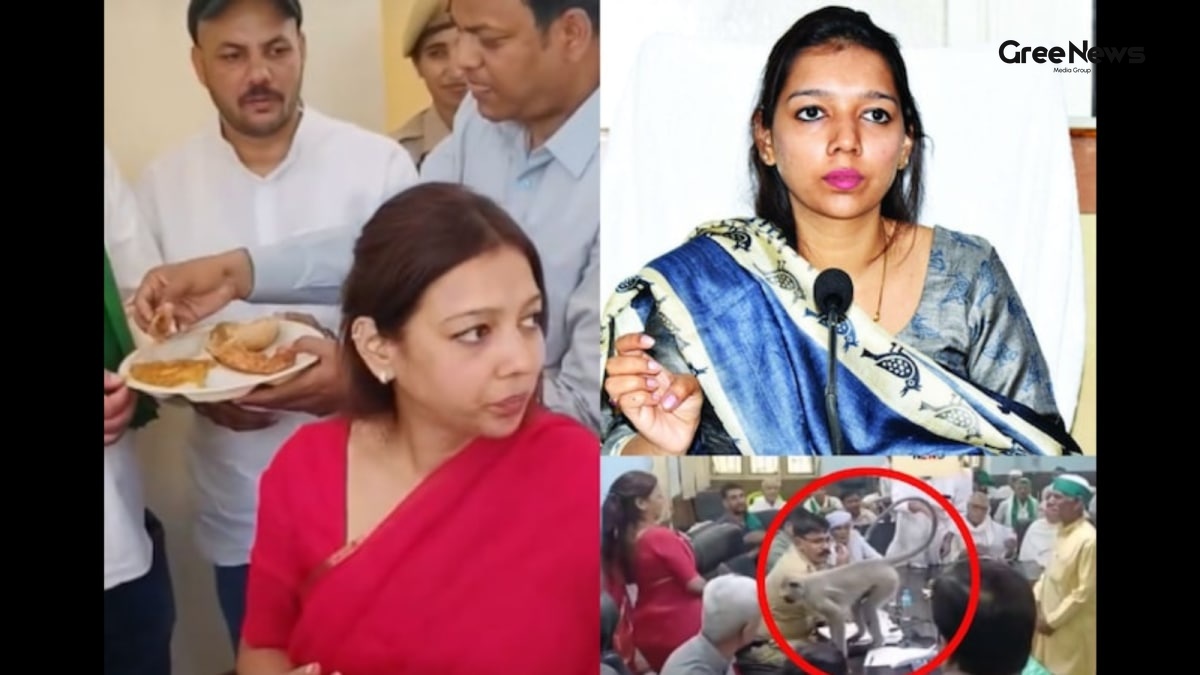
A video of Baghpat DM Asmita Lal eating with farmers and offering her chair to a monkey named ‘Matru’ has gone viral online. Her simplicity has won widespread praise
Honestly, when I first saw the clip on my phone, I thought it was some staged PR stunt. I was scrolling through the latest news India on my favourite news app and this short video popped up under the "breaking news" section a senior IAS officer, Asmita Lal, sitting down for a humble meal with a group of farmers. The vibe was so different from the usual formal gatherings you see in the media.
What happened next is interesting: a small, grey‑brown langur known locally as a monkey hopped onto the scene and made a direct beeline for the officer’s chair. In most cases, you’d expect a flurry of panic or a quick shoo‑away, but Asmita Lal simply smiled, stood up, and politely asked the animal to take her seat. The whole incident felt like something out of a feel‑good Bollywood movie, and it quickly became a piece of viral news that was shared across WhatsApp groups, Instagram reels, and even the comment sections of regional newspapers.
Why the video struck a chord my personal take on the Farmers’ Day meal
I grew up in a small village near Delhi, where farmers’ gatherings are a part of everyday life. We’d sit on charpoys under the shade of a neem tree, sip chai, and discuss the monsoon outlook. So when I saw Asmita Lal, the District Magistrate of Baghpat, join the farmers for a simple thali after the official program, it felt strangely familiar. She didn’t stay on a raised dais or hold a microphone; she chose to sit on the same low wooden bench as the farmers. That gesture, in my mind, shouted "I’m one of you" louder than any speech could.
In the video, you can hear farmers chatting about wheat prices, diesel costs, and the unpredictable weather the same topics we discuss back home. Asmita Lal listened, nodded, and even laughed when someone made a witty remark about the price of mustard oil. It was as if the usual barrier between an IAS officer and the common man had melted away for an hour. Many netizens commented that she seemed "like a farmer’s daughter" a phrase that stuck with me because it captures the essence of her approach.
The simplicity of the moment made the clip spread like wildfire. I remember my aunt forwarding the video to our family group with the caption "Breaking news: DM eats with farmers!" and that little exclamation turned the whole conversation at our dinner table into a discussion about how officials should connect with the people they serve.
The unexpected visitor Matru the langur steals the show
Just when you think the story can’t get any more heart‑warming, Matru the langur made his entrance. Apparently, Matru is a regular at the Collectorate premises. According to locals, he’s often seen hanging around the office corridors and even attended a few earlier farmers’ protests, where he mischievously grabbed a scarf and perched on a chair.
During the Farmers’ Day programme, as the officials were wrapping up, Matru hopped onto the stage, wove through the tables, and confidently walked up to Asmita Lal’s seat. In most cases you’d see officials usher the animal away, but not this time. She stood, smiled, and in a calm voice said, “Sit here,” inviting the monkey to take her place. The animal obliged and settled on her chair, almost as if it understood the invitation.
What’s funny is that the entire episode was captured on a phone by a farmer sitting nearby. The clip went viral within a few hours, and soon the hashtag #MatruDM trended on Twitter. People started sharing memes, some joking that the DM had finally found a seat that’s actually comfortable! The humorous side of the incident added a light‑hearted flavour to the trending news India was already buzzing about.
A little background Who is IAS Asmita Lal?
To give you a clearer picture, let’s talk a bit about Asmita Lal’s professional journey. She belongs to the 2015 batch of the Indian Administrative Service, a highly competitive service that selects the country’s top civil servants. Born on December 17, 1989, in Delhi, she completed her schooling and higher education before clearing the UPSC exam a feat she achieved with determination and hard work.
She officially started her career on September 7, 2015, and after a series of postings, she was appointed as the District Magistrate and Collector of Baghpat on January 18, 2025. Since then, she has been in the news multiple times for her people‑centric approach, especially during crises like floods and farmer protests.
Her profile reflects a consistent pattern: a willingness to step out of the formal office environment and engage directly with citizens, whether it’s helping set up a healthcare camp in remote villages or joining a local school’s sports day. The recent incident with the farmers and the monkey just reinforced that image.
Public reaction From social media buzz to heartfelt appreciation
When the video started circulating, the response was overwhelmingly positive. Comments poured in across platforms: “Finally, a DM who knows how to eat dal and roti with us,” wrote one user; another said, “The world needs more officers like Asmita Lal simple, kind, and unafraid of a cheeky monkey!” The phrase “viral news” was used frequently, as people bookmarked the clip and shared it with friends and relatives.
Many seniors in the civil services also chimed in, praising her for setting a benchmark in public engagement. A senior official, who preferred to stay unnamed, told a regional channel that “her humility is a lesson for all of us.” The story even featured in the evening bulletins of leading TV channels as a piece of breaking news, underlining how a single spontaneous act can shape public perception.
What struck me the most was how the story sparked a larger conversation about the role of bureaucracy in India. People started debating whether more officials should adopt such down‑to‑earth practices. Some even suggested that future training modules for IAS officers include “how to share a chair with a monkey” a tongue‑in‑cheek way of saying that flexibility and empathy are essential skills for governance.
Why this matters Connecting the dots with India updates
In the grand scheme of India updates, stories like this serve as a reminder that governance isn’t just about policy papers and meetings. It’s also about the small, human moments that build trust. When a District Magistrate sits on the floor, enjoys a simple meal, and doesn’t shy away from a playful langur, it sends a powerful message: officials are part of the same community.
For many of us living in tier‑2 and tier‑3 towns, these moments are rare. The mainstream media often focuses on high‑profile politics, but this piece of trending news India got to see a side of public service that feels relatable. It’s as if the government decided to drop a ‘live from the field’ segment, and we all got to watch it unfold in real time.
Moreover, the viral nature of the clip highlights how quickly stories travel in the digital age. Within a few hours, the video had crossed linguistic barriers, being shared with subtitles in Hindi, Punjabi, and even Marathi. That’s the power of social media a localized incident can become a nationwide conversation in a blink of an eye.
My reflections What I learned from Asmita Lal’s example
Seeing Asmita Lal’s conduct made me rethink how I interact with people in my own life. Whether it’s a neighbour asking for help with their garden or a colleague needing a listening ear, the lesson is clear: a little humility goes a long way. The story reminded me of my own experiences at community functions where officials either stay aloof or become part of the crowd. When they choose the latter, it leaves a lasting impression.
Also, the incident with Matru reminded me that sometimes unexpected situations bring out the best in us. In most cases, we’d be rattled by an unexpected guest be it a stray dog at a wedding or a sudden power cut during an exam. But watching Asmita Lal handle Matru with calm confidence made me realise that a composed response can turn a potentially awkward moment into a memorable story.
And let’s not forget the role of the media. By covering this tale as trending news, the outlets gave it the platform it deserved. The piece became part of the “latest news India” feed for millions, showing how responsible reporting can amplify positive narratives.
Final thoughts A simple gesture with big impact
All in all, the video of Baghpat DM Asmita Lal sharing a meal with farmers and offering her chair to a friendly langur has become more than just viral content; it’s a case study in genuine public service. It teaches us that small gestures, when done with sincerity, can spark nationwide discussions, reshape perceptions, and perhaps inspire other officials to follow suit.
So the next time you see a story labelled as “breaking news” or “trending news India,” take a moment to think about the human element behind it. You might just find a story that, like this one, reminds you that humility and a smile can bridge any gap even the one between a high‑ranking officer and a mischievous monkey.