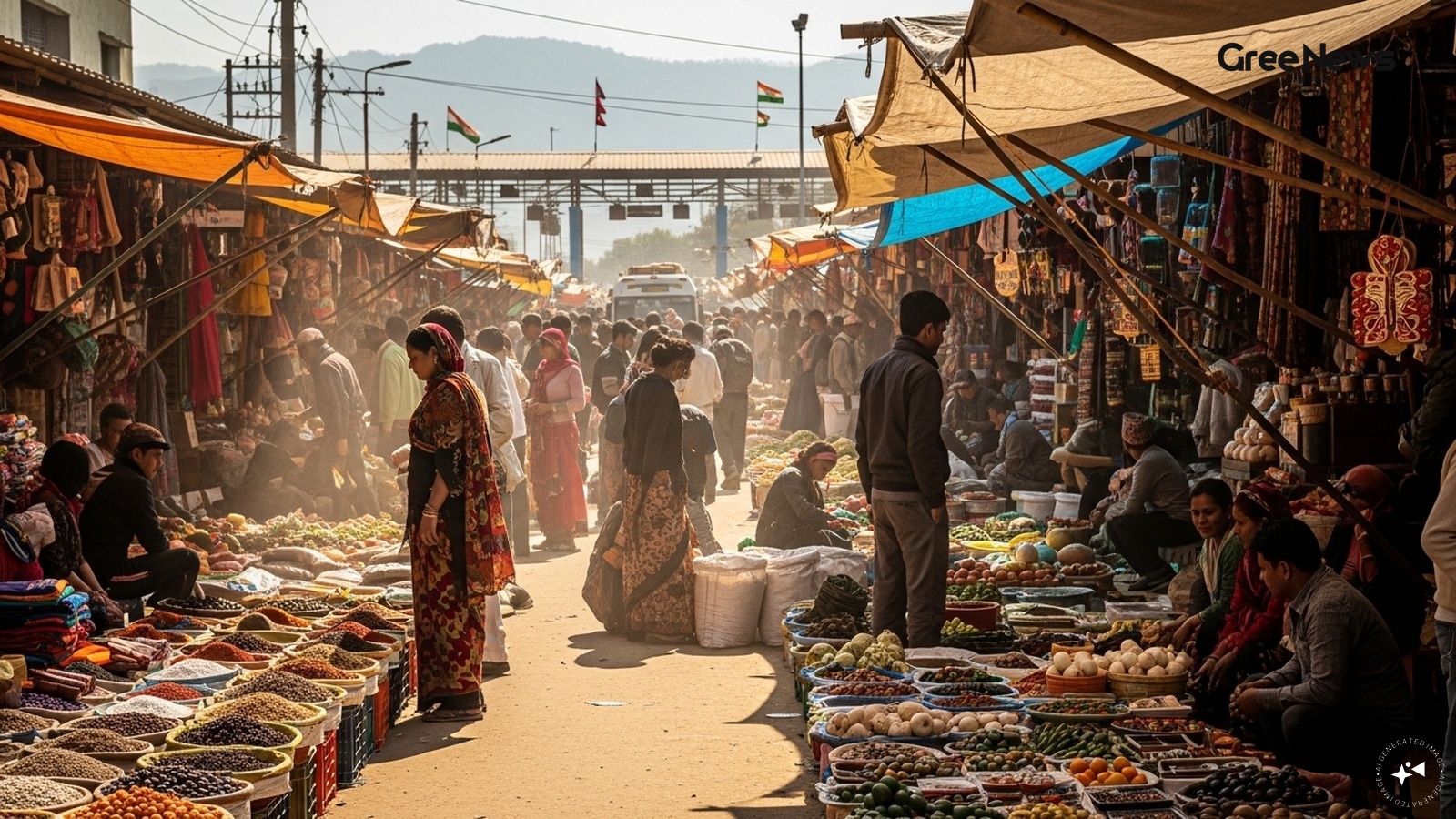
When I first started travelling to Birgunj for my weekly grocery haul, I never imagined that a simple duty of Rs 100 could turn my routine trip into a full‑day affair. The new customs enforcement, which can take up to 80 % duty on certain items, has been strictly applied since the middle of the year, and the whole vibe at the border has changed. Imagine the usual friendly chatter at the checkpoint turning into long queues, people waiting for their turn to pay a tax they never knew existed that’s the reality now.
While the rule technically existed on paper for a long time, the current administration has shifted from occasional checks to a zero‑tolerance approach at major crossing points like Birgunj, Biratnagar and Bhairahawa. This means that any shopper, whether you are carrying a handful of biscuits or a kilo of tea, can be stopped and asked to pay duty. The rule is simple but its impact is massive let me walk you through what actually happens.
What is the rule?
Mandatory customs duty, locally called Bhansar, is now levied on any good worth more than Rs 100 (NPR 160) bought from India. The tax rate is not a flat figure; depending on the type of product, it can range anywhere from 5 % to a hefty 80 %. So, a packet of instant noodles that used to be practically free now carries a noticeable charge.
For me, the first time I tried to bring back a small box of sweets, the customs officer at Birgunj stopped me, measured the value, and told me I had to pay a 20 % duty. I was surprised I thought the Rs 100 limit meant “no tax for small items”. But the rule says any item over that threshold is taxable, regardless of its nature.
Why has shopping become more expensive?
Earlier, shoppers could bring in Rs 200‑500 worth of household goods without any scrutiny. That little leeway allowed families in Nepal to stretch their budgets, especially when domestic prices were high. Now, even a kilo of tea or a few packets of biscuits can trigger a tax. The reason is simple: the government wants to curb informal imports and push people to buy locally.
What happened next is interesting long lines formed at the customs desks. I watched families with toddlers standing for hours, just to pay a few rupees as duty on a packet of chips. Goods that are not paid for within 24 hours are seized, and reports say millions of clothing items and essentials have already been confiscated.
Because it has become harder to source cheap goods from India, local Nepali retailers have begun raising prices on the stock they already have. I remember asking a shop owner in Biratnagar why his price for a kilogram of wheat flour had gone up. He simply said, “Because my suppliers are feeling the pinch too.”
In most cases, this has turned a simple grocery run into a costly, time‑consuming chore. The extra money spent on duty is not just a financial burden; it also adds stress, especially for low‑income families who rely on those small savings every month.
How will it impact the border communities?
The rule has sparked protests in border regions like Bihar and Uttarakhand, where deep social and economic ties often called “beti roti” relations traditionally rely on an open, untaxed border. People in these areas have been shouting, “We used to buy daily essentials from across the border, now it’s a nightmare!”
Border markets in India, from Dharchula to Darjeeling, including Jogbani and Banbasa, report a sharp drop in footfall as Nepali buyers avoid the new taxes and long customs delays. The trade that used to be a lifeline for many families now looks shaky.
Many low‑income families used the cheaper Indian goods as a “survival strategy” to cope with high domestic inflation. That strategy is now under pressure. While the move aims to boost Nepal’s domestic revenue and promote local production, the low Rs 100 limit has made routine grocery runs prohibitively expensive and logistically difficult for the average citizen.
What caught people’s attention most was the fact that the tax rules are being enforced uniformly, regardless of whether you’re a farmer carrying a sack of rice or a student buying stationery. This uniformity, while fair on paper, feels harsh in practice, especially when you see a neighbour’s small shop being shut down because he couldn’t pay the duty on a few imported accessories.
My personal experience at the border
Let me share a story that I think many of you will relate to. I was in Birgunj last month, planning to buy a few cans of soft drinks and some snack packets for a family gathering. I packed everything in a small bag, thinking it would be a quick trip. As soon as I reached the customs counter, the officer told me that my bag’s total value exceeded Rs 100, so duty was applicable.
He calculated a 15 % tax on the drinks and a 25 % tax on the snacks. I had to pay an extra Rs 30 on the spot. While Rs 30 may not sound a lot, the waiting time over an hour meant I missed the bus back home and had to spend the night in a budget hotel. That night I realized how a tiny change in policy can ripple through everyday lives.
Many people were surprised by this sudden shift, and the chatter among other shoppers was full of disbelief. Some even laughed it off, saying “It’s the new normal now.” But I could sense the frustration especially among senior citizens who can’t afford to waste both time and money.
After paying the duty, I saw a small group of Indian sellers at the border stall, looking despondent. Their customers from Nepal had dwindled dramatically. They told me that the same items they used to sell for a fraction of the Nepali market price were now out of reach for most Nepali buyers. The whole atmosphere felt like a dimmed market that once buzzed with life.
KEY FAQs
What is the new rule?
Nepal has made customs duty mandatory on goods worth over Rs 100 (NPR 160) brought from India, with strict checks at border points like Birgunj, Biratnagar and Bhairahawa.
Why does it make shopping expensive?
Earlier, small personal purchases were mostly duty‑free; now taxes (ranging roughly from 5 % up to 80 %) are being charged even on low‑value items.
Who is affected the most?
Daily shoppers in border areas, who relied on cheaper Indian goods, now face higher costs, reduced shopping trips, and tighter enforcement at crossings.
With agency inputs
What could be next?
Given the intensity of the protests and the drop in cross‑border trade, many wonder if the Nepali government will revisit the Rs 100 limit. Some analysts say the policy could be relaxed if the economic impact becomes too severe, while others argue that the move is necessary for long‑term self‑reliance.
For now, as a regular traveler, I keep an eye on the updates at the border, carry a checklist of items under Rs 100, and try to plan my trips well in advance. If you’re reading this as part of the trending news India feed, you might be curious to see how this will affect the next wave of “viral news” around border trade. Stay tuned, because the story is still unfolding, and you never know when the next change will catch people off‑guard.