The primary driver for this ambitious target is India’s staggering dependence on fossil fuel imports
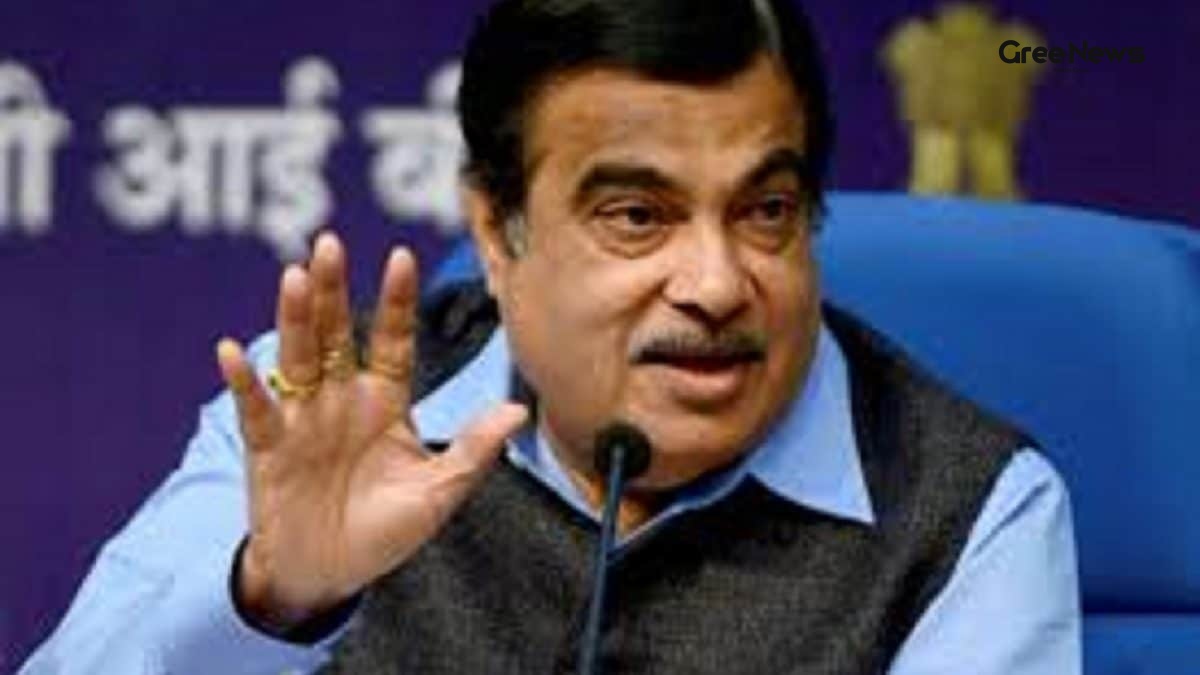
When I first heard about the minister’s call for 100 per cent ethanol blending, I was sipping chai on a Mumbai morning, scrolling through the latest news India had to offer. It felt like a classic case of breaking news that could really touch everyday lives. Nitin Gadkari, who’s handling the Road Transport and Highways portfolio, said straight away that total energy self‑reliance is no longer just an environmental goal it’s a national security must‑have.
Honestly, the timing couldn’t be better. The global energy market is still reeling from the West Asia conflict, and the usual oil supply routes are wobbling. That’s why the minister’s remarks sounded like a lifeline for a country that spends a massive chunk of its budget on imported crude.
Why is ‘100 per cent ethanol blending’ necessary now?
Let’s break it down. India today depends on imports for about 87 per cent of its oil needs. Imagine a household that has to buy almost all its food from outside the money just flies out of the kitchen. In financial terms, the country is bleeding close to Rs 22 lakh crore every year on oil imports. That’s a number that even a seasoned accountant would raise an eyebrow at.
Gadkari pointed out that the West Asia crisis has laid bare how fragile that arrangement is. Suddenly, the idea of decoupling our transport sector from the ups and downs of international crude prices looks far more urgent. It’s a classic example of why trending news India often circles around energy security.
Now, what makes ethanol such a tempting alternative? The answer lies in the vast agricultural surplus we have. Think of the sugarcane fields stretching across Maharashtra, the corn stubble in Karnataka, the jaggery‑making villages of Uttar Pradesh. If we can turn that surplus into fuel, we not only cut down on imported oil but also give farmers a new revenue stream turning them from “Annadatas” (food providers) into “Urjadatas” (energy providers). That transition is something I’ve read many times in rural development reports, and it feels like a win‑win.
What is the current status of ethanol blending in India?
Over the past three years, India’s biofuel programme has taken a giant leap. Remember when the E20 rollout was announced? That was the point when petrol started containing 20 per cent ethanol and could run in most existing engines with only tiny tweaks. The rollout was officially completed on 1 April 2026, and it set the stage for bigger goals.
Moving beyond E20, however, means we have to think about flex‑fuel vehicles the kind that can sip both pure petrol and higher ethanol blends like E85 or even pure E100. The government is already gearing up for that shift. The upcoming CAFE III (Corporate Average Fuel Efficiency) standards, slated for 1 April 2027, will push manufacturers to adopt not only electric tech but also flex‑fuel capabilities.
There’s also a draft notification for E85 that’s reportedly in its final stages. If you’re wondering what that means for you, think of it like this: a future where your car could run on fuel made largely from leftover sugarcane bagasse, cutting down on foreign oil and possibly even lowering your pump price. It’s the kind of viral news that spreads fast when people realise there’s a tangible benefit for the common commuter.
How will this impact the automotive industry and consumers?
Gadkari has been crystal clear the government isn’t going to force anyone into a new fuel type. The idea is to let technology do its magic and make Green vehicles more attractive on their own merit. For car makers, the challenge is real: ethanol is more corrosive than regular petrol, so engines need to be built or retrofitted to handle higher concentrations.
When I talked to a friend who owns a Maruti Suzuki, he was curious about whether his old Swift could handle E85. The answer? It might need some valve adjustments and upgraded fuel lines, but it’s not an impossible feat. Manufacturers will have to invest in R&D, but the payoff could be huge think of a domestic market that isn’t as exposed to risky oil price swings.
Besides ethanol, Gadkari also emphasized Green hydrogen as a potential “future fuel”. The vision is that if production costs can drop to around $1 per kilogram, hydrogen could become the mainstay for heavy transport, like trucks and buses. While that may sound like something out of a sci‑fi movie today, the minister hinted that the groundwork is already being laid.
Right now, though, ethanol is the most practical substitute. It offers a circular economy model: agricultural waste turns into a clean‑burning fuel, which then powers the very vehicles that carry those grains to market. It’s a loop that could keep the economy humming while cutting down on the “poisonous” fossil fuel imports.
What does this mean for farmers and rural India?
If you ask a farmer in Telangana about ethanol, you’ll often hear excitement mixed with caution. The prospect of earning extra money from the same crop they already grow is appealing. For many, it means turning a piece of land that traditionally supplied food into a dual‑purpose asset providing both food and fuel.
Take the example of a sugarcane farmer I met during a trip to Kolhapur. He told me that under the current scheme, he gets a fixed price for the bagasse (the fibrous residue after juice extraction). With a 100 per cent ethanol push, that bagasse could be processed into fuel, fetching him a better price and reducing waste. He likened it to getting a second paycheck without planting an extra crop.
This story is exactly why this topic keeps surfacing in trending news India it’s not just about policy, it’s about livelihoods. And that’s why many people were surprised by this: the policy could directly affect the pocket‑book of a farmer in Madhya Pradesh as much as the commuter in Delhi.
Infrastructure and logistical challenges
Switching to E100 isn’t as simple as swapping a bottle of soda. The fuel distribution network will need upgrades: storage tanks must be ethanol‑compatible, pipelines need to resist corrosion, and fuel stations will have to handle a new blend safely. The government is reportedly already budgeting for these upgrades, but the rollout will be a phased process.
One practical illustration: imagine you’re driving from Bengaluru to Chennai and stop for fuel every 200 km. If the station you pull into hasn’t upgraded its tanks, you could end up with a blend that’s not what you expect. That’s why the draft notification for E85 is crucial it sets clear standards that the whole supply chain must meet.
What happened next is interesting several private fuel companies have started pilot projects in Gujarat and Punjab, testing ethanol‑friendly pumps. Early results suggest that with a little investment, most stations can switch over without massive downtime. This is the kind of breaking news that could soon become routine, and it’s already sparking conversations on social media.
Potential impact on fuel prices for the everyday commuter
One of the biggest questions on everyone’s mind is whether this will make petrol cheaper. The short answer: possibly, but it depends on a few variables. If the cost of producing ethanol from agricultural waste drops, and if the supply chain becomes efficient, the price per litre could stabilize or even dip compared to a scenario where we rely heavily on imported oil.
Think of it like this when you buy tea, the price goes up if the tea leaves have to be imported from abroad during a bad harvest season. But if you grow the leaves locally, the cost becomes more predictable. Similarly, ethanol could buffer India against global oil price volatility, keeping the pump price more stable.
However, there’s a catch. Ethanol blends can have slightly lower energy density, meaning you might need to refuel a bit more often. But the trade‑off could be worth it if the overall cost per kilometre drops. This nuance often gets lost in the headlines, but it’s an essential part of the conversation.
Future outlook beyond ethanol
While the focus right now is on ethanol, the minister’s mention of Green hydrogen hints at a longer‑term roadmap. If scientists succeed in bringing down the production cost to around $1 per kilogram a figure that sounds almost magical hydrogen could become the go‑to fuel for heavy trucks, buses, and maybe even trains.
In many ways, the E100 push is a stepping stone. It builds the necessary expertise in handling bio‑fuels, sets up distribution networks that can later accommodate hydrogen, and familiarises the public with the idea of alternative fuels. It’s like learning to ride a bicycle before moving on to a motorbike.
Many people were surprised by this holistic vision because the usual narrative just talks about electric cars. But Gadkari’s plan tries to keep all options on the table, catering to a country as diverse as ours from the bustling metros to the remote villages where electricity may still be an occasional luxury.
What can everyday Indians do right now?
If you’re wondering how you can be part of this transition, start small. Keep an eye on the fuel pump labels many stations already display the ethanol percentage. If you own a newer car, check the owner’s manual to see if it’s flex‑fuel compatible. And, if you have a farm or know someone who does, explore whether they can participate in ethanol production programmes that many state governments are rolling out.
On a personal level, I’ve begun to look at my own fuel consumption more closely, planning trips that minimise idle time and ensuring my car’s engine is properly maintained simple steps that complement the larger national effort.
In the end, the shift to 100 per cent ethanol isn’t just policy; it’s a collective experiment. And as with any experiment, the more people understand the why and the how, the smoother the journey will be. This is truly one of those pieces of India updates that could shape our daily lives for years to come.