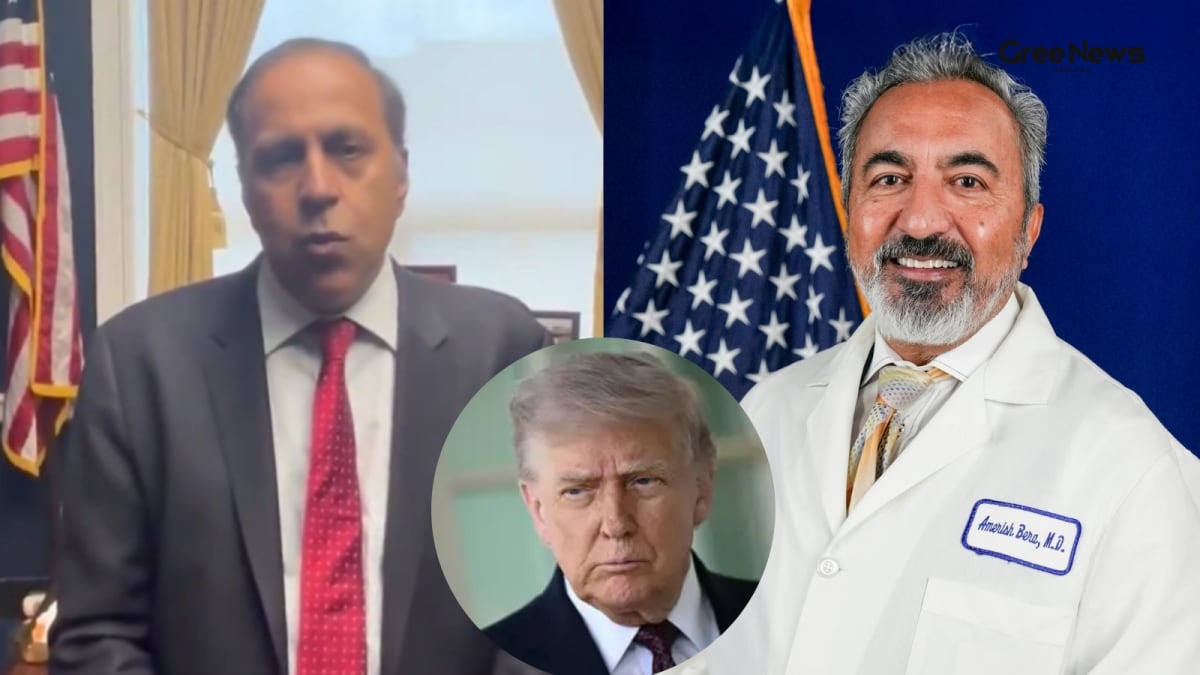
Representative Ami Bera, the longest‑serving Indian American member of Congress, strongly condemned Trump and labelled his remarks as “offensive, ignorant.”
So there I was, scrolling through X on a lazy afternoon, when I stumbled upon what quickly became one of the most talked‑about pieces of breaking news. President Donald Trump had just shared a transcript from a conservative talk‑show hosted by Michael Savage. In that clip, Savage had described India, China and a few other nations as “hell‑holes”, saying people from those places travel to the United States in the ninth month of pregnancy just to secure automatic citizenship for their babies. You can imagine the reaction it was like a stone tossed into a calm pond, creating ripples that turned into a full‑blown wave of anger across the Indian diaspora.
What caught people’s attention next was how American lawmakers of Indian origin fired back. Representative Ami Bera, who I’ve followed for a while because he’s the longest‑serving Indian‑American in Congress, posted a long, heartfelt statement on X. He didn’t just call the comment offensive he called it ignorant, and even went as far as saying it was beneath the dignity of the office the President holds.
In his post Bera wrote, “As the son of immigrants from India, I take great pride in both my heritage and in the country that gave my family the opportunity to build a better life. My parents came to the United States legally in search of that opportunity.” Reading that, I felt a sudden pang of respect. It’s not every day you see a politician weave his personal story into a policy debate. He went on to talk about his mother, who spent 35 years as a public school teacher, and his father, an engineer. That bit really resonated with me it reminded me of my own aunt who taught in a government school in Tamil Nadu for decades, and my cousin who works as a civil engineer in Mumbai.
He continued, “My mother spent 35 years working as a public school teacher. My father worked as an engineer. They instilled in my brothers and me a deep belief in hard work, public service, and giving back to the country that welcomed them.” Bera’s words painted a vivid picture of the classic American Dream, but with an Indian twist. He said he attended California’s public schools from kindergarten all the way through medical school, became a doctor, and now serves in Congress. “That is what the American Dream looks like,” he added.
Reading his story made me recall the many Indian families in my neighbourhood who moved to the United States in the ‘80s and ‘90s, hoping for a better future for their kids. Most of them, like Bera’s parents, came here on legal visas, worked hard, and eventually became citizens. That background gave Bera a solid base to argue that Trump’s “hell‑hole” jab reflected “a fundamental misunderstanding of who we are as a nation.” He emphasized that immigrants have always been the backbone of the United States, a point that feels especially true when you look at the bustling Indian restaurants and small businesses that line the streets of New York, Chicago, and Bengaluru’s diaspora hubs.
Another voice in the row was Congressman Raja Krishnamoorthi, who jumped in on X, calling the President’s amplification of Savage’s rant a “racist rant”. He wrote that such remarks insult millions of Indian‑Americans and strain ties with one of America’s key global partners. “Donald Trump’s decision to amplify a racist rant attacking India and immigrants is disgraceful and beneath the office he holds. His rhetoric doesn’t just insult millions of Indian Americans and one of our most important global partners; it undermines the values that have made America a nation of opportunity and innovation.”
What I found interesting was how both Bera and Krishnamoorthi framed their arguments not just in emotional terms but also in the larger context of US‑India relations. The Ministry of External Affairs (MEA) in India also stepped into the debate, issuing a statement that the comments were “obviously uninformed, inappropriate and in poor taste”. They added that the remarks do not represent the reality of the long‑standing India‑US relationship, which has been built on mutual respect and shared interests.
Now, you might wonder whether Trump ever clarified his position. Yes, he did. After the uproar, he told the American Embassy in New Delhi that he considered India a “great country” led by “a very good friend of mine”. That line seemed like an attempt to soothe the anger, but many felt it was a bit too little, too late.
It’s fascinating how a single repost can snowball into a full‑blown diplomatic episode. The whole incident has become trending news India, with countless articles, memes, and videos going viral across social media platforms. The phrase “hell‑hole” itself started trending, and people were sharing their own family stories of immigration, trying to humanise the statistics that often get lost in political debates.
From a personal perspective, I’ve seen how such controversies shape the conversation among the Indian diaspora. In my own community, the local Indian association organized a small meet‑up to discuss the implications of the President’s remarks on the image of Indian immigrants. Many elders expressed concern that these kinds of comments could fuel xenophobia, while younger members argued that it also highlighted the need for more accurate representation in media.
Beyond the community level, the episode also sparked a wave of “India updates” on various news portals. Headlines were littered with phrases like “Trump’s ‘hell‑hole’ comment draws ire of Indian‑American lawmakers” and “India‑US ties tested after controversial repost”. These stories kept the narrative alive across the day, making it a piece of viral news that kept people glued to their screens.
What’s striking is that the core issuehow we talk about immigration and the value of immigrantsremains unresolved. Bera’s concluding remarks summed it up nicely: “America was built by people from all over the world who believed in its promise and worked tirelessly to make it better for the next generation. We are a nation of immigrants, and we are stronger because of it.” Those words feel like a reminder to us all, especially in today’s climate of heated political discourse.
What’s The Row?
The row kicked off after President Trump reposted a transcript from Michael Savage’s talk‑show, in which the host labelled India, China and several other countries as “hell‑holes”. Savage argued that people from those nations travel to the United States in the ninth month of pregnancy simply to enjoy automatic birthright citizenship for their children. Trump also shared the full podcast video, where Savage called for a national referendum on birthright citizenship and sharply criticised the Supreme Court’s ongoing deliberations on the matter.
After the President’s share, the backlash was swift. Indian‑American lawmakers, members of the Indian community, and even the Indian diaspora in other countries started voicing their discontent. What happened next is interesting the President later tried to clarify his stance, saying to the US Embassy in New Delhi that he considered India “a great country” led by “a very good friend of mine”. But the damage was already done, and the whole episode turned into a fresh debate on immigration, citizenship, and how we talk about other nations.
India Opposes Trump’s Comment
The Ministry of External Affairs (MEA) issued a pointed response, describing the President’s amplified comments as “obviously uninformed, inappropriate and in poor taste”. They stressed that the remarks do not reflect the reality of the India‑US relationship, which has been built over decades on mutual respect and shared interests. The statement highlighted that such rhetoric undermines the goodwill that both nations have cultivated, especially in areas like trade, defence, and technology collaborations.
Even after the Ministry’s response, the conversation kept churning. Social media feeds were flooded with memes, opinion pieces, and personal anecdotes from Indian immigrants across the world. People shared how their families, much like Bera’s, came here legally, worked hard, and contributed to their new homeland. The episode reminded many of the fragile balance between diplomatic language and domestic politics, and how quickly a single phrase can go viral, becoming part of the larger narrative of “latest news India”.