Indian Army reaffirms its tough stance against terrorism, declaring “Justice will be served” while recalling Operation Mahadev and confirming the continuation of Operation Sindoor.
When I saw the Indian Army’s post on X this morning, I could feel the same mix of anger and determination that many of us felt after the Pahalgam tragedy. In simple words, the Army said, “For acts against India, the response is assured. Justice will be served. Always.” It was a clear message, one that reminded me of the kind of forthright statements we often see in the latest news India about national security.
What happened next is interesting the post didn’t just end there. It referenced a past operation, saying, “Operation Mahadev it was only a matter of time,” and then went on to assert that “Operation Sindoor continues.” For most of us, those names are more than just words; they’re reminders of a time when the whole country was glued to breaking news updates, watching live feeds of helicopters and troops moving across rugged terrain.
This kind of continuity in messaging signals that the Indian Army’s security posture isn’t just a one‑off reaction. It’s an ongoing, evolving strategy that keeps the pressure on anyone daring to threaten the nation. In fact, many people were surprised by how consistent the tone has remained, especially after a year of intense media coverage and viral news clips showing the aftermath of the attack.
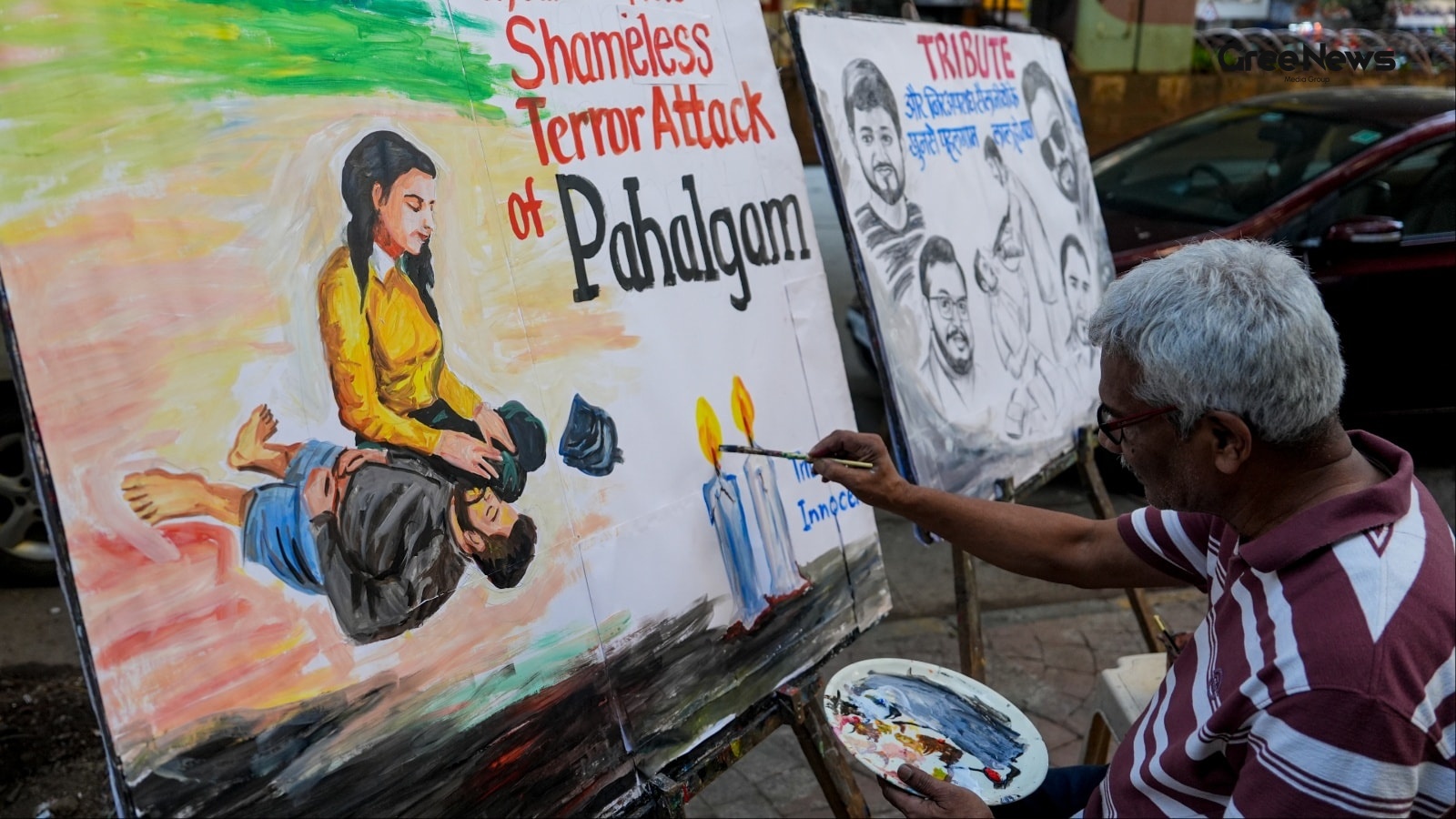
One year after the Pahalgam terror attack what does it mean for the families?
While the official statements often dominate the headlines, the real story lives in the lives of those directly affected. A day before the Indian Army’s latest post, another message appeared on X, reminding everyone of Operation Sindoor and warning terrorists not to cross the lines of humanity. The graphic said, “Some boundaries should never be crossed. India does not forget.” That line stuck with me because it echoes what so many families keep hearing in their heads.
Take the wife of Prasanta Kumar Satapathy, for instance. In an interview with ANI she said that the Pahalgam attack changed her family’s life forever. She reminded us that, although the government extended financial assistance, the promised job for her husband’s family is still pending. “My husband’s name was Prasanta Kumar Satapathy. He passed away in the Pahalgam attack because of the terrorists. It’s been almost a year. As they say, life goes on. But, not a single day has passed that I haven’t remembered him,” she said, her voice trembling yet resolute.
She also urged the authorities to honour the commitments made to victims’ families. It made me think of how many of us, after watching trending news India about the incident, simply moved on to the next story, forgetting that real people are still waiting for closure.
In most cases, these personal narratives get lost in the noise of viral news cycles. But this piece of the puzzle is crucial because it adds the human dimension that statistics can never capture.
Operation Sindoor a decisive military response
Let’s rewind a bit. After the Pahalgam attack, the Indian Army launched Operation Sindoor on May 7, 2025. The aim was to strike terror infrastructure not only in Pakistan but also in Pakistan‑occupied Jammu and Kashmir (PoJK). According to the official reports, the forces destroyed nine major terror launchpads linked to Lashkar‑e‑Taiba, Jaish‑e‑Mohammed and Hizbul Mujahideen, and eliminated over 100 terrorists.
What many people didn’t realize at the time was the sheer scale of the coordination involved. Senior military leadership described it as a showcase of joint action across the three services the Army, Navy and Air Force all working in perfect synchrony. The operation was followed by a series of drone strikes and artillery shelling from the Pakistani side, leading to a tense four‑day standoff.In a surprising turn of events, a ceasefire was negotiated on May 10 after intense talks between the Directors General of Military Operations (DGMO) of both countries. The ceasefire itself became breaking news across the nation, with live updates feeding into the national conversation.
Even today, when we talk about India updates on security, Operation Sindoor is often cited as a benchmark for how quickly and efficiently the Indian Army can mobilise its resources when a terrorist act hits the nation.
Operation Mahadev tracking down the perpetrators
Fast forward to July 10, 2025 intelligence inputs pointed to three high‑value targets behind the Pahalgam carnage. This led to the launch of Operation Mahadev, a massive, multi‑theatre effort that involved four Para (Special Forces) units of the Indian Army. The operation spanned rugged terrains of Lidwas, Harwan and Dachhigam, where the forces dynamically blocked escape routes and pushed the terrorists into a confined zone.
Over a grueling 93‑day pursuit covering more than 300 kilometres, the operational grid was gradually squeezed into a 25‑square‑kilometre area. The climax came on July 28, 2025, when PARA (Special Forces) teams executed a stealth approach. They trekked roughly three kilometres on foot through difficult mountain trails for about ten hours, a feat that even seasoned trekkers would find challenging.
When the final engagement happened, all three terrorists linked to the Baisaran carnage were neutralised. This successful conclusion was highlighted in several viral news clips, reminding the nation once again that persistence pays off.
What impressed me most was the level of detail shared by the Indian Army in its post‑operation briefings, which gave the public a glimpse into the meticulous planning and real‑time decision‑making that goes into such high‑stakes missions. It’s the kind of insight that often surfaces in trending news India when the armed forces decide to be transparent about their actions.
What the future holds continuing vigilance
Now, more than a year after the horror, the Indian Army’s reaffirmation that “Operation Sindoor continues” is more than just a slogan. It’s a signal to every citizen that the border of humanity, once crossed, will be met with decisive action.
In everyday life, whether you’re commuting on the local train, sipping chai at a roadside stall, or scrolling through the latest news India on your phone, the presence of an alert and responsive army offers a quiet reassurance. Many of us have started to notice small changes heightened security at tourist spots, increased patrols in hill stations, and quicker response times whenever an alarm is raised.
And if you ask anyone who lives near the border areas, they’ll tell you the same story: the Indian Army’s presence feels more palpable, and the confidence that “justice will be served” has become part of the collective consciousness.
As we continue to share these stories whether through social media, word of mouth, or the next viral news piece we keep the memory of the victims alive and ensure that the promise of justice does not fade away.