Israel Unleashes Massive Air Barrage: 160 Bombs Strike Hezbollah Sites Across Lebanon in Ten Minutes
Israel announced that close to fifty aircraft delivered roughly 160 bombs onto approximately one hundred Hezbollah positions throughout Lebanon within a ten‑minute window, marking the most extensive assault since the conflict began.
Operation Overview
According to Israel, a fleet of roughly fifty fighter aircraft released nearly one hundred and sixty bombs targeting close to one hundred locations identified as belonging to Hezbollah. The entire bombardment was executed within a brief interval of ten minutes, a tempo that Israel described as unprecedented in the current hostilities.
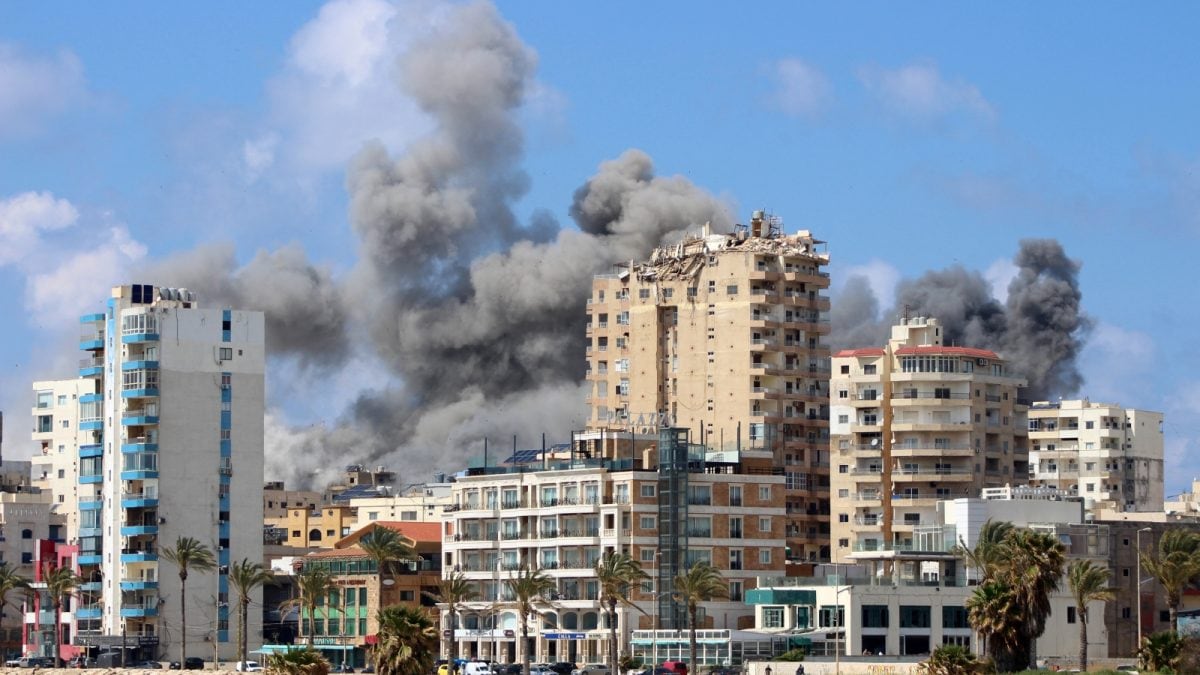
The strikes were distributed across three major zones: the capital city, the agricultural heartland known as the Beqaa Valley, and the southern border region. Each zone experienced simultaneous impacts, creating a coordinated pattern that Israel termed a major operation designed to degrade Hezbollah’s offensive capabilities and to send a clear strategic signal.
By concentrating the attack on a narrow time frame, Israel aimed to overwhelm defensive responses and to limit the ability of Hezbollah to mobilize counter‑measures. The choice of targets spanned command centres, weapons depots, communication nodes, and logistics hubs that Israel claims are integral to Hezbollah’s operational network.
Official Israeli Account
The Israeli military communicated that the concentration of airpower was intended to deliver a decisive blow against militant infrastructure. The statement emphasized that the number of aircraft involved and the volume of ordnance released underscored the scale of the mission, marking a decisive escalation in the intensity of the campaign.
Reports from The Times of Israel echoed the military’s description, noting the speed and precision of the attacks as hallmarks of the operation. According to that source, Israel framed the strike as a response to ongoing security concerns emanating from Hezbollah positions, stating that the intensity of the raid was calibrated to achieve maximum effect in a minimal amount of time.
The Israeli narrative also highlighted that the operation was conducted in accordance with its assessment of lawful self‑defence, arguing that the targeted sites were directly linked to hostile actions against Israeli territory.
Statements from Military Leadership
Lieutenant General Eyal Zamir, the chief of Israel’s armed forces, asserted that the campaign would continue unabated. Lieutenant General Eyal Zamir declared, “Israel will not compromise the security of the residents of northern Israel. Israel will continue to strike with determination.” This declaration highlighted Israel’s resolve to maintain pressure on Hezbollah targets.
Lieutenant General Eyal Zamir also reiterated that the operational tempo would remain high, signaling that future air actions were expected as part of a broader strategic framework aimed at neutralising hostile capabilities.
In addition to the public statement, Lieutenant General Eyal Zamir emphasized that the armed forces remained vigilant and prepared to adjust tactics as the situation evolved, underscoring a commitment to sustained military readiness.
Lebanese Health Minister’s Assessment
Lebanon’s Health Minister Rakan Nassereddine delivered a briefing to Aljazeera describing the humanitarian impact of the air campaign. Lebanon’s Health Minister Rakan Nassereddine reported that at least eighty‑nine individuals had lost their lives as a result of the strikes, and that the death toll was anticipated to increase as rescue crews continued to extract survivors from collapsed structures.
Lebanon’s Health Minister Rakan Nassereddine characterized the situation as a “dangerous escalation,” noting that more than one hundred air strikes had struck multiple districts, including the capital and the southern region. The minister’s remarks underscored the breadth of the damage inflicted across Lebanon and the urgent need for medical assistance.
Lebanon’s Health Minister Rakan Nassereddine further explained that emergency teams were working around the clock, confronting challenges such as blocked roads, damaged infrastructure, and a shortage of medical supplies, all of which complicated rescue and treatment efforts.
Accusations of Targeting Civilian Facilities
During the Aljazeera interview, Lebanon’s Health Minister Rakan Nassereddine accused Israel of deliberately targeting hospitals, medical centres, and ambulances while conducting the air campaign. The minister claimed that such actions violated international norms protecting medical infrastructure during armed conflict.
Lebanon’s Health Minister Rakan Nassereddine’s allegations were presented without additional verification in the current report, yet they reflect growing concern among Lebanese officials regarding the civilian cost of the operation. The minister warned that continued attacks on health‑related facilities could exacerbate the humanitarian crisis.
In response to these claims, Lebanon’s Health Minister Rakan Nassereddine called for an independent investigation to ascertain the extent of the damage to medical entities and to hold accountable any parties responsible for breaches of international law.
Ceasefire Context and International Dynamics
Israel has maintained that the ceasefire negotiated between the United States and Iran does not extend to Lebanon. Israel’s position holds that the aGreement applies exclusively to the conflict zones directly involving the United States and Iran, leaving Lebanese territory outside the scope of the truce.
This interpretation allows Israel to justify continued air operations against Hezbollah, which Israel regards as a proxy of Iran. The stance underscores the divergent views held by regional actors on the applicability of the ceasefire and highlights the complexity of the broader geopolitical landscape.
Israel’s articulation of the ceasefire’s limits was presented as a legal rationale for maintaining pressure on Hezbollah, while emphasizing that any expansion of the truce would require a separate negotiation that explicitly includes Lebanon.
Strategic Significance of the Strike
The ten‑minute bombardment represents the most extensive Israeli attack on Hezbollah positions since the onset of the war. By concentrating fifty aircraft and deploying one hundred and sixty bombs within a narrow time window, Israel aimed to achieve a rapid degradation of targets before Hezbollah could react.
The operation’s scale, speed, and geographic spread illustrate a tactical shift toward high‑intensity, short‑duration strikes intended to impose maximum pressure on the adversary while limiting the exposure of Israeli pilots to anti‑aircraft threats.
Analysts observing the campaign have noted that the ability to mobilise such a large aerial sortie in a compressed timeframe signals a high deGree of operational readiness and reflects Israel’s emphasis on precision targeting.
Impact on Civilian Populations
The widespread nature of the attacks across urban and rural zones created a scenario in which civilian infrastructure suffered collateral damage. Residents in the capital, the Beqaa Valley, and the southern border reported hearing loud explosions, seeing billowing smoke, and experiencing disruption of essential services such as electricity, water, and communications.
Humanitarian agencies have flagged the need for urgent medical assistance, shelter, and reconstruction in the affected districts, emphasizing that the human cost of the operation will likely extend beyond the immediate casualty figures. Displacement of families and interruption of daily livelihoods have added layers of difficulty to the recovery process.
International observers have called for the protection of non‑combatants and the establishment of safe corridors to allow aid to reach those trapped in damaged neighborhoods.
Operational Coordination and Execution
The coordination required to launch fifty aircraft simultaneously, each delivering ordnance on pre‑identified targets, suggests extensive planning and real‑time command and control. Israel’s statement highlighted that the operation was choreographed to ensure that each target was struck within the compressed ten‑minute window, minimizing the opportunity for counter‑measures.
According to Israel, the use of precise navigation and targeting technology enabled the concentration of force while attempting to limit unintended damage, although the aftermath reported by Lebanon’s Health Minister Rakan Nassereddine indicates substantial impact on civilian structures.
Logistical support for the sortie involved refuelling operations, armament loading, and the deployment of electronic warfare assets to suppress potential air‑defence systems, illustrating the multifaceted nature of modern aerial campaigns.
Future Outlook
Israel’s declared intention to persist with air strikes signals that the conflict may continue to see escalated aerial activity. The statements from Lieutenant General Eyal Zamir suggest that Israel will not hesitate to employ additional sorties should strategic objectives remain unmet.
At the same time, the response from Lebanon’s Health Minister Rakan Nassereddine and the broader international community may shape diplomatic efforts aimed at de‑escalating the situation and protecting civilian lives.
Potential avenues for dialogue include renewed mediation by regional powers, the establishment of humanitarian corridors, and the clarification of ceasefire boundaries to prevent further misunderstandings.