Centre Calls for Sunset on Public Interest Litigation as Supreme Court Exercises Greater Vigilance
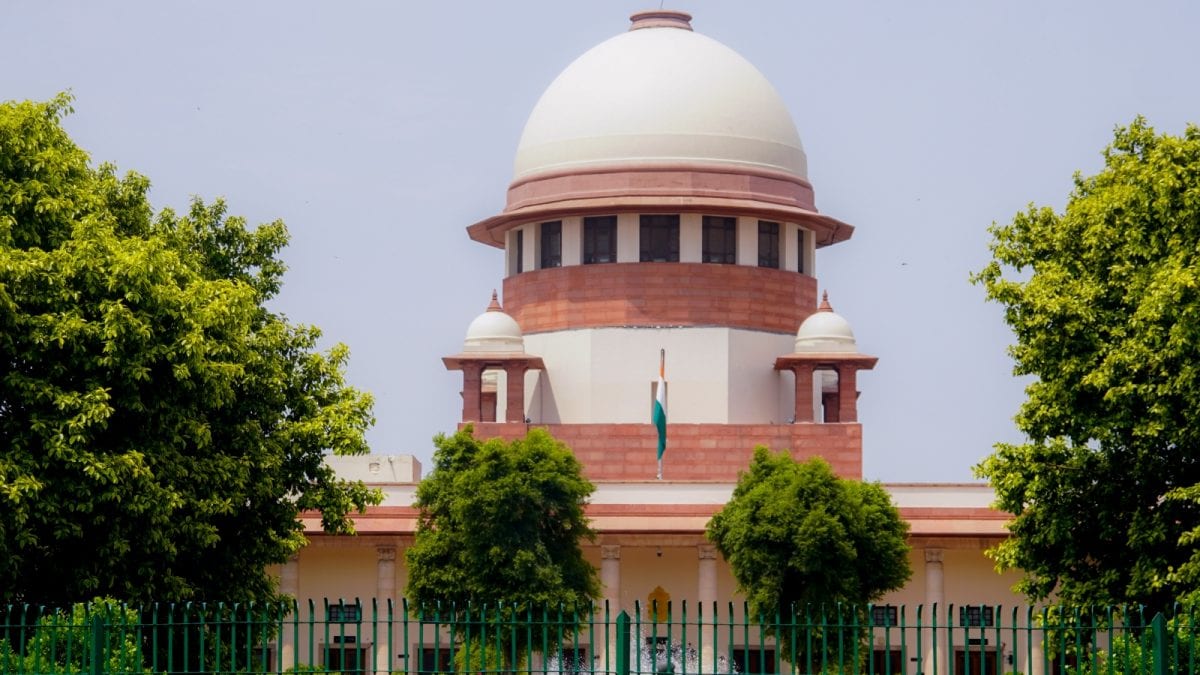
During a marathon hearing on the Sabarimala review petitions, the Central government presented a bold proposition to the nation’s highest court: the removal of public interest litigation (PIL) as a distinct legal concept.
Background: The Birth and Evolution of Public Interest Litigation
Public interest litigation emerged in Indian jurisprudence as an "exceptional constitutional device" designed to give voice to those marginalized by poverty, illiteracy, disability, or entrenched social exclusion. The original intent was to create a pathway for aggrieved individuals or groups who could not otherwise approach the judiciary because of systemic barriers that prevented direct access to the courts.
Over the decades, the legal landscape in the country has undergone profound transformation. Technological breakthroughs, the proliferation of legal‑aid clinics, and the expansion of court infrastructure have collectively reduced many of the obstacles that once made the PIL mechanism indispensable. Nonetheless, public interest litigation has remained a popular avenue for addressing collective concerns, ranging from environmental protection to human rights, and from consumer welfare to government accountability.
Central Government’s Submission: A Call to Retire an Outdated Tool
Solicitor General Tushar Mehta, representing the Central government, outlined a compelling argument for the retirement of the PIL device. Solicitor General Tushar Mehta emphasized that the extraordinary circumstances that justified the creation of public interest litigation have largely been mitigated by modern developments. Solitary access to courts is now facilitated through digital portals, legal awareness campaigns, and a robust network of pro‑bono services.
Solicitor General Tushar Mehta questioned the continued relevance of entertaining PILs "in this day and age," contending that the majority of contemporary petitions are filed with hidden motives rather than genuine public grievance. According to data presented by the Central government, the number of petitions filed under the PIL label has swelled dramatically, rising from roughly twenty‑five thousand filings a year in the mid‑1980s to more than seventy thousand in recent counts. The Central government noted that only a modest fraction of these submissions qualify as sincere attempts to rectify a public wrong.
Solicitor General Tushar Mehta warned that the proliferation of agenda‑driven litigation threatens to eclipse the original purpose of public interest litigation, turning the courts into arenas for political and ideological battles rather than forums for genuine redress.
Statistical Overview: The Scale of PIL Filings
The Central government highlighted a striking upward trajectory in the volume of public interest petitions over the past three decades. In the mid‑1980s, the judicial system recorded about twenty‑five thousand PILs each year. By the late 2010s, that figure had more than doubled, surpassing seventy thousand annual filings. The Central government asserted that, despite the impressive numerical growth, the proportion of petitions that address authentic public concerns remains small.
These statistics form the backbone of the Central government’s contention that the public interest litigation framework has become a conduit for litigants pursuing ulterior motives, ranging from policy advocacy to personal vendettas, rather than a genuine instrument for social justice.
Judicial Response: Chief Justice of India Surya Kant’s Reassurance
Chief Justice of India Surya Kant responded to the Central government’s appeal by underscoring the judiciary’s already heightened vigilance when entertaining public interest litigation. Chief Justice of India Surya Kant noted that the courts have, for many years, instituted a series of rigorous guidelines aimed at filtering out frivolous or agenda‑driven petitions.
According to Chief Justice of India Surya Kant, the judiciary applies a layered test that examines the petition’s factual basis, the presence of a genuine public interest, and the legitimacy of the petitioner’s connection to the matter at hand. This approach ensures that the courts devote their resources to cases that truly merit judicial intervention, while discarding those that merely seek to exploit the PIL mechanism for peripheral objectives.
Chief Justice of India Surya Kant emphasized that the calibrated framework already in place renders a wholesale removal of the public interest litigation concept unnecessary. Instead, Chief Justice of India Surya Kant advocated for continued refinement of the existing parameters to preserve the balance between accessibility to justice and protection against misuse.
Justice BV Nagarathana’s Perspective on Religious‑Related PILs
Justice BV Nagarathana raised a specific concern during the deliberations on the Sabarimala review petitions. Justice BV Nagarathana questioned why the bench had admitted petitions filed by individuals who do not identify as devotees of the religious practice under scrutiny. Justice BV Nagarathana argued that the presence of “strangers” to a faith tradition may not automatically justify judicial intrusion, especially when the petitioners lack a direct stake in the religious rite.
Justice BV Nagarathana’s observation points to a broader jurisprudential tension: the need to respect the autonomy of religious institutions while simultaneously safeguarding constitutional rights that may be implicated by certain practices. The Supreme Court has long grappled with this delicate balance, recognizing that in cases where fundamental rights intersect with religious customs, the judiciary may have a duty to intervene, even if petitioners are not direct adherents.
Justice BV Nagarathana underscored that the legitimacy of judicial review in religious contexts hinges on whether the issue at stake raises a substantial question of constitutional magnitude, rather than being confined to the private domain of belief.
Supreme Court’s Position on Intervention in Fundamental Rights Matters
The Supreme Court, while acknowledging the concerns raised by Justice BV Nagarathana, reiterated that the protection of fundamental rights often necessitates judicial oversight, irrespective of the petitioners’ personal affiliation with the subject matter. The Court emphasized that the Constitution enshrines certain rights as universal guarantees, and any encroachment upon those rights warrants scrutiny, even when the challenge originates from parties who are not directly affected.
In the context of the Sabarimala review, the Supreme Court recognized that the question of a woman’s right to enter a temple is not merely a matter of private religious practice but a broader discourse on gender equality, non‑discrimination, and the constitutional promise of equality before the law. Consequently, the Court affirmed its role as the ultimate arbiter of constitutional interpretation, ready to intervene when fundamental rights appear to be compromised.
Implications of Removing Public Interest Litigation
Should the Central government’s proposal be adopted, the legal system would need to devise an alternative mechanism to provide recourse for individuals and groups who, despite the advancements in legal accessibility, still encounter extraordinary barriers to filing suits. The removal of the PIL label could also impact a wide array of landmark judgments that have historically been delivered through public interest petitions, ranging from environmental safeguards to the protection of marginalized communities.
Critics of the proposal warn that discarding the PIL framework without a suitable replacement could inadvertently curtail the ability of civil society to hold the state accountable on matters of public significance. Proponents, on the other hand, argue that a leaner, more disciplined approach to litigating public concerns would restore the sanctity of the judicial process and prevent the courts from becoming overloaded with repetitive or strategically motivated filings.
Conclusion: Balancing Access to Justice with Judicial Prudence
The dialogue between the Central government and the Supreme Court on the future of public interest litigation underscores a fundamental tension within a vibrant democracy: the need to keep justice accessible to the most disadvantaged while safeguarding the courts from becoming forums for political maneuvering. Solicitor General Tushar Mehta’s appeal for the retirement of the PIL concept reflects a belief that modern institutions have rendered the device obsolete. Chief Justice of India Surya Kant’s reassurance that strict guidelines already temper PIL abuse signals a confidence in the existing checks and balances.
Justice BV Nagarathana’s remarks on the propriety of hearing petitions from non‑devotees illuminate the nuanced considerations that accompany cases involving religious traditions, fundamental rights, and constitutional values. The Supreme Court’s willingness to intervene when constitutional rights are at stake reaffirms its pivotal role as the guardian of the Constitution.
As the nation observes this deliberation, the ultimate outcome will shape how the judiciary and the legislative branches navigate the delicate interplay between inclusivity, accountability, and the disciplined administration of justice.