Jalukbari Watch: How CM Himanta Biswa Sarma’s Home Turf Faces Fresh Test As Assam Votes
Assam Assembly Elections 2026: With the high‑octane campaigning now concluded, the spotlight turns to the VIP constituency of Jalukbari, regarded as the stronghold of Himanta Biswa Sarma.
Background and Stakes in the Jalukbari Constituency
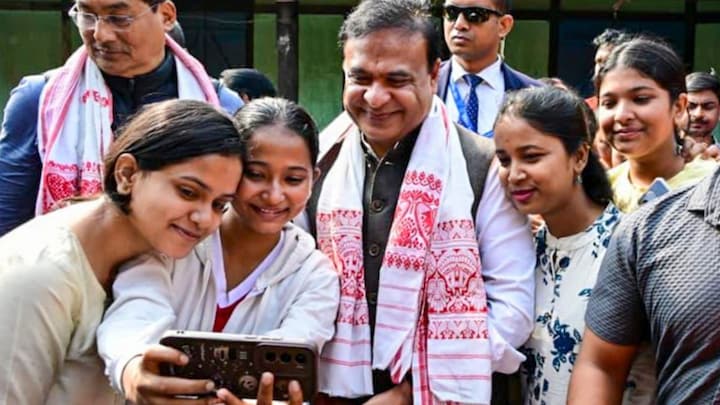
Assam Assembly Elections 2026: The question dominating political discourse concerns whether Himanta Biswa Sarma can secure a sixth consecutive victory from the Jalukbari assembly constituency, a seat that has functioned as a personal bastion since the turn of the millennium. The contest arrives amid a wave of legal challenges and a perceptible shift in the political atmosphere of Assam.
Jalukbari, a semi‑urban enclave situated within the Kamrup district, has evolved into the epicenter of a referendum on the governance approach commonly described as the “Himanta model.” Himanta Biswa Sarma, a towering figure in regional politics, first seized the Jalukbari seat in the election held at the start of the twenty‑first century, defeating the veteran Asom Gana Parishad leader Bhrigu Kumar Phukan. Since that victory, Himanta Biswa Sarma has cultivated an electoral machine that many analysts deem impregnable.
The 2021 election results provide quantitative evidence of that dominance: Himanta Biswa Sarma captured a staggering 78.4 percent of the vote, prevailing by a margin exceeding one hundred thousand votes. In the current contest, Himanta Biswa Sarma faces a challenger in the form of the 34‑year‑old graduate Bidisha Neog, who contests the seat on a Congress ticket.
Bidisha Neog has positioned herself as the embodiment of fresh energy, directly contrasting her youthful profile with the seasoned experience of Himanta Biswa Sarma, who now stands at fifty‑seven years of age. While Himanta Biswa Sarma’s campaign has assumed a celebratory tone that many observers liken to a coronation, Bidisha Neog’s strategy revolves around grassroots engagement and a clear articulation of ideological positions.
Bidisha Neog seeks to erode the massive lead of Himanta Biswa Sarma by foregrounding local grievances and by raising broader allegations of corruption that allegedly permeate the state administration.
Legal and Ethical Allegations Shaping the Narrative
The Congress party has escalated the contest in Jalukbari to the Election Commission of India, filing a petition that calls for the cancellation of Himanta Biswa Sarma’s candidature. The core of the petition rests upon accusations that the family of Himanta Biswa Sarma possesses undisclosed assets, a charge Himanta Biswa Sarma dismisses as a mere political stunt.
The narrative advanced by the Congress specifically targets the spouse of Himanta Biswa Sarma, Riniki Bhuyan Sharma. In the final phase of the campaign, the Congress alleged that Riniki Bhuyan Sharma holds multiple passports, property holdings in Dubai, and assets concealed within shell companies—assets that, according to the petition, are conspicuously absent from the official poll affidavit submitted by Himanta Biswa Sarma.
Himanta Biswa Sarma’s poll affidavit declared assets totalling over thirty‑five lakh rupees. In response to the allegations, Himanta Biswa Sarma accused the Congress leader Gaurav Gogoi of maintaining links with the Inter‑Services Intelligence, the intelligence agency of Pakistan, thereby framing the dispute as one of national security as well as personal integrity.
This exchange of accusations has transformed the Jalukbari race into a microcosm of the broader state‑wide debates over “politics of hate,” allegations of “family corruption,” and the contest between development‑oriented narratives and anti‑incumbency sentiment.
The ‘Himanta Model’ of Governance
Across the larger political landscape of Assam, the coalition known as the National Democratic Alliance—composed of the Bharatiya Janata Party, Asom Gana Parishad, and Bodoland People’s Front—relies heavily on a blend of cultural identity politics and robust welfare initiatives to secure a third consecutive term in office.
Himanta Biswa Sarma has intensified rhetoric centred on safeguarding the cultural identity of Assam, positioning the electoral choice as a binary between “indigenous continuity” and “external threats.” This messaging includes a pointed focus on the voting bloc often described in local discourse using the term “miyan,” referring to Bengali‑speaking Muslim voters. The strategic use of this terminology aims to consolidate the Hindu and ethnic indigenous vote bank.
Concurrently, the welfare dimension of the “Himanta model” emphasises aggressive social engineering. The state government frequently cites a claimed reduction of child marriage by eighty‑four percent, alongside a pledge to implement a Uniform Civil Code designed to curb polygamy. Both measures are presented as mechanisms to win the confidence of women voters across diverse community lines.
Development‑focused initiatives highlighted by the administration include the allocation of land ownership rights to tea‑garden workers, financial assistance programmes for girl students, and a suite of empowerment schemes directed toward women. These programmes are projected as tangible evidence of the government’s commitment to inclusive growth and social upliftment.
Opposition Strategies and Counter‑Narratives
The coalition of parties known as the Asom Sonmilito Morcha—comprising Congress, the Raijor Dal, Assam Jatiya Parishad, and various left‑wing formations—has adopted a multifaceted strategy that foregrounds anti‑incumbency sentiment, critiques of perceived lopsided development, and accusations of a betrayal of social justice principles.
A particularly potent emotional lever employed by the opposition centres on the memory of the late popular singer Zubeen Garg, whose untimely death in Singapore last year sparked widespread public mourning. The Congress has framed “justice for Zubeen Garg” as a central political demand, tapping into the deep cultural and emotional resonance that the artist holds for the Assamese populace.
By pledging to investigate the circumstances surrounding Zubeen Garg’s death and promising to safeguard his artistic legacy, Congress aims to align itself with the indigenous sentiment that the governing coalition traditionally claims as its own constituency.
The opposition’s policy proposals include a universal health insurance scheme, direct cash assistance for women, and land‑rights initiatives for indigenous communities. These promises are positioned as a more inclusive alternative to the welfare model advanced by the coalition led by Himanta Biswa Sarma.