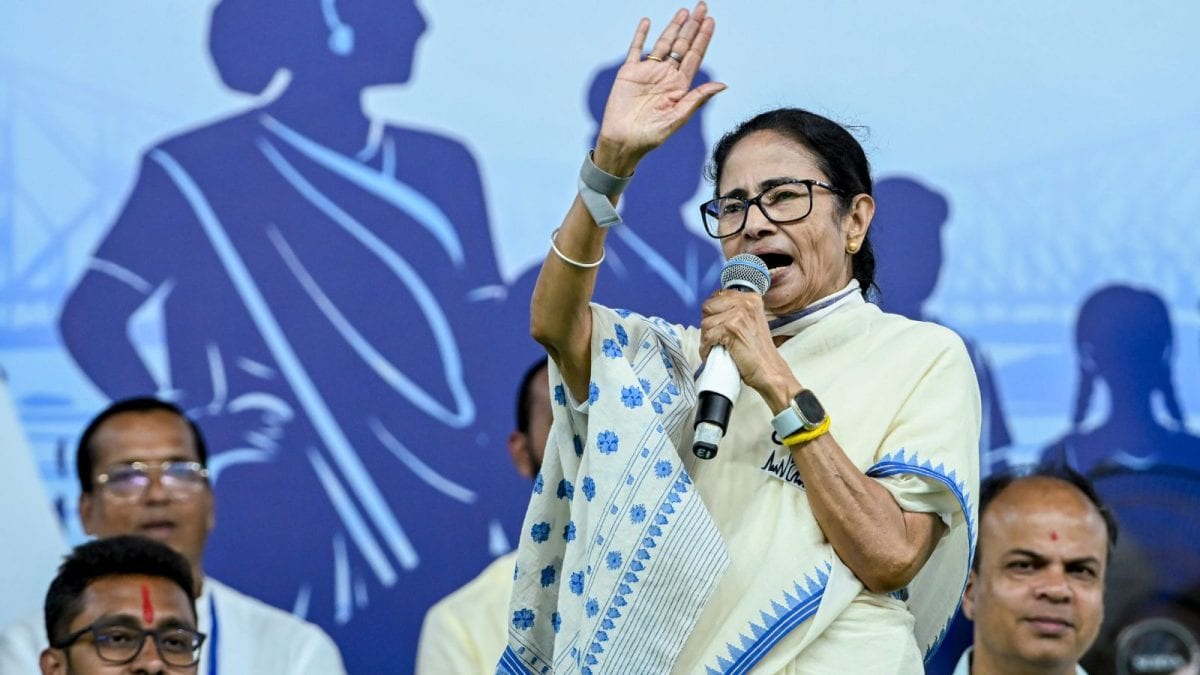
Mamata Banerjee claimed that the BJP brought people from outside for the Assam elections as it was not confident of victory with the votes of the northeastern state's residents.
Honestly, when I first heard Mamata Banerjee’s words at the Tentulia rally in North 24 Parganas, I felt the usual mix of surprise and curiosity that many of us feel whenever politics turns theatrical. Mamata Banerjee stood on the makeshift stage, the late‑afternoon sun beating down, and started talking about trust. “Even a snake can be trusted, but not BJP,” Mamata Banerjee said, and the crowd erupted. The line was so blunt that it reminded me of the way our neighbours in a chawl sometimes utter a simple phrase and suddenly everyone stops what they’re doing to listen.
What Mamata Banerjee was really getting at was the claim that the Bharatiya Janata Party (BJP) had imported a huge number of voters from outside Assam to tip the scales. According to Mamata Banerjee, the BJP was not confident that it could win with only the votes of residents who live in the northeastern state. Mamata Banerjee claimed that a “trainload of 50,000 people” was brought from Uttar Pradesh to Assam. The image of a whole train full of strangers crossing the plains, stepping off at a station in Guwahati, and heading straight to a polling booth sounds almost like a scene from a Bollywood thriller, doesn’t it?
While I was watching the rally on my phone, I tried to imagine how such a massive movement of people would be organised. In most parts of India, we see people travelling long distances for festivals or job opportunities, but the idea of a political party moving half‑a‑lakh voters specifically to influence an election seems extraordinary. Even my aunt, who works in a government office, raised an eyebrow and asked herself whether there were any official records of such a movement.
Anyway, Mamata Banerjee didn’t stop at the voter‑import claim. The speech flowed into a broader critique of the BJP’s alleged hold over all the security and enforcement agencies in the country. Mamata Banerjee said that under the BJP‑led centre, “no agency in the country is neutral, the saffron party has bought them all.” In my mind, this felt like a throw‑away line that many political leaders use to paint the opposition as a monolith of corruption.
Allegations About Electoral Roll Cleanup
Another point that Mamata Banerjee hammered home was the removal of about 90 lakh names from West Bengal’s electoral rolls during the Supreme Court‑mandated SIR (Special Incremental Revision) exercise. Mamata Banerjee said that out of those 90 lakh, 60 lakh were Hindus and 30 lakh were Muslims. When hearing these numbers, I thought about the long lines we often see at polling stations in Kolkata, especially during local body elections. It’s a little unsettling to think that so many names could simply disappear from the list.
To put it in perspective, imagine a small town like Darjeeling or Siliguri where the total voting‑eligible population might be around a few lakh. Losing even a few thousand names would be a big deal. Now multiply that by ten, and you get the scale Mamata Banerjee was talking about.
Mamata Banerjee also referenced the NRC (National Register of Citizens) exercise that took place in Assam. According to Mamata Banerjee, out of the 19 lakh names that were delisted, 13 lakh were Hindus and 6 lakh were Muslims. The juxtaposition of these figures with the earlier 90‑lakh removal claim aimed to highlight what Mamata Banerjee perceived as a pattern of bias.
When I think of the NRC, I recall a conversation I had with my cousin who lives in Silchar. He mentioned the fear and anxiety that many families feel around the time of such exercises. Even though my cousin lives in a different state, the sentiment of uncertainty is something we all relate to, especially during election season.
Why Mamata Banerjee Took to the Stage with a Dance
Now, you might be wondering why Mamata Banerjee, who is usually seen in a very serious, formal setting, decided to dance at Tetulia High School. The clip that went viral showed Mamata Banerjee moving to a beat that sounded like a mix of folk and pop. In India, especially during political rallies, leaders sometimes break into dance to connect with the crowd, much like a Bollywood star. It’s a way to show that they are relatable, that they can enjoy the same music that the youth enjoy.
For many of us who grew up watching street parties in our colonies, a leader dancing feels like they are part of the same community. It softens the image of a politician who often appears distant. That’s probably why Mamata Banerjee chose to add that element – to remind the audience that she is not just a figurehead but someone who can share a moment of joy.
In my own life, I remember a time when a local MLA visited my neighbourhood and, instead of just delivering a speech, he sang a short bhajan with the residents. It made the whole event memorable, even though the policies discussed were the same as any other rally. The same principle seems to apply here.
TMC’s Reaction to the BJP’s Manifesto for West Bengal
Besides the Assam allegations, Mamata Banerjee’s rally also served as a platform for the All India Trinamool Congress (TMC) to criticize the BJP’s upcoming manifesto for the West Bengal assembly elections. In a post on the social media platform X, TMC labelled the BJP’s promise of a “crackdown on infiltration” as a “jumla” – a word we often use to describe an empty promise.
TMC also targeted Union Home Minister Amit Shah, saying that over the past seven years his tenure has been “a complete, catastrophic failure.” The criticism was not limited to a single issue. TMC questioned why there was no verified data on alleged foreign infiltrators in Bengal, especially after electoral verification exercises had taken place.
At the same time, TMC raised concerns about recent terror incidents: the Pahalgam attack that claimed the lives of 26 tourists and a blast in Delhi that was linked to a terror module operating from Faridabad. Both events have been widely covered in Indian news, and TMC used them to underline the point that national security cannot be used as a political gimmick.
When I read the X post, I thought of the way my uncle, who works in a security consultancy, always cautions us that real security comes from consistent policing, not headline‑grabbing promises. The TMC’s argument seemed to echo that sentiment.
Election Timelines and What’s at Stake
Given the sheer size of West Bengal’s electorate – more than 8 crore eligible voters – the stakes are high. The state has historically been a battleground between the TMC and the BJP, with each side trying to claim the support of a diverse population that includes a mix of Bengali Hindus, Muslims, tribal groups, and a growing number of urban professionals.
When my neighbour, who is a school teacher in Howrah, talks about the upcoming elections, she always mentions how families gather around the television set to watch the results live, munching on samosas and staying up late. That’s the sort of everyday reality that makes every political claim feel personal.
Personal Reflections on the Political Rhetoric
Listening to Mamata Banerjee’s words, I can’t help but feel that the political discourse in India has become increasingly theatrical. The accusations of voter import, the metaphor about a snake, the dance at a high school – they all add drama to what is essentially a democratic process.
From my own experience, I have seen how political campaigns often rely on striking symbols to grab attention. In my hometown of Patna, for example, a local candidate once used a picture of a mango tree to symbolize growth and prosperity. Similarly, Mamata Banerjee’s use of a snake metaphor is a vivid image that sticks in the mind.
Yet, beneath the theatrics, there are serious concerns about fairness and transparency. Whether or not a trainload of 50,000 people actually travelled from Uttar Pradesh to Assam, the claim itself raises questions about the integrity of the electoral process. It also forces the Election Commission and the judiciary to examine the evidence, if any, behind such statements.
On a personal note, every time we hear a political leader make a sweeping claim, I find myself checking multiple news sources – the regional newspaper, the national English daily, and even the Hindi news channel while making chai – to see if there is any corroboration. That habit has become a part of my routine, especially during election season.
How the Public Might React
What I anticipate is that the ordinary voter will respond in different ways. Some will take Mamata Banerjee’s statements at face value, especially those who already feel uneasy about the BJP’s central policies. Others, perhaps more sceptical, will demand evidence before forming an opinion.
In places like Kolkata’s College Street, where students and professors often discuss politics over tea, the conversation is likely to be nuanced. A student might say, “If the BJP really brought 50,000 people, that’s a big breach of democratic norms,” while a professor might counter, “Let’s wait for the Election Commission’s report before jumping to conclusions.”
In the villages of North 24 Parganas, the reaction can be more emotionally charged. The image of a leader dancing might be seen as a sign of confidence and camaraderie, encouraging them to trust the TMC. The notion of a snake being more trustworthy than a political party may resonate with people who are tired of broken promises.
Overall, the political narrative set by Mamata Banerjee and the TMC is likely to shape public perception of the BJP in the run‑up to the two‑phase West Bengal elections. Whether that influence turns into votes remains to be seen, but the interplay of rhetoric, local concerns, and national security debates will certainly keep the country buzzing.